EN6 trial reveals PD-1 checkpoint inhibition efficacy in advanced endometrial cancer
Copy code to add this image to your page
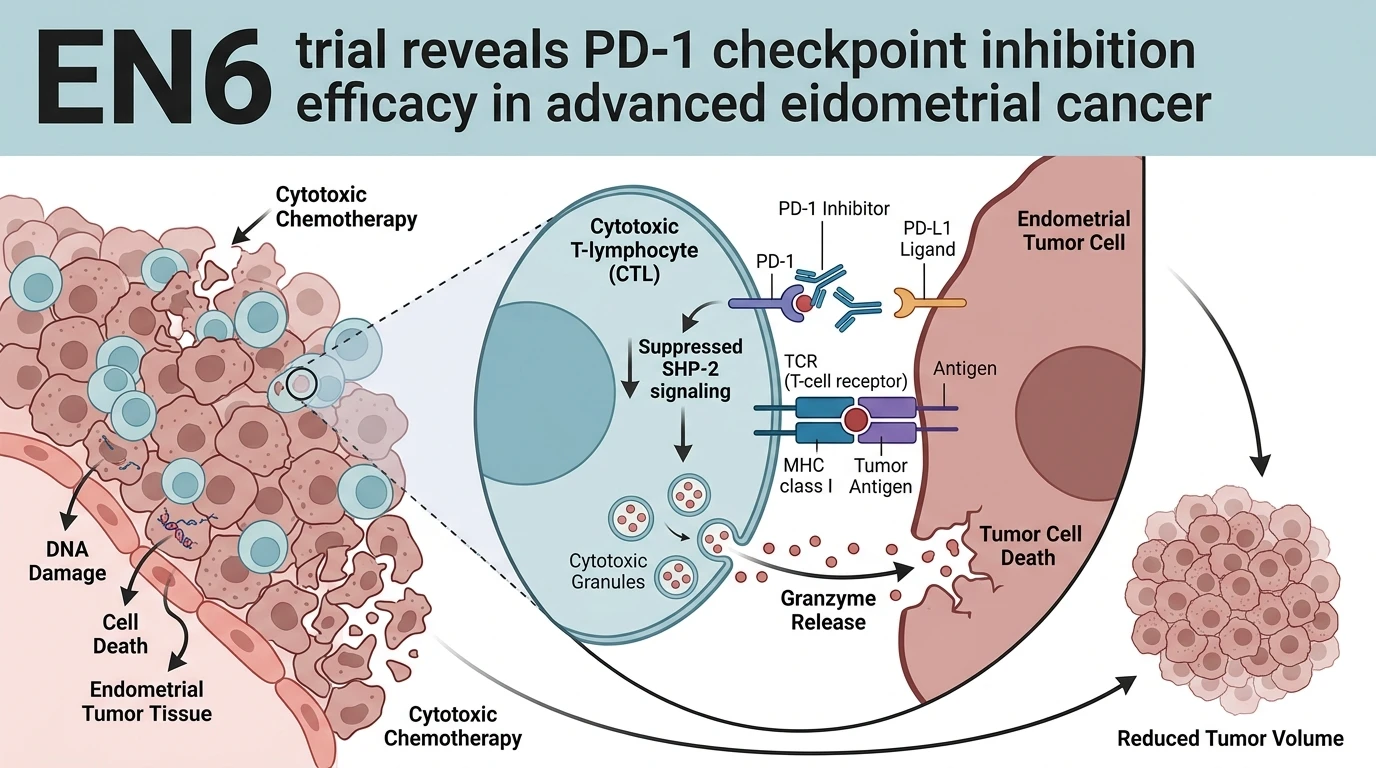
Primary advanced and recurrent endometrial carcinomas present substantial clinical challenges, particularly following disease progression after standard platinum-based doublets. The open-label, randomized trial designated as ENGOT-EN6/GOG3031/RUBY evaluated the therapeutic addition of the anti-PD-1 monoclonal antibody dostarlimab to standard carboplatin-paclitaxel chemotherapy. Programmed cell death protein 1 (PD-1) operates as an inhibitory cell-surface receptor on activated T lymphocytes, B cells, and natural killer cells. Tumor cells frequently exploit this pathway by upregulating Programmed Death-Ligand 1 (PD-L1), which binds PD-1 to induce T-cell exhaustion and facilitate immune evasion. Combining direct immune checkpoint inhibition with cytotoxic chemotherapy seeks to disrupt this immunosuppressive axis while simultaneously augmenting tumor antigen presentation through chemotherapy-induced immunogenic cell death.
In Part 1 of the ENGOT-EN6 study, investigators evaluated overall survival (OS) and secondary progression metrics in a broad cohort of patients receiving either dostarlimab plus carboplatin-paclitaxel or placebo plus chemotherapy. Analysis of the primary intent-to-treat population demonstrated a statistically significant improvement in OS among patients assigned to the immune checkpoint inhibitor arm. Specifically, the combination of dostarlimab and chemotherapy yielded a 31% reduction in the risk of death relative to chemotherapy alone (hazard ratio [HR] = 0.69; 95% confidence interval [CI], 0.54–0.89). This benefit was maintained across pre-specified biomarker subgroups, illustrating the broader utility of immunomodulatory combinations beyond classical biomarker-restricted populations.
Mismatch repair status represents a pivotal molecular biomarker in endometrial oncology. Tumors displaying deficient mismatch repair or high microsatellite instability (dMMR/MSI-H) possess high mutational burdens, generating abundant neoantigens that attract tumor-infiltrating lymphocytes. In the dMMR/MSI-H subgroup within the ENGOT-EN6 protocol, dostarlimab plus chemotherapy reduced the risk of death by 68% compared to control (HR = 0.32; 95% CI, 0.17–0.63). Patients harboring mismatch repair-proficient or microsatellite-stable (MMRp/MSS) disease also exhibited clinical improvement, recording a 21% reduction in mortality risk (HR = 0.79; 95% CI, 0.60–1.04). These findings indicate that while dMMR/MSI-H status confers heightened sensitivity to PD-1 targeted monoclonal antibodies, platinum-paclitaxel chemotherapy may sensitize MMRp/MSS tumors through increased antigen release and transient depletion of regulatory T cells.
Secondary efficacy endpoints corroborated the OS advantages observed in the ENGOT-EN6 protocol. Second progression-free survival (PFS2)—defined as the time from randomization to objective disease progression on subsequent therapy or death from any cause—showed sustained separation of survival curves favoring the dostarlimab combination. This persistent signal indicates that initial PD-1 blockade combined with cytotoxic therapy does not compromise the efficacy of subsequent lines of treatment, but rather establishes a prolonged disease control trajectory. Researchers also observed favorable trends in objective response rate (ORR) and duration of response (DoR) across both mismatch repair cohorts.
The safety profile of dostarlimab in combination with carboplatin and paclitaxel aligned with the known toxicities of the individual active agents. The most common treatment-emergent adverse events included nausea, alopecia, fatigue, and peripheral neuropathy, primarily attributed to the chemotherapy backbone. Immune-related adverse events (irAEs), including hypothyroidism, rash, and pneumonitis, occurred at frequencies expected for PD-1 inhibitors and were predominantly low-grade and manageable with standard clinical algorithms. Toxicities leading to discontinuation of all study components remained low. These empirical findings support dostarlimab combined with carboplatin-paclitaxel as a definitive therapeutic option for patients with primary advanced or recurrent endometrial carcinoma. Additional investigations into small-molecule targeted immune modulators continue to clarify optimal combination scheduling and biomarker stratifications in gynecologic oncology.
Clinical Metrics and Subgroup Analysis
Copy code to add this image to your page
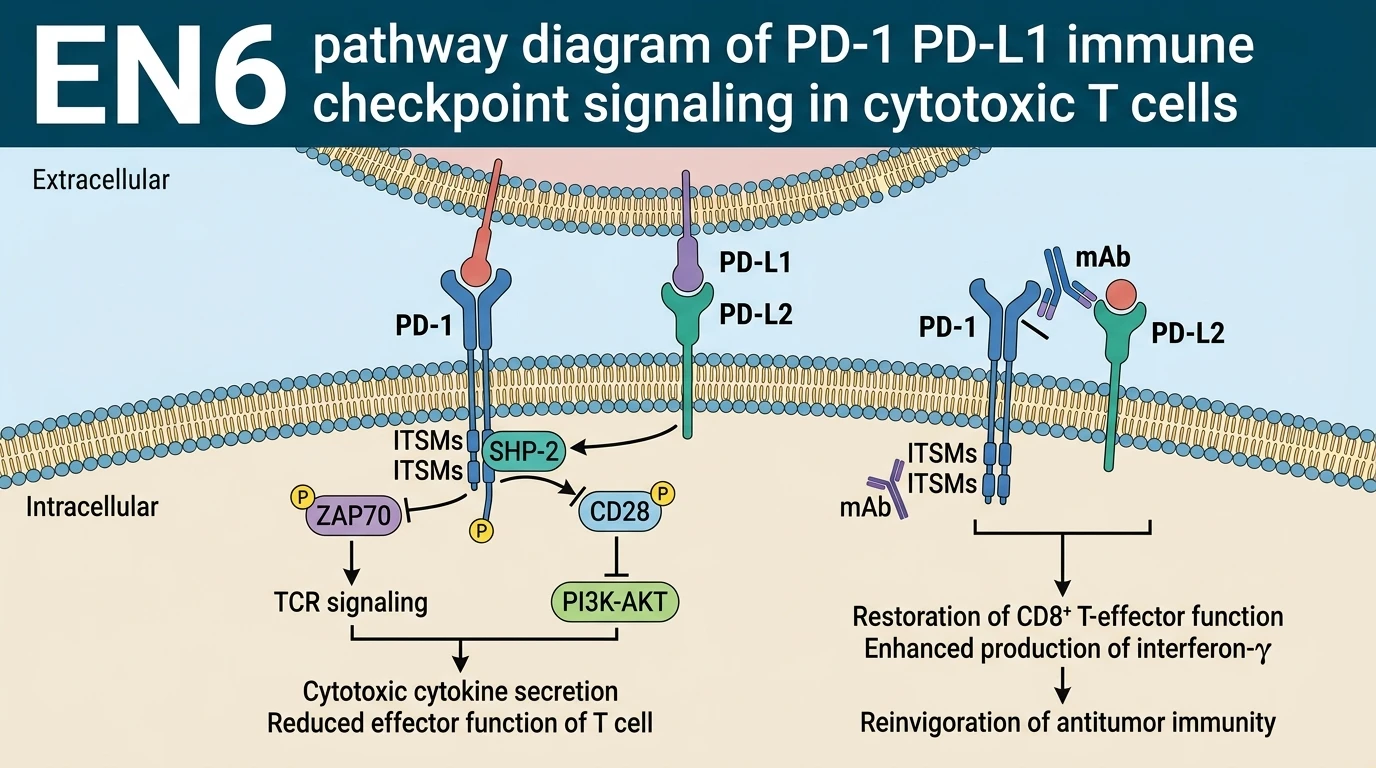
PD-1 checkpoint inhibition restores tumor-directed immune clearance by preventing interaction between PD-1 and its ligands, PD-L1 and PD-L2. In the ENGOT-EN6 clinical evaluation, combining the anti-PD-1 antibody dostarlimab with standard cytotoxic chemotherapy (carboplatin and paclitaxel) attenuates SHP-2-mediated signaling cascades in CD8+ T cells. This dual approach concurrently induces DNA cross-linking, disrupts microtubule assembly, and enhances effector lymphocyte activation within the tumor microenvironment. Consequently, the regimen yields extended progression-free and overall survival in patients presenting with primary advanced or recurrent endometrial carcinoma across distinct mismatch repair profiles.
Durable Overall Survival Across Molecular Subtypes
The primary clinical metric evaluated in the ENGOT-EN6 evaluation focused on overall survival parameters. Dostarlimab plus chemotherapy delivered a 31% risk reduction overall. Tumor stratification revealed profound divergence in response magnitude. Patients with dMMR/MSI-H status achieved an absolute mortality reduction exceeding sixty percent. T-cell infiltration remained robust. Conversely, MMRp/MSS cohorts exhibited moderate HR improvement at 0.79. Synergistic mechanisms likely drive these outcomes. Cytotoxic insult triggers immunogenic cell death, releasing tumor-associated antigens into the microenvironment. Concurrently, anti-PD-1 administration prevents early T-cell exhaustion.
Secondary Progression Signals and Tolerability Assessment
PFS2 outcomes mirrored the primary OS survival benefit. Disease progression slowed significantly after subsequent systemic interventions. Treatment continuation rate remained stable throughout cycles. Adverse events matched established historical toxicities. Grade 3 or higher neutropenia occurred at anticipated rates. Hypothyroidism represented the primary immune-related condition. Discontinuation due to irAEs remained minimal under monitoring. In the EN6 trial protocol, safety profiles remained acceptable across patient demographics. Overall data support combination checkpoint inhibition as a foundational option in advanced stage disease.