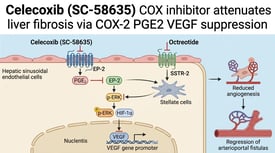
COX Inhibitors
Cyclooxygenase (COX) inhibitors, commonly referred to as nonsteroidal anti-inflammatory drugs (NSAIDs), target the COX enzymes responsible for the rate-limiting step in the conversion of arachidonic acid into pro-inflammatory prostanoids, including prostaglandins, prostacyclin, and thromboxanes. There are two primary isoforms: COX-1, which is constitutively expressed in most tissues and maintains homeostatic functions such as gastric mucosal protection and platelet aggregation; and COX-2, which is rapidly induced by inflammatory stimuli, cytokines, and growth factors. The inhibition of COX-2 is primarily responsible for the analgesic, antipyretic, and anti-inflammatory effects of these drugs, while the inhibition of COX-1 is often associated with adverse effects, particularly gastrointestinal toxicity. COX inhibitors are broadly classified into non-selective NSAIDs, such as aspirin, ibuprofen, and naproxen, and COX-2 selective inhibitors, known as coxibs, which include celecoxib, etoricoxib, and the now-withdrawn rofecoxib. Aspirin is unique as it irreversibly acetylates the COX enzyme, providing long-lasting antiplatelet effects that are crucial for cardiovascular protection.
Beyond pain and inflammation, COX-2 is frequently overexpressed in various cancers, particularly colorectal cancer, where it promotes tumor angiogenesis, invasion, and immune evasion. This has led to significant research into the use of COX inhibitors for cancer chemoprevention and as adjuvants in oncology. Clinical trials, such as the VIGOR and CLASS trials, have highlighted the complex safety profile of these agents. While COX-2 inhibitors reduce gastrointestinal risks compared to non-selective NSAIDs, they have been associated with an increased risk of cardiovascular events, such as myocardial infarction and stroke. This is attributed to an imbalance between thromboxane A2 (a pro-thrombotic agent produced by COX-1 in platelets) and prostacyclin (an anti-thrombotic agent produced by COX-2 in endothelial cells).
Current research progress involves the development of nitric oxide-releasing NSAIDs (NO-NSAIDs) and dual COX/LOX inhibitors to improve safety profiles. Challenges include managing the renal toxicity and hypertensive effects associated with chronic use. In clinical practice, the choice of a COX inhibitor requires a careful assessment of a patient's individual gastrointestinal and cardiovascular risk factors. Combination therapies, such as pairing NSAIDs with proton pump inhibitors (PPIs), are standard for mitigating gastric damage. As research continues, the role of COX-2 in the tumor microenvironment remains a major focus, with ongoing studies investigating whether selective inhibition can enhance the efficacy of immune checkpoint inhibitors.
Despite being some of the oldest and most widely used drugs in medicine, COX inhibitors remain a central subject of pharmacological refinement to balance their potent efficacy with their well-documented systemic risks.