ROS1 Inhibitors
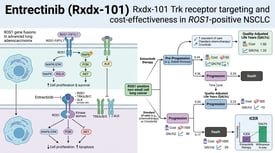
ROS1 is a receptor tyrosine kinase (RTK) of the insulin receptor family, characterized by its large extracellular domain and a highly conserved kinase domain. While its physiological role in humans remains somewhat obscure, chromosomal rearrangements involving the ROS1 gene lead to the expression of constitutively active fusion proteins (e.g., CD74-ROS1, SLC34A2-ROS1). These fusions act as potent oncogenic drivers by activating downstream signaling pathways such as MAPK/ERK, PI3K/Akt/mTOR, and JAK/STAT3, which promote uncontrolled cell proliferation and survival. ROS1 rearrangements occur in approximately 1-2% of non-small cell lung cancer (NSCLC) cases and are also found in other malignancies like glioblastoma, cholangiocarcinoma, and gastric cancer. The mechanism of action for ROS1 inhibitors involves competing with ATP for binding to the kinase domain, thereby preventing autophosphorylation and downstream signaling.
ROS1 shares significant structural homology with the Anaplastic Lymphoma Kinase (ALK), which has allowed for the repurposing of many ALK inhibitors. Crizotinib was the first-generation inhibitor to receive FDA approval for ROS1-positive NSCLC, demonstrating high response rates. However, most patients eventually develop resistance, often through secondary mutations in the ROS1 kinase domain, with the G2032R "solvent front" mutation being the most common. This has led to the development of second-generation inhibitors like Entrectinib, which is also CNS-active, and third-generation inhibitors like Repotrectinib and Taletrectinib. These newer agents are designed to overcome specific resistance mutations and provide better intracranial control, as brain metastases are frequent in ROS1-rearranged cancers.
Classifications of ROS1 inhibitors are based on their generation and their ability to inhibit specific mutant forms. Current research progress is focused on the results of pivotal trials like TRIDENT-1 (for Repotrectinib) and the exploration of combination therapies to delay the onset of resistance. One of the major challenges in treating ROS1-positive cancers is the heterogeneity of the fusion partners and the emergence of "off-target" resistance mechanisms, such as the activation of the MET or HER2 pathways. Notable research tools include patient-derived xenograft (PDX) models and liquid biopsies for monitoring clonal evolution. The safety profile of ROS1 inhibitors is generally manageable, though side effects like dizziness, dysgeusia, and peripheral neuropathy are common, particularly with agents that cross the blood-brain barrier.
As precision oncology continues to evolve, the integration of highly potent, mutation-selective ROS1 inhibitors into the first-line setting is expected to significantly extend the survival of patients harboring these genetic alterations.