Topoisomerase Inhibitors
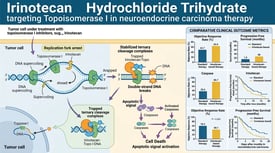
Topoisomerase inhibitors are a cornerstone of modern cancer chemotherapy, targeting the enzymes responsible for managing the topological state of DNA during essential processes such as replication, transcription, and recombination. DNA topoisomerases are classified into two main types: Type I, which create transient single-strand breaks, and Type II, which generate double-strand breaks to allow the passage of one DNA duplex through another. Topoisomerase I (Topo I) inhibitors, such as the camptothecin derivatives Irinotecan and Topotecan, work by binding to and stabilizing the transient 'cleavable complex' formed between the enzyme and DNA. This prevents the religation of the DNA strand, leading to the formation of permanent double-strand breaks when the replication fork collides with the stabilized complex, ultimately triggering apoptosis. These agents are widely used in the treatment of colorectal, lung, and ovarian cancers.
Topoisomerase II (Topo II) inhibitors are further divided into catalytic inhibitors and topoisomerase poisons. Poisons, such as the anthracyclines (e.g., Doxorubicin) and epipodophyllotoxins (e.g., Etoposide), also stabilize the cleavable complex, but in this case, it involves double-strand breaks. Catalytic inhibitors, like ICRF-187, interfere with the enzyme's activity without inducing DNA breaks. Topo II inhibitors are essential for treating a broad spectrum of malignancies, including leukemias, lymphomas, and various solid tumors. Despite their high efficacy, topoisomerase inhibitors are associated with significant toxicities.
Anthracyclines, for instance, are notorious for dose-limiting cardiotoxicity, which is thought to be mediated by the generation of reactive oxygen species and the inhibition of Topo II-beta in cardiomyocytes. Additionally, the use of Topo II poisons has been linked to the development of secondary malignancies, such as treatment-related acute myeloid leukemia, due to the induction of chromosomal translocations. Resistance to topoisomerase inhibitors is another major hurdle, often arising from the upregulation of efflux transporters like P-glycoprotein, mutations in the topoisomerase genes, or alterations in the DNA damage response and apoptotic pathways. Recent research progress has focused on the development of novel formulations, such as liposomal delivery systems and antibody-drug conjugates (ADCs), to improve the therapeutic index and reduce systemic toxicity. For example, the ADC Trastuzumab deruxtecan utilizes a potent Topo I inhibitor as its payload to target HER2-expressing tumors.
Furthermore, there is ongoing interest in combining topoisomerase inhibitors with other targeted therapies, such as PARP inhibitors or immune checkpoint blockers, to exploit potential synergies. As our understanding of the structural biology of topoisomerases and the cellular response to DNA damage continues to advance, the development of more selective and less toxic inhibitors remains a vital goal in oncological research, aiming to refine the use of these powerful agents in personalized medicine.