Syk Inhibitors
Spleen Tyrosine Kinase (Syk) is a non-receptor tyrosine kinase that plays a pivotal role in the signal transduction of various immune receptors, most notably the B-cell receptor (BCR) and the Fc receptors (FcRs) found on mast cells, macrophages, and neutrophils. Syk contains two N-terminal Src homology 2 (SH2) domains and a C-terminal kinase domain. Upon receptor engagement, Syk is recruited to phosphorylated immunoreceptor tyrosine-based activation motifs (ITAMs) via its SH2 domains. This recruitment leads to Syk activation through autophosphorylation and phosphorylation by Src-family kinases. Once active, Syk phosphorylates key adaptor proteins like BLNK and LAT, which in turn activate downstream effectors such as phospholipase Cγ2 (PLCγ2), PI3K, and the Ras/MAPK pathway. These events culminate in calcium mobilization, cytoskeletal reorganization, and the activation of transcription factors like NF-κB, which are essential for immune cell activation, proliferation, and the release of inflammatory mediators.
Given its central role in immune signaling, Syk has become a major therapeutic target for autoimmune diseases and B-cell malignancies. In autoimmune conditions like rheumatoid arthritis (RA) and immune thrombocytopenia (ITP), Syk inhibition aims to dampen the aberrant activation of B cells and the FcR-mediated destruction of platelets or joint tissues. In oncology, particularly in B-cell lymphomas such as diffuse large B-cell lymphoma (DLBCL) and chronic lymphocytic leukemia (CLL), many tumors are addicted to tonic or chronic BCR signaling, making them sensitive to Syk blockade. Syk inhibitors are generally classified as ATP-competitive small molecules. Fostamatinib was the first-in-class Syk inhibitor to receive FDA approval, specifically for the treatment of chronic ITP. It is a prodrug that is rapidly converted to its active metabolite, R406.
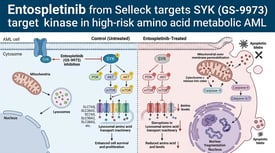
Current research progress is focused on improving the selectivity of Syk inhibitors to minimize off-target effects. Early inhibitors like fostamatinib showed some cross-reactivity with other kinases (e.g., VEGFR and JAK), which contributed to side effects such as hypertension and gastrointestinal distress. Newer, more selective agents like entospletinib, lanraplenib, and takinib are currently in various stages of clinical and preclinical development. These second-generation inhibitors aim to provide a better therapeutic window. Another area of active investigation is the role of Syk in acute myeloid leukemia (AML), where it has been identified as a critical mediator of survival signals in FLT3-ITD mutated cells. Challenges in the field include the potential for immunosuppression and the development of resistance through bypass signaling or mutations in the Syk kinase domain.
Combination therapies, particularly with BTK inhibitors or BCL-2 inhibitors, are being explored in hematological malignancies to achieve synergistic effects and overcome resistance. This includes studying the impact of Syk inhibition on the tumor microenvironment and its ability to modulate the activity of tumor-associated macrophages and other myeloid cells that support tumor growth.