Entospletinib from Selleck targets SYK kinase in high-risk amino acid metabolic AML
Copy code to add this image to your page
Acute myeloid leukemia (AML) presents marked clonal heterogeneity and metabolic plasticity, complicating standardized induction chemotherapy regimes. Recent transcriptomic analyses demonstrate that metabolic rewiring, specifically within amino acid (AA) pathways, directly correlates with clinical outcomes and treatment resistance. A robust 6-gene prognostic signature—comprising TRH, HNMT, TFEB, SDSL, SLC43A2, and SFXN3—effectively stratifies AML patients into high-risk and low-risk risk cohorts. Each component of this signature occupies a functional node in cellular metabolism: SLC43A2 governs L-type amino acid transport across the plasma membrane; TFEB regulates lysosomal biogenesis and autophagic flux; SFXN3 mediates mitochondrial metabolite transport; SDSL handles serine dehydration; HNMT drives histamine methylation; and TRH modulates neuropeptide signaling networks. Patients harboring the high-risk signature exhibit significantly compromised overall survival metrics across multiple independent patient cohorts.
Microenvironmental profiling reveals that high-risk AML marrow niches adopt an immune-active ("hot") phenotype. This state features elevated baseline infiltration of cytotoxic lymphocytes alongside enhanced expression of inhibitory immune checkpoints. Paradoxically, this inflamed architecture coincides with intense metabolic competition, where blast cells scale up amino acid catabolism to sustain rapid biomass accumulation and maintain intracellular redox balance. Heightened flux through metabolic nodes creates distinct targetable dependencies. Computational drug sensitivity screening across stratified patient cohorts identified enhanced sensitivity to specific targeted kinase inhibitors in high-risk patients. Prominent among these sensitive candidates is Entospletinib (GS-9973), an ATP-competitive, highly selective Spleen Tyrosine Kinase (SYK) inhibitor. High-risk blast populations demonstrated marked responsiveness to entospletinib, alongside the RAF inhibitor sorafenib and the MEK inhibitor selumetinib.
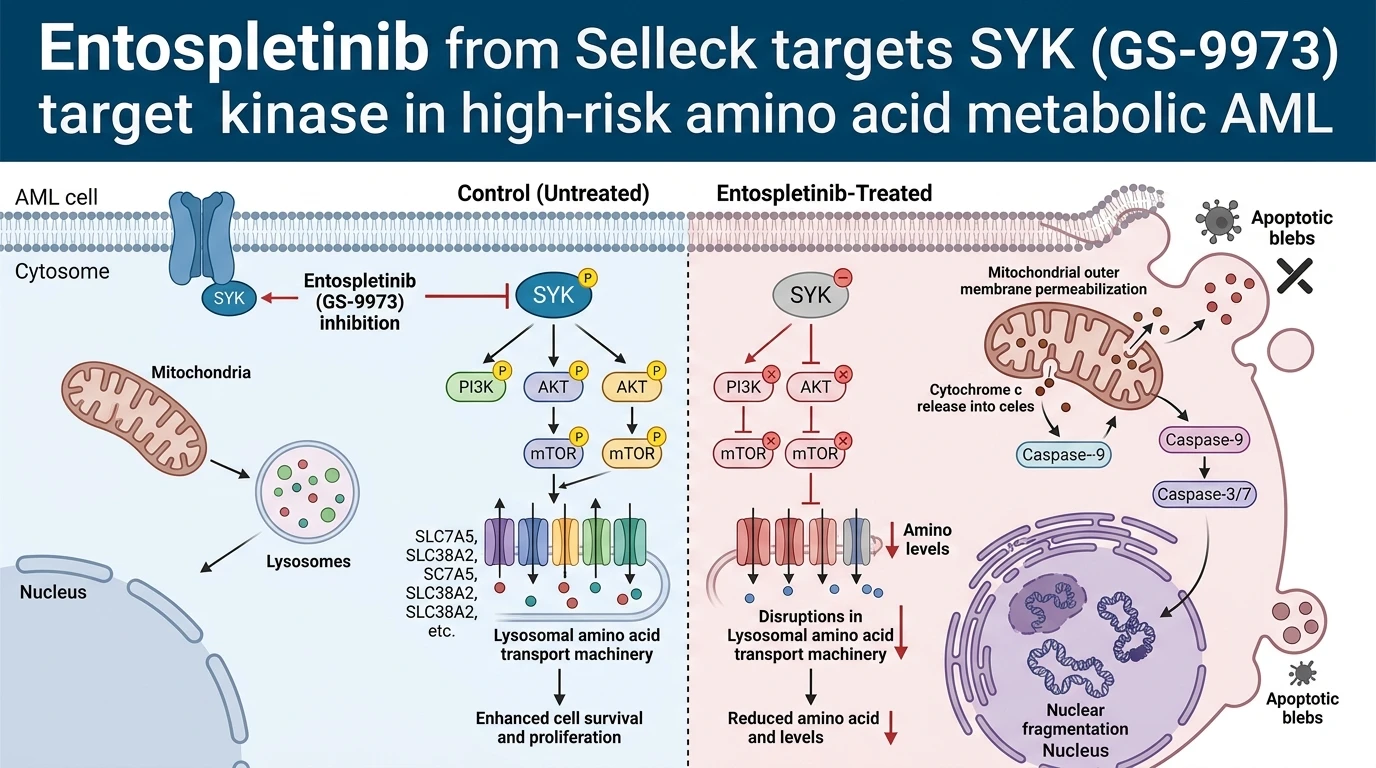
SYK acts as a critical signal transducer in hematopoietic lineage cells. In AML, aberrant SYK activation sustains anti-apoptotic cascades, drives tonic signaling downstream of surface integrins and lectins, and promotes survival within the protective bone marrow microenvironment. Pharmacological blockade using Entospletinib from Selleck effectively disrupts SYK autophosphorylation at Tyr525/526, neutralizing downstream activation of AKT and ERK phosphorylation cascades under experimental conditions. In high-risk AML cells burdened by intense amino acid metabolic strain, SYK inhibition selectively abrogates survival signals, triggering mitochondrial apoptosis pathways. Utilizing defined molecular tools such as Entospletinib from Selleck allows researchers to dissect the precise synthetic lethal relationships existing between amino acid transport machinery and non-receptor tyrosine kinase survival signaling.
Pharmacological Evaluation and Targeted Vulnerabilities in High-Risk AML
Copy code to add this image to your page
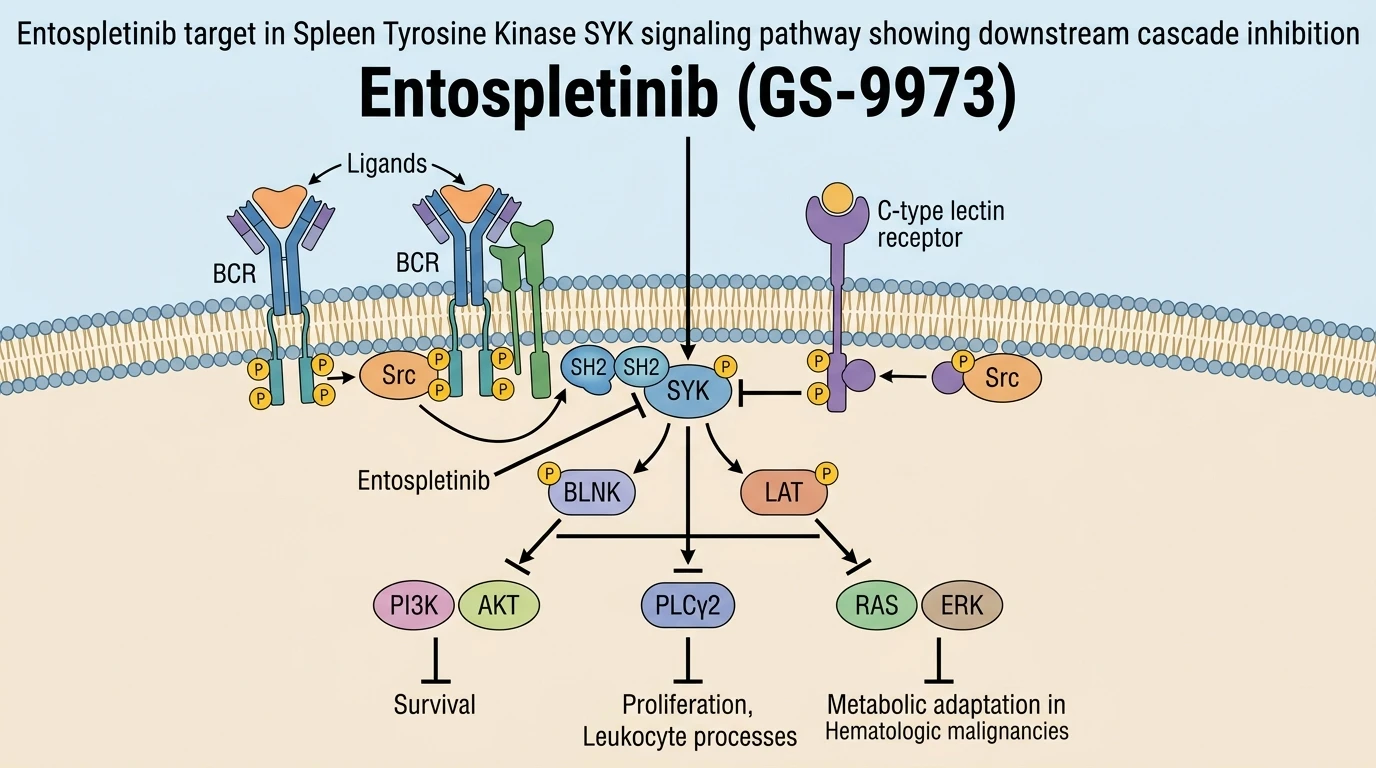
Entospletinib (GS-9973) selectively inhibits Spleen Tyrosine Kinase (SYK) by competing for its ATP-binding pocket, blocking autophosphorylation and downstream effector activation. In high-risk AML characterized by a 6-gene amino acid metabolic signature (TRH, HNMT, TFEB, SDSL, SLC43A2, SFXN3), SYK signaling supports blast survival and microenvironmental cross-talk. Pharmacological blockade with Entospletinib disrupts downstream PI3K/AKT and MAPK cascades, selectively inducing apoptosis in metabolically active high-risk AML cells.
Characterization of the Six-Gene Metabolic Prognostic Signature
Transcriptomic stratification establishes six amino acid metabolic genes as independent predictors of AML survival. Expression levels of SLC43A2 and TFEB correlate with accelerated nutrient uptake and lysosomal turnover in blast populations. Cellular baseline demand for amino acid substrates increases substantially in high-risk samples. Short-term metabolic assays confirm elevated leucine uptake in these cells. Downstream signaling reliance shifts accordingly. High-risk blasts exhibit heightened sensitivity to nutrient deprivation. This metabolic profile creates clear targetable vulnerabilities.
Targeted SYK Blockade Induces Selective Cytotoxicity
Pharmacological profiling using Entospletinib from Selleck confirms selective inhibition of SYK autophosphorylation in patient-derived AML models. Cell viability assays demonstrate significantly reduced IC50 values in high-risk primary blasts compared to low-risk controls. Downstream AKT phosphorylation decreased within thirty minutes of compound exposure. Apoptotic markers, including cleaved caspase-3, rose markedly under tested assay conditions. The combination of amino acid metabolic stress and SYK inhibition impairs blast maintenance without compromising non-malignant progenitor viability.