GSK-516, Cardarine PPAR agonist GW501516 Induces Metabolic Remodeling in Dystrophic Muscle
Copy code to add this image to your page
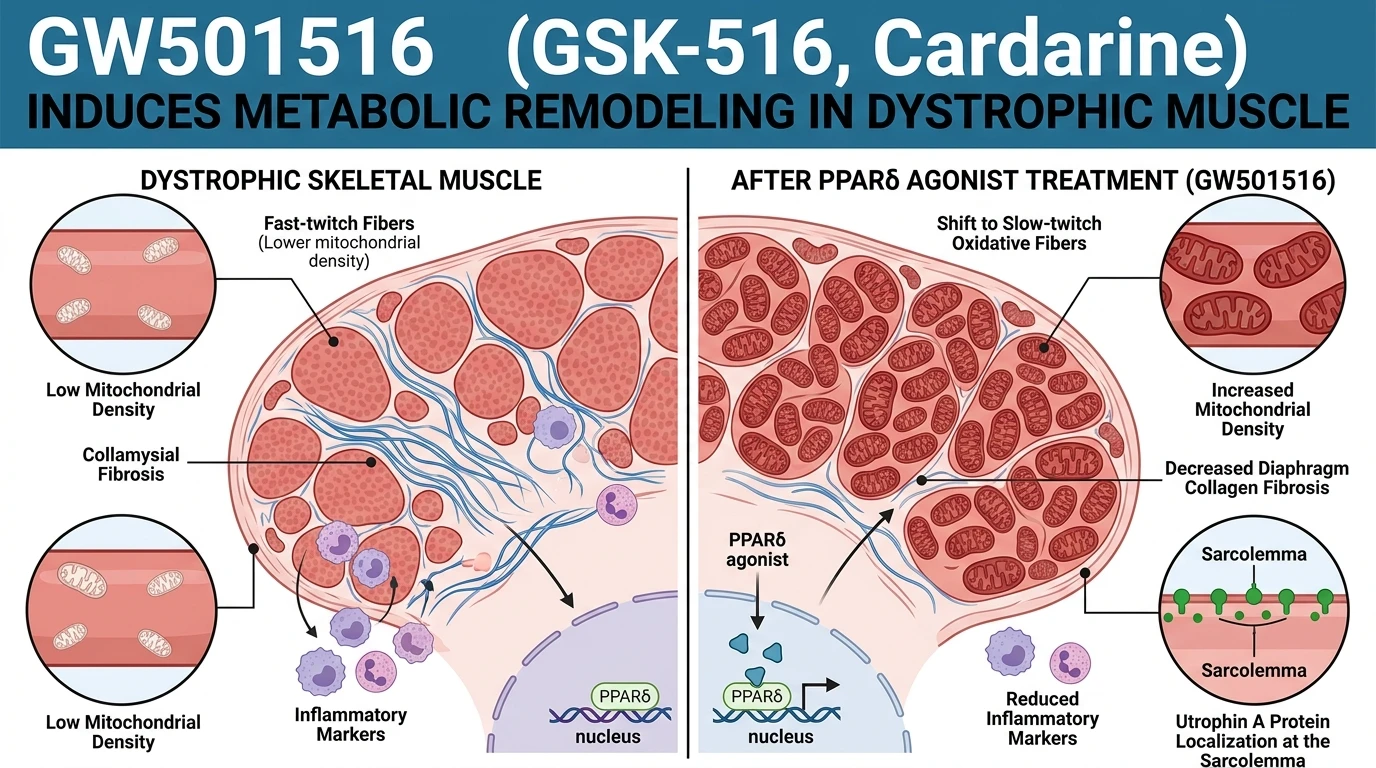
Targeting metabolic homeostasis in dystrophin-deficient skeletal muscle represents a strategic alternative to direct genetic rescue. The synthetic compound GW501516 (GSK-516, Cardarine) functions as a potent and selective agonist of peroxisome proliferator-activated receptor delta (PPARδ). Receptor activation initiates transcriptional programs that drive mitochondrial biogenesis and mimic physiological endurance exercise signaling. In dystrophic mouse models—specifically the mdx strain—pathological progression is driven by sarcolemmal fragility, chronic calcium influx, and impaired oxidative metabolism. Administering a GSK-516, Cardarine PPAR agonist systematically recalibrates muscle energetics, promoting metabolic adaptation that partially mitigates the primary structural defects of dystrophin deficiency.
Experimental protocols utilizing a 4-week daily regimen in mdx mice demonstrate significant improvements in systemic and functional parameters. Morphometric evaluations reveal increases in overall muscle mass accompanied by a measurable reduction in visceral adiposity. Functional performance assays confirm enhanced forelimb and hindlimb grip strength alongside elevated spontaneous locomotor activity. At the subcellular level, GW501516 stimulates transcriptional upregulation of peroxisome proliferator-activated receptor gamma coactivator 1-alpha (PGC-1α). Elevated PGC-1α levels drive the biogenesis of functional mitochondria, marked by increased cytochrome c protein expression and augmented nicotinamide adenine dinucleotide (NADH) dehydrogenase activity. This biochemical shift induces a transition from glycolytic fast-twitch fibers toward fatigue-resistant oxidative slow-twitch fibers.
Beyond metabolic remodeling, GW501516 exerts pronounced anti-dystrophic actions through structural and inflammatory modulation. Treatment upregulates utrophin A, a structural paralog of dystrophin capable of compensating for its absence at the sarcolemma. Sarcolemmal stabilization correlates with reductions in ongoing muscle degeneration markers, including down-regulated embryonic myosin heavy chain (dMHC), MyoD, microRNA-31 (miRNA-31), and forkhead box O1 (FoXO1). Intracellular accumulation of immunoglobulin M (IgM)—an indicator of sarcolemmal permeability—is markedly suppressed. In severe dystrophic phenotypes affecting the diaphragm, GW501516 attenuates fibrotic tissue deposition and suppresses local pro-inflammatory cytokine expression. These findings indicate that ligand-mediated PPARδ activation alters pathological progression in dystrophin-deficient muscle tissue under controlled experimental conditions.
Pharmacological Characterization of PPARδ Activation in Mdx Mice
Copy code to add this image to your page
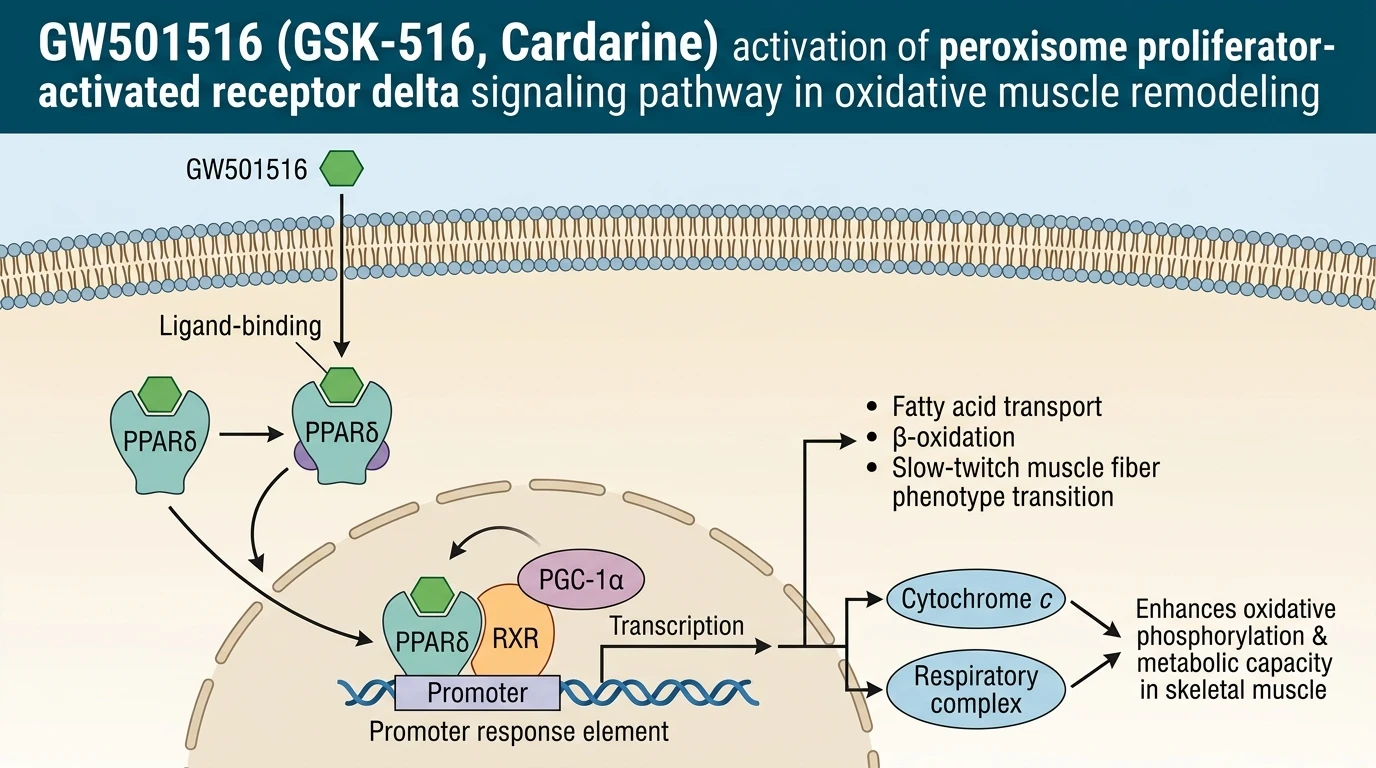
GW501516 acts as a selective PPARδ agonist, heterodimerizing with RXR to recruit PGC-1α and drive transcriptomic programs for mitochondrial biogenesis and slow-oxidative fiber conversion. This activity increases NADH activity and cytochrome c expression while upregulating utrophin A. In dystrophic mdx mice, these metabolic adaptations reduce sarcolemmal fragility, decrease degeneration markers (dMHC, MyoD, miRNA-31, FoXO1, IgM), and suppress inflammatory diaphragmatic fibrosis.
Upregulation of Utrophin A and Phenotypic Fiber Switching
In dystrophin-deficient skeletal muscle, sarcolemmal instability causes recurrent membrane micro-tears. GW501516 treatment drives transcriptional activation of utrophin A. Utrophin A localizes to the extrasynaptic sarcolemma, partially restoring dystrophin-glycoprotein complex functionality. Simultaneously, PPARδ engagement coordinates a shift from fast-glycolytic toward slow-oxidative muscle fiber phenotypes. This transition lowers mechanical stress during contraction. Consequently, markers of ongoing muscle damage drop significantly. Expression levels of embryonic myosin heavy chain (dMHC) and MyoD decrease following four weeks of ligand administration. MicroRNA-31 and FoXO1 signaling nodes also show marked suppression within treated mdx tissues. Intracellular IgM accumulation falls, confirming improved sarcolemmal structural integrity.
Attenuation of Diaphragmatic Fibrosis and Inflammatory Cascades
Diaphragmatic pathology in mdx rodents severely compromises respiratory function through progressive fibrotic replacement. Daily dosing with a GSK-516, Cardarine PPAR agonist attenuates connective tissue deposition within the diaphragm. Collagen infiltration decreases substantially in treated cohorts compared to vehicle controls. Reduced fibrosis correlates with suppression of localized inflammatory cascades within the interstitial space. Macrophage infiltration markers drop. Interleukin and tumor necrosis factor signaling cascades display diminished baseline activity under tested conditions. These histological shifts preserve functional tissue compliance. Consequently, respiratory muscle exhaustion is delayed during prolonged mechanical workload.
Enhancement of Mitochondrial Capacity and Oxidative Metabolism
Chronic metabolic failure compromises dystrophic muscle contraction energy output. GW501516 addresses this energy deficit by activating the nuclear receptor PPARδ. Ligand binding recruits PGC-1α coactivator complexes to mitochondrial gene promoters. Mitochondrial density expands rapidly across skeletal muscle beds. Biochemical assays show elevated cytochrome c protein levels and increased NADH dehydrogenase activity. Total oxidative capacity rises. Systemic parameters reflect this metabolic transition: treated mdx mice exhibit reduced abdominal fat mass alongside increases in total movement and grip strength. These findings confirm that metabolic reprogramming mitigates downstream dystrophic pathology in rodent models.