AS1517499 STAT inhibitor Regulates STAT6 Phosphorylation and NIS Expression in Graves Disease
Copy code to add this image to your page
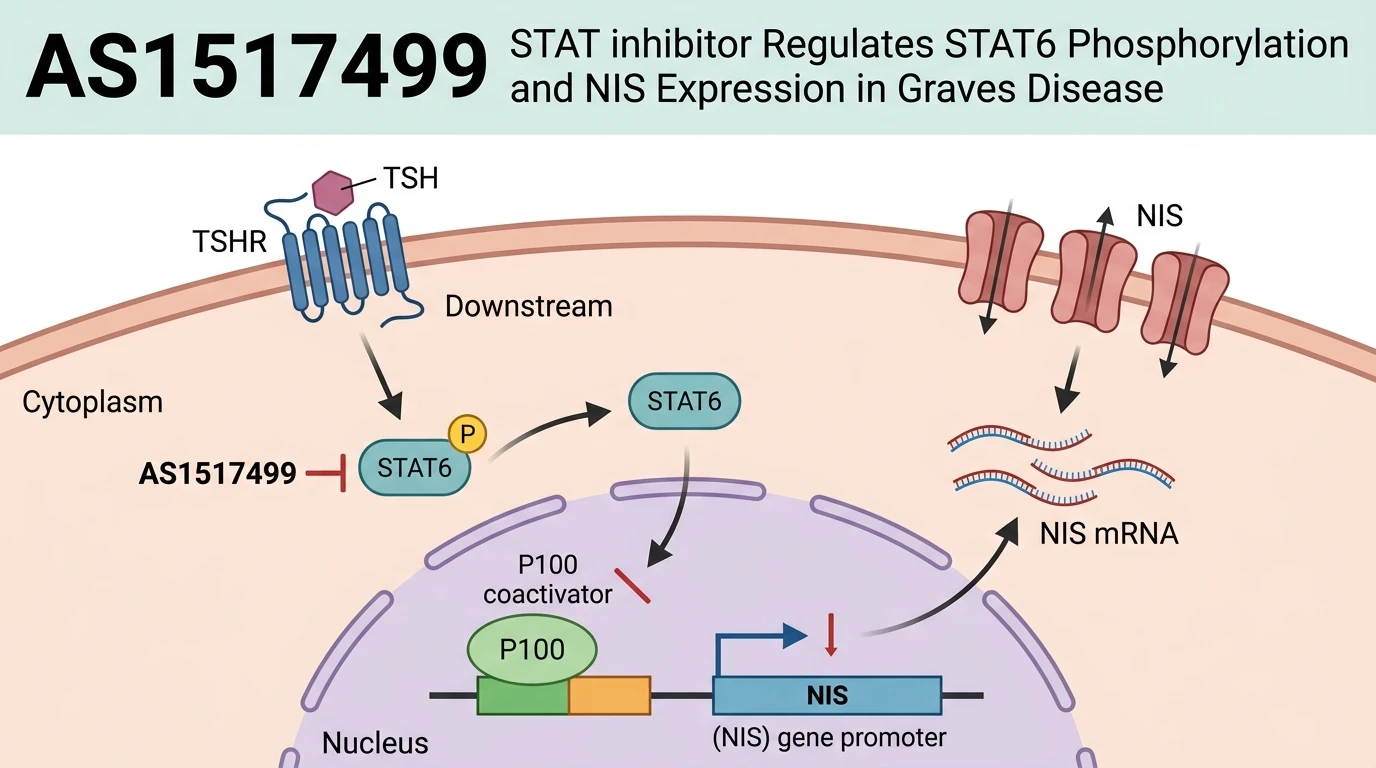
In Graves' disease (GD), pathogenic thyroid-stimulating autoantibodies (TSAbs/TRAb) target the thyroid-stimulating hormone (TSH) receptor, initiating downstream signal transduction cascades that drive autoimmune hyperthyroidism. A central downstream mediator in this pathogenic circuit is Signal Transducer and Activator of Transcription 6 (STAT6). Upon TSH receptor stimulation by autoantibodies, STAT6 undergoes rapid tyrosine phosphorylation, enabling its homodimerization and subsequent import into the nuclear compartment. Inside the nucleus, STAT6 binds specific promoter motifs of the sodium/iodide symporter (NIS), a key transmembrane glycoprotein responsible for active iodide transport in thyroid follicular epithelial cells.
To define the transcriptional machinery governing this response, promoter-reporter assays demonstrate that STAT6 operates in physical coordination with transcriptional coactivator P100. The interaction between phosphorylated STAT6 and P100 markedly enhances NIS gene promoter transactivation. This targeted transcriptional upregulation drives elevated NIS mRNA synthesis and subsequent protein expression, escalating intracellular iodide uptake and precipitating hyperthyroid hormone biosynthesis.
Targeting this hyperactive transcriptional axis offers a rational strategy to modulate thyroid dysregulation. The small molecule AS1517499 functions as a potent, selective STAT6 phosphorylation inhibitor. In human thyroid follicular epithelial cells (Nthy-ori 3-1), application of AS1517499 interrupts autoantibody-stimulated signaling pathways. Exposure to the compound prevents STAT6 phosphorylation at sub-micromolar concentrations. Consequently, STAT6 blockade suppresses both TSH-stimulated and TRAb-induced NIS gene expression at the transcript and protein levels.
Quantitative real-time polymerase chain reaction and Western blot analyses confirm robust reductions in NIS expression following treatment. Luciferase reporter assays confirm that blocking STAT6 phosphorylation directly abolishes P100-mediated transcriptional transactivation of the NIS promoter. Under controlled in vitro conditions, this targeted intervention normalizes the expression of the iodide transport apparatus without altering basal cellular viability. These empirical findings demonstrate that pharmacological inhibition via the AS1517499 STAT inhibitor attenuates pathological iodide symporter expression, establishing STAT6 blockade as a viable therapeutic strategy for Graves' disease.
Pharmacological Evaluation of STAT6 Blockade in Follicular Epithelium
Copy code to add this image to your page
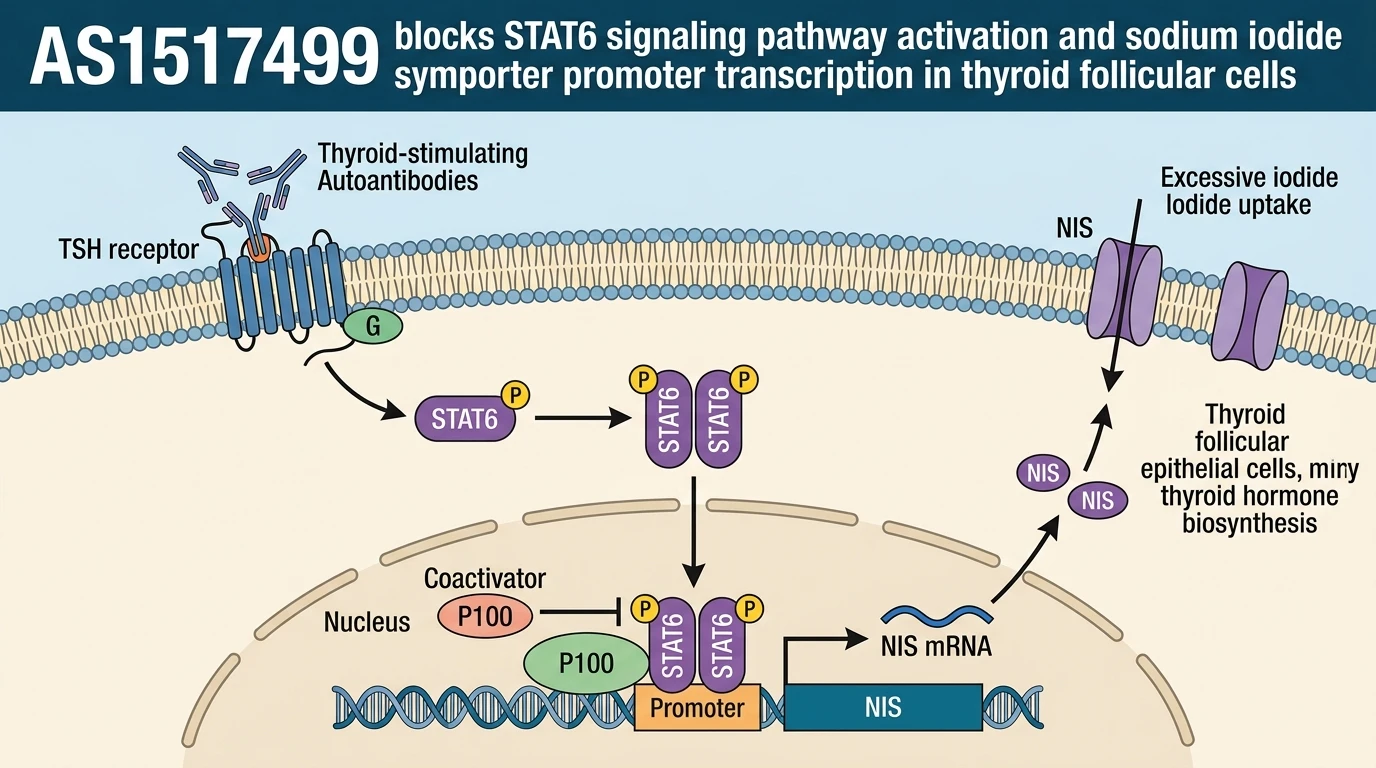
AS1517499 selectively inhibits STAT6 phosphorylation downstream of thyroid-stimulating autoantibody receptor engagement. By preventing STAT6 activation and its subsequent nuclear interaction with coactivator P100, the molecule suppresses transcription from the sodium/iodide symporter (NIS) promoter. Consequently, NIS mRNA and protein levels decline in human thyroid follicular epithelial cells, attenuating pathologic thyroid hormone biosynthesis in Graves' disease models.
STAT6 Phosphorylation Drives NIS Promoter Transactivation via P100 Coactivation
In human thyroid follicular epithelial cells (Nthy-ori 3-1), thyroid-stimulating autoantibodies (TRAb) initiate intracellular signaling through TSH receptor engagement. This binding event triggers STAT6 phosphorylation at key tyrosine residues. Phosphorylated STAT6 dimerizes prior to nuclear translocation. Nuclear STAT6 then binds directly to response elements within the NIS promoter region. Luciferase reporter assays confirm robust promoter activation under these conditions. Coactivator P100 physically associates with STAT6 to amplify transcriptional activity. This synergistic interaction significantly elevates NIS transcription levels. Enhanced symporter expression drives excessive iodide accumulation. Pharmacological suppression using the AS1517499 STAT inhibitor abolishes this promoter activity in vitro. The disruption prevents P100 coactivation and halts downstream NIS mRNA synthesis.
Selective Inhibition Downregulates Symporter Expression in Follicular Cells
Evaluating the pharmacodynamic response in Nthy-ori 3-1 cultures revealed a dose-dependent reduction in NIS expression following AS1517499 treatment. Cells stimulated with either recombinant TSH or purified Graves' patient TRAb exhibited elevated NIS protein levels. Application of the STAT6 inhibitor restored baseline protein expression profiles. Western blot quantification confirmed a significant reduction in membrane-bound NIS protein within 24 hours of administration. Quantitative PCR corroborated these findings, demonstrating suppressed NIS transcript accumulation. Cellular viability assays confirmed that target suppression occurred without compromising cell membrane integrity or inducing apoptosis. Within this cell-based disease model, STAT6 blockade effectively decouples TSH receptor stimulation from downstream iodide transport machinery.