STAT5-IN-1 STAT target inhibition blocks cryptotanshinone-mediated FOXP3 expression and neuroprotective Treg expansion
Copy code to add this image to your page
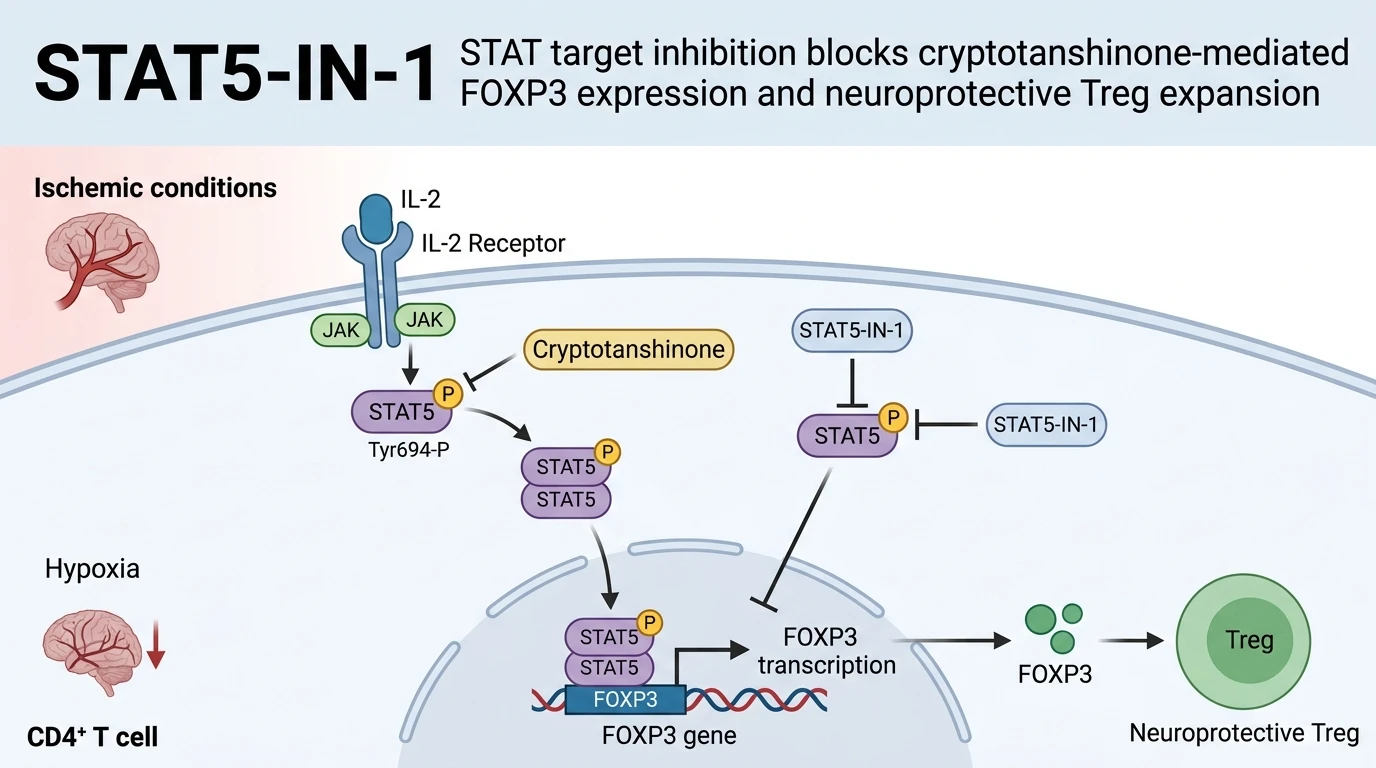
Signal Transducer and Activator of Transcription 5 (STAT5) operates as a central downstream signaling hub following cytokine receptor stimulation in CD4+ T lymphocytes. Phosphorylation at the critical Tyr694 residue induces STAT5 homodimerization, nuclear translocation, and direct recruitment to promoter regions of the FOXP3 gene. Small molecule inhibition using STAT5-IN-1 permits targeted pharmacodynamic evaluation of this pathway without non-specific off-target disruption of parallel MAP kinase or NF-κB cascades.
Cryptotanshinone (CT), a major lipophilic diterpenoid isolated from Salvia miltiorrhiza, exerts post-ischemic tissue protection by modulating neuroinflammatory responses. Deciphering the exact molecular target of CT relies on functional inhibition studies. Structural and mechanistic data from small molecule bioactivity repositories highlight the necessity of verified target probes. In primary CD4+ T lymphocytes harvested from middle cerebral artery occlusion (MCAO) rat models, application of STAT5-IN-1 directly inhibits STAT5 phosphorylation at Tyr694. This target engagement blocks STAT5 binding to the FOXP3 promoter, preventing naive T cell differentiation into functional CD4+CD25+FOXP3+ regulatory T cells (Tregs).
In acute ischemic brain injury, endogenous Treg expansion serves a key immunomodulatory function by downregulating cytotoxic pro-inflammatory cytokines, including IL-17 and TNF-alpha, in the cerebral ischemic penumbra. Selective blockade using STAT5-IN-1 demonstrates that STAT5 activation represents an obligate requirement for CT-mediated Treg generation and subsequent neuroprotection. Inhibiting STAT5 phosphorylation abolishes the neuroprotective capacity of CT in vivo, establishing STAT5 Tyr694 phosphorylation as a functional pathway node governing post-stroke anti-inflammatory response.
Pharmacological Interrogation of STAT5 Signaling in Focal Ischemia
Copy code to add this image to your page
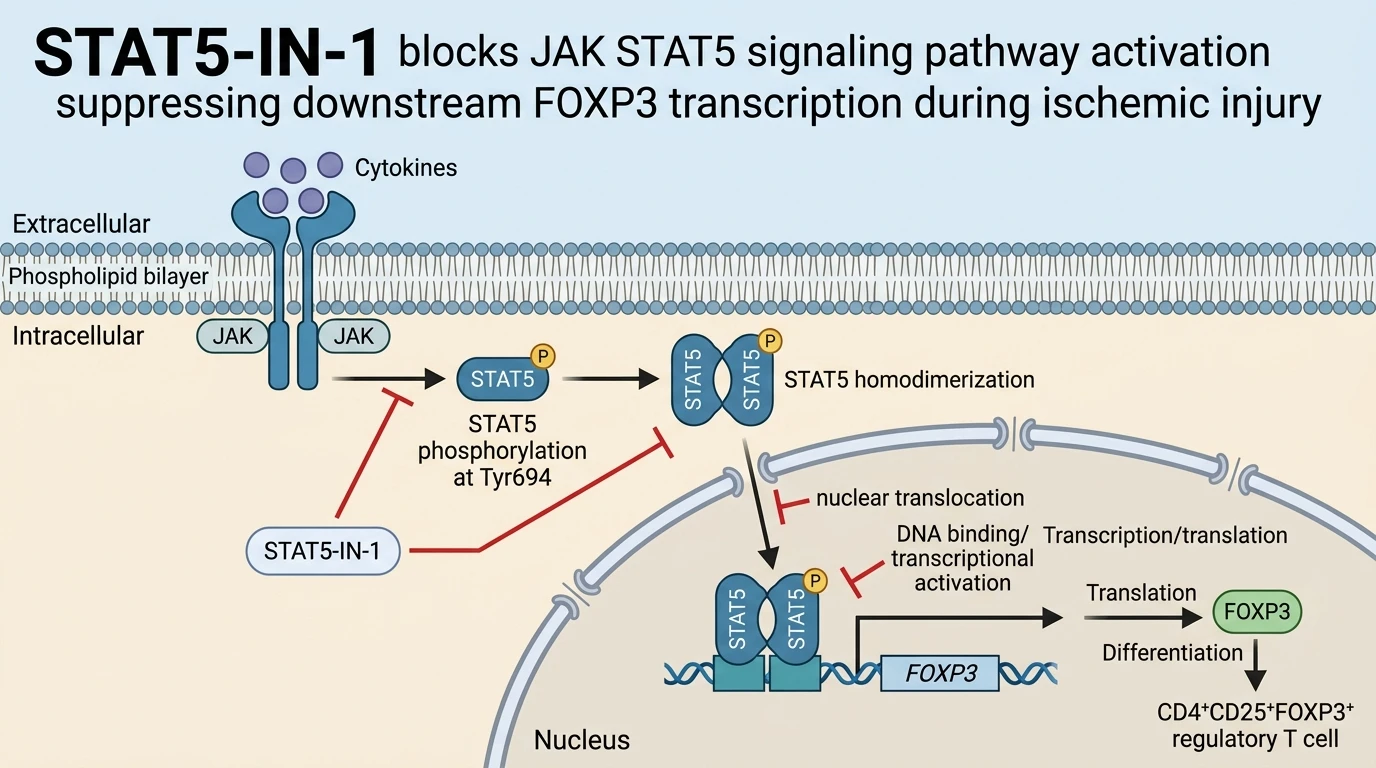
STAT5-IN-1 specifically inhibits STAT5 phosphorylation at residue Tyr694 in CD4+ T lymphocytes. By attenuating STAT5 activation, the compound prevents nuclear translocation of STAT5 homodimers and blocks transcription of the FOXP3 gene. In middle cerebral artery occlusion models, this target engagement abolishes cryptotanshinone-induced differentiation of naive CD4+ T cells into CD4+CD25+FOXP3+ regulatory T cells, establishing STAT5 phosphorylation as a crucial obligate pathway for anti-inflammatory neuroprotection.
Inhibition of Tyr694 Phosphorylation Disrupts Transcriptional Cascades
Direct target engagement was established in CD4+ T lymphocytes cultured from MCAO rat models. STAT5-IN-1 suppressed Tyr694 phosphorylation rapidly. Western blot quantification confirmed a dose-dependent reduction in phosphorylated STAT5 levels following treatment. Phosphorylation declined significantly within thirty minutes of administration. In contrast, total STAT5 protein abundance remained unchanged throughout the assay period. Using the probe compound STAT5-IN-1 STAT signaling was systematically dissected across multiple dose ranges. Interruption of Tyr694 phosphorylation prevented STAT5 protein dimerization; consequently, nuclear translocation of active transcription factors ceased. These biochemical observations confirm that STAT5-IN-1 functions as a potent pharmacological tool for target validation in ischemic stroke research.
Suppression of FOXP3 Expression Prevents Regulatory T Cell Expansion
The biological consequence of STAT5 inhibition directly impacts regulatory T cell lineage commitment. Flow cytometry analysis revealed a marked contraction in CD4+CD25+FOXP3+ T cell populations following inhibitor application. Primary naive T lymphocytes failed to acquire regulatory marker phenotypes. FOXP3 mRNA transcript abundance dropped significantly within tested cellular assays. Furthermore, cryptotanshinone administration failed to rescue FOXP3 gene transcription in the presence of the inhibitor. Cellular differentiation stalled completely. Application of STAT5-IN-1 STAT blockade establishes that FOXP3 activation depends obligately on intact STAT5 Tyr694 phosphorylation. Without functional STAT5 binding to the promoter, immunosuppressive lineage conversion remains inaccessible.
Abolition of Cryptotanshinone Neuroprotection in MCAO Models
Animal model experiments demonstrated the functional necessity of STAT5 signaling during cerebral ischemia recovery. Neurological deficit scores worsened when Treg expansion was suppressed. Infarct volume measurements expanded significantly following STAT5 inhibitor administration in MCAO rats. Cerebral tissue damage matched untreated ischemia controls. The protective anti-inflammatory effects induced by cryptotanshinone were completely negated under these experimental conditions. Pro-inflammatory cytokine secretion increased within the ischemic hemisphere. Brain edema expanded correspondingly. These pharmacodynamic outcomes demonstrate that STAT5 phosphorylation constitutes an obligatory node for mediating cryptotanshinone neuroprotection in vivo.