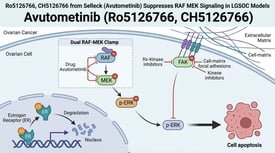
MEK Inhibitors
The Mitogen-Activated Protein Kinase (MAPK) signaling pathway is a fundamental regulator of cellular processes including proliferation, differentiation, and survival. At the core of this cascade are the MEK1 and MEK2 (Mitogen-activated protein kinase kinase) enzymes, which are dual-specificity kinases responsible for phosphorylating and activating the extracellular signal-regulated kinases (ERK1/2). MEK occupies a unique position as the sole known activator of ERK, making it a highly attractive bottleneck for therapeutic intervention in cancers driven by upstream mutations in the RAS or RAF genes. The mechanism of action for most clinical-grade MEK inhibitors is distinct; they are typically non-ATP-competitive, allosteric inhibitors. These molecules bind to a unique pocket adjacent to the ATP-binding site, inducing a conformational change that locks the enzyme in an inactive state and prevents its phosphorylation by upstream RAF kinases. This high degree of selectivity reduces off-target effects compared to traditional ATP-competitive kinase inhibitors.
Clinically, MEK inhibitors have revolutionized the treatment of BRAF-mutant melanoma. Drugs such as trametinib, cobimetinib, and binimetinib are FDA-approved, often used in combination with BRAF inhibitors to delay the onset of acquired resistance and reduce the paradoxical activation of the MAPK pathway seen with RAF inhibitor monotherapy. Beyond melanoma, selumetinib has gained approval for pediatric patients with neurofibromatosis type 1 (NF1) who develop symptomatic, inoperable plexiform neurofibromas, marking a significant milestone in treating genetic disorders of the Ras pathway. Research is also expanding into non-small cell lung cancer and colorectal cancer, although efficacy in the latter has been limited by rapid feedback reactivation. The classification of MEK inhibitors generally follows their developmental generation and binding kinetics. First-generation compounds like CI-1040 paved the way but suffered from poor bioavailability, leading to the second-generation allosteric inhibitors that dominate the current clinical landscape.
Despite their success, resistance remains a formidable challenge. Mechanisms of resistance include MEK1/2 mutations that disrupt allosteric binding, amplification of the BRAF oncogene, or the activation of bypass pathways such as the PI3K/AKT/mTOR axis. To combat this, current research focuses on vertical pathway inhibition or horizontal inhibition targeting parallel survival pathways. Furthermore, the toxicity profile of MEK inhibitors, which includes skin rash, gastrointestinal issues, and rare but serious retinal pigment epithelial detachments, requires careful clinical management. Ongoing trials are investigating intermittent dosing schedules and novel third-generation inhibitors designed to overcome specific resistance mutations, ensuring that MEK remains a central pillar of precision oncology and targeted molecular therapy. The integration of MEK inhibitors into immunotherapy regimens is also a burgeoning area of study, as MAPK signaling is known to influence the tumor immune microenvironment and the expression of programmed death-ligand 1 (PD-L1), suggesting that these inhibitors may enhance the efficacy of checkpoint blockade in specific genetic contexts.