Secretase Inhibitors
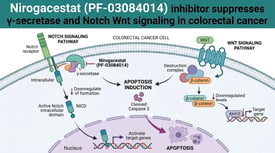
Secretases are a group of proteolytic enzymes responsible for the intramembrane cleavage of various transmembrane proteins, most notably the amyloid precursor protein (APP). The three main types are alpha, beta (BACE1), and gamma-Secretase. In the amyloidogenic pathway, BACE1 first cleaves APP to release a soluble fragment, followed by gamma-Secretase cleavage within the transmembrane domain, which produces the amyloid-beta (Abeta) peptides that aggregate into plaques, a hallmark of Alzheimer’s disease (AD). Gamma-secretase is a multi-subunit protease complex consisting of presenilin, nicastrin, APH-1, and PEN-2. Beyond APP, gamma-secretase also cleaves other critical substrates, including the Notch receptor, which is vital for cell fate determination and immune function.
Consequently, secretase inhibitors have been a major focus of research for treating AD and certain types of cancer, such as Notch-driven T-cell acute lymphoblastic leukemia (T-ALL). The history of secretase inhibitors is marked by significant clinical challenges. BACE1 inhibitors, such as verubecestat, lanabecestat, and atabecestat, were developed to reduce Abeta production at an early stage. While these compounds successfully lowered Abeta levels in the cerebrospinal fluid of patients, multiple Phase III clinical trials were halted due to a lack of cognitive improvement or, in some cases, a worsening of cognitive function and the appearance of adverse effects like skin depigmentation and weight loss. Similarly, gamma-secretase inhibitors (GSIs) like semagacestat failed in clinical trials for AD because they inhibited the cleavage of Notch, leading to severe gastrointestinal toxicity and an increased risk of skin cancer.
These failures have shifted the focus toward gamma-secretase modulators (GSMs), which alter the cleavage site to produce shorter, less toxic Abeta fragments without interfering with Notch signaling. In the oncology sector, GSIs like RO4929097 and nirogacestat are still being investigated for their ability to block Notch signaling in solid tumors and desmoid tumors, where nirogacestat recently received FDA approval. Inhibitors are classified into BACE1 inhibitors, GSIs (often categorized by their chemical structure into sulfonamides, benzodiazepines, etc.), and GSMs. The primary challenge remains the Notch problem and the timing of intervention in AD, as many researchers now believe that treating patients after symptoms appear may be too late. Current strategies include the development of highly selective BACE1 inhibitors that do not cross-react with other BACE isoforms and the use of GSIs in combination with other targeted therapies in oncology to overcome Notch-mediated drug resistance.
The development of transition-state analogs and non-peptide small molecules continues to be a primary focus for improving the pharmacokinetic profiles and safety of these agents in the clinical setting.