2-D08 2D08 SUMO inhibitor suppression of AKT signaling in resistant breast cancer
Copy code to add this image to your page
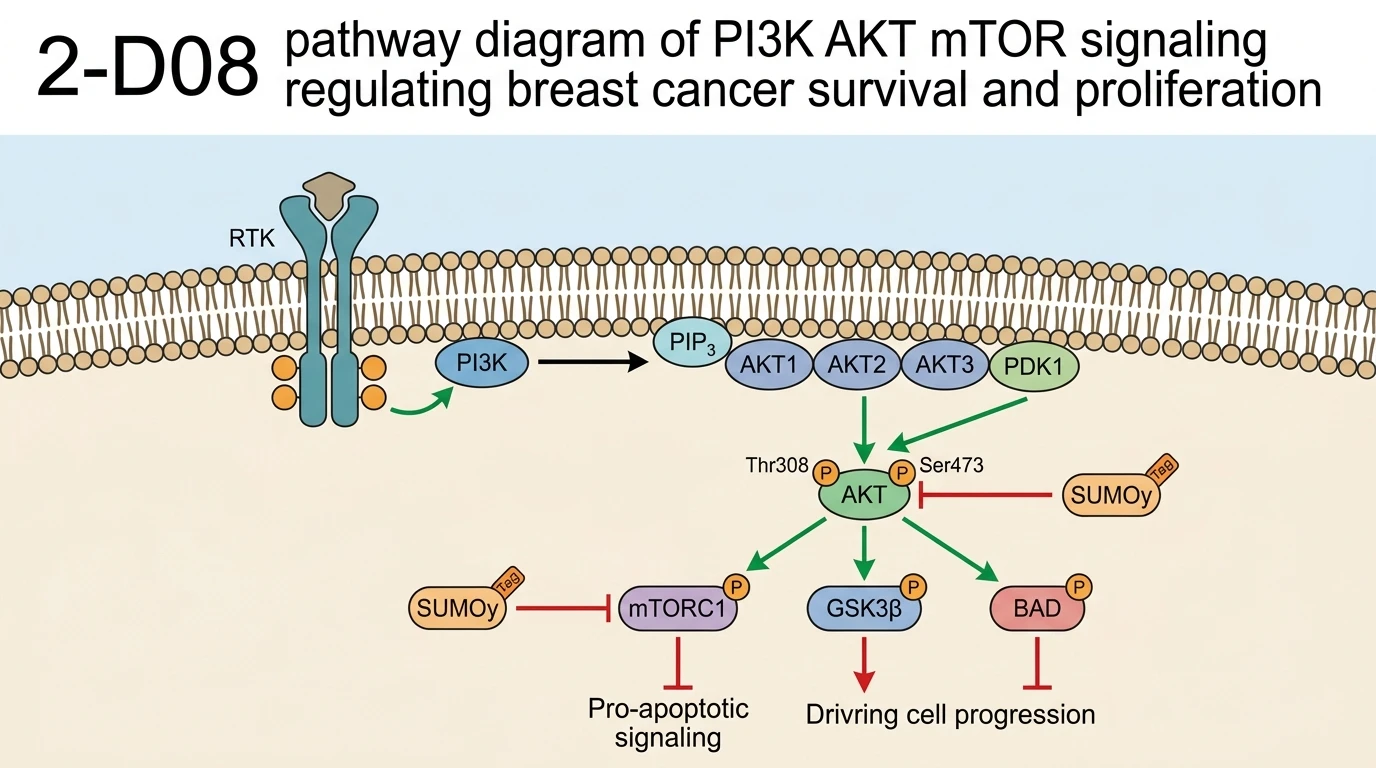
The hyperactivation of the phosphoinositide 3-kinase (PI3K)/AKT/mammalian target of rapamycin (mTOR) signaling axis represents one of the most frequent oncogenic drivers in human malignancies, particularly in hormone receptor-positive (HR+), human epidermal growth factor receptor 2-negative (HER2-) breast cancers. Within this pathway, the serine/threonine kinase AKT serves as a central nodal regulator, existing as three distinct cellular isoforms: AKT1, AKT2, and AKT3. Activation of AKT occurs through sequential phosphorylation events at Thr308 by PDK1 and Ser473 by mTORC2 following receptor tyrosine kinase engagement and PIP3 accumulation at the plasma membrane. Once activated, AKT phosphorylates a broad array of downstream substrates involved in anti-apoptotic signaling, cell cycle progression, and metabolic reprogramming.
Constitutive activation of this node frequently arises from genetic alterations, including gain-of-function mutations in PIK3CA, activating mutations in AKT1 (such as the E17K substitution), or loss-of-function lesions in the tumor suppressor phosphatase PTEN. In estrogen receptor-positive breast cancer models, persistent PI3K/AKT signaling provides a key mechanism of acquired resistance to standard endocrine therapies, including selective estrogen receptor degraders (SERDs) and aromatase inhibitors. Pharmacological intervention targeting the catalytic domain of AKT offers a therapeutic strategy to break this resistance loop and restore endocrine sensitivity.
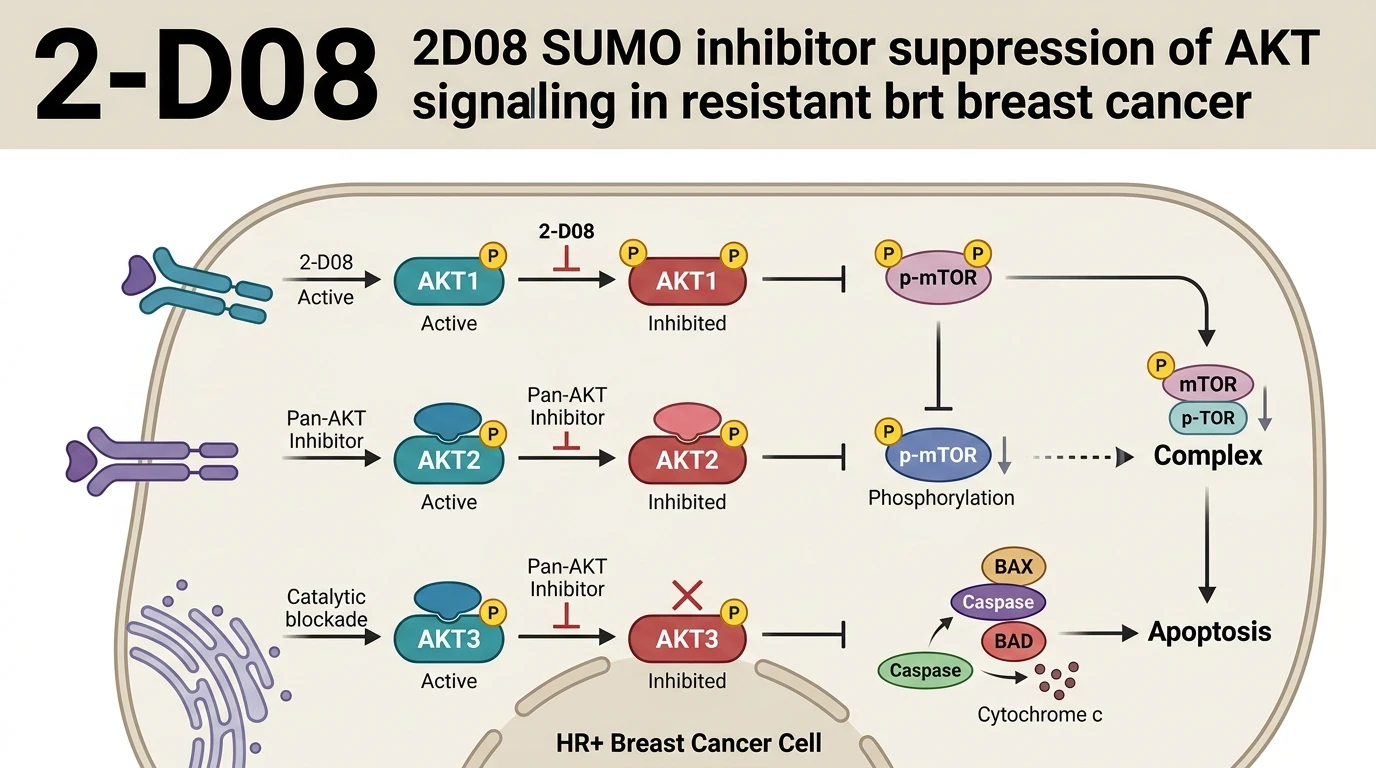
Capivasertib (AZD5363) functions as a potent, ATP-competitive, oral pan-AKT kinase inhibitor that targets AKT1, AKT2, and AKT3 isoforms with high affinity. By directly competing with ATP in the catalytic cleft of the kinase, capivasertib prevents the transphosphorylation of downstream substrates, effectively halting downstream mTORC1 activation and FOXO transcription factor inactivation. In preclinical assays, compound characterization using small molecules such as 2-D08 and the genomic sequencing datasets derived from patient-derived xenografts have helped delineate the precise interplay between post-translational regulatory mechanisms and direct kinase inhibition.
Clinical validation of pan-AKT inhibition was demonstrated in the randomized Phase III CAPItello-291 trial. This study evaluated capivasertib in combination with the SERD fulvestrant in patients with HR+/HER2- advanced breast cancer whose disease progressed during or after prior endocrine therapy. The trial met its primary endpoints, demonstrating a statistically significant and clinically meaningful improvement in progression-free survival (PFS) in both the overall study population and the biomarker-selected cohort harboring PIK3CA, AKT1, or PTEN alterations. The addition of capivasertib to fulvestrant effectively doubled median PFS in patients with pathway-altered tumors, validating the strategy of dual ER and AKT pathway inhibition in endocrine-resistant settings.
Safety evaluations across clinical trials indicate that pan-AKT inhibition induces a distinct toxicological profile manageable through standard supportive interventions and therapeutic dose modifications. Primary treatment-emergent adverse events include gastrointestinal toxicities such as diarrhea, cutaneous eruptions (rash), and metabolic alterations including transient hyperglycemia resulting from the physiological role of AKT2 in insulin-mediated glucose uptake. Understanding these pharmacodynamic and toxicodynamic parameters ensures optimized patient dosing while maintaining continuous target suppression.
Pharmacological Evaluation and Downstream Effector Suppression
Copy code to add this image to your page
Pan-AKT kinase inhibition targets AKT1, AKT2, and AKT3 isoforms to disrupt downstream signaling within the PI3K/AKT/mTOR pathway. By blocking kinase domain activation and downstream substrate phosphorylation, this pharmacological intervention suppresses cell proliferation and survival. In hormone receptor-positive breast cancer models, pan-AKT inhibition overcomes acquired endocrine resistance caused by PIK3CA, AKT1, or PTEN genomic alterations. Targeted disruption of this cascade restores apoptotic sensitivity and halts tumor growth under controlled experimental conditions.
Pan-AKT Kinase Inhibition Blocks Downstream mTOR Phosphorylation
Target engagement was verified across human breast cancer cell models. The pan-AKT inhibitor capivasertib demonstrated concentration-dependent attenuation of phosphorylation at Ser473 and Thr308. Downstream kinase targets exhibited marked reductions in activity within hours of exposure. Phosphorylation of S6 ribosomal protein and 4E-BP1 decreased sharply in treated cultures. Small molecule tool compounds, including the 2D08 SUMO inhibitor, help elucidate secondary regulatory pathways that modulate nuclear-cytoplasmic shuttling during continuous drug treatment. In cellular assays, prolonged inhibition triggered compensatory upstream receptor tyrosine kinase upregulation, though downstream mTORC1 signaling remained sustainedly suppressed.
Genomic Biomarkers Predict Response in Endocrine Resistance
Targeting AKT isoforms shows efficacy in biomarker-defined subgroups. Tumors harboring activating PIK3CA or AKT1 E17K mutations exhibited heightened sensitivity to pan-AKT blockade under tested in vitro conditions. PTEN-deficient models similarly demonstrated rapid cell cycle arrest upon exposure to therapeutic compound levels. Antiproliferative activity translated directly to tumor regression in patient-derived xenograft models bearing pathway alterations. When combined with fulvestrant, capivasertib suppressed estrogen receptor-mediated transcriptional programs alongside AKT-driven survival signals, demonstrating synergistic tumor inhibition in endocrine-resistant models.
Toxicity Profiles and Metabolic Effects in Clinical Models
Systemic inhibition of AKT isoforms induces predictable physiological changes. Diarrhea and maculopapular rash represented the most frequent clinical toxicities reported. On-target blockade of AKT2 disrupted peripheral insulin signaling, resulting in dose-dependent hyperglycemia in subset populations. Most metabolic events were managed with oral hypoglycemic agents and temporary treatment interruptions. The selectivity margin between anti-tumor efficacy and toxicological liability remained acceptable in tested clinical cohorts.