SUMO Inhibitors
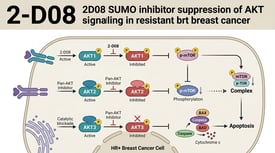
SUMO (Small Ubiquitin-like Modifier) inhibitors target the SUMOylation pathway, a critical post-translational modification process that regulates the function, localization, and stability of thousands of proteins. The pathway involves a cascade of enzymes: the E1 activating enzyme (SAE1/SAE2), the E2 conjugating enzyme (Ubc9), and various E3 ligases. SUMOylation is essential for many cellular processes, including DNA repair, nuclear transport, and cell cycle progression. However, many cancers exhibit "SUMO addiction," where they over-rely on this pathway to manage the proteotoxic stress and genomic instability associated with rapid proliferation. Consequently, SUMO inhibitors are being primarily developed as anti-cancer agents, particularly for MYC-driven malignancies, acute myeloid leukemia (AML), and solid tumors like colorectal cancer.
Beyond oncology, SUMOylation is involved in viral replication and heart failure, suggesting broader therapeutic potential. Current research has led to the development of several classes of inhibitors. The most advanced is TAK-981 (Subasumstat), a first-in-class small molecule that forms a covalent adduct with SUMO, effectively inhibiting the E1 enzyme. TAK-981 is currently in multiple Phase I/II clinical trials, both as a monotherapy and in combination with other agents like rituximab or immune checkpoint inhibitors. Other inhibitors include natural products like ginkgolic acid and kerriamycin B, which were used as early tool compounds to study the pathway.
Inhibitors can be classified by the specific enzyme they target in the cascade, with E1 and E2 inhibitors being the most common. A significant challenge in targeting the SUMO pathway is its ubiquity; since SUMOylation is vital for normal cell function, achieving a therapeutic window that spares healthy tissues is critical. Interestingly, SUMO inhibition has been found to trigger a potent Type I interferon response, suggesting that these drugs may also act as "immuno-oncology" agents by making tumors more visible to the immune system. Resistance mechanisms, such as mutations in the E1 enzyme or upregulation of alternative stress-response pathways, are also being investigated. Combination strategies are particularly promising, as SUMO inhibitors can sensitize cells to DNA-damaging agents or proteasome inhibitors.
As the first wave of clinical data for TAK-981 becomes available, the field is poised to determine whether modulating this complex "ubiquitin-like" system will provide a new pillar in cancer therapy.