Axl Inhibitors
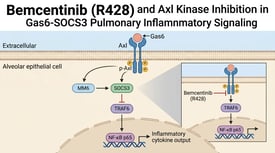
Axl is a prominent member of the TAM (Tyro3, Axl, Mer) receptor tyrosine kinase family, playing a pivotal role in regulating diverse cellular processes including cell survival, proliferation, migration, and the inflammatory response. The primary ligand for Axl is Growth Arrest-Specific 6 (Gas6), which binds to the extracellular domain, inducing receptor dimerization and subsequent autophosphorylation of intracellular tyrosine residues. This activation triggers several downstream signaling cascades, most notably the PI3K/Akt/mTOR, MAPK/ERK, and JAK/STAT pathways. Axl is particularly distinguished by its role in the epithelial-mesenchymal transition (EMT), a process that confers migratory and invasive properties to epithelial cells and is a hallmark of cancer progression and metastasis. In the context of human disease, Axl overexpression or overactivation is strongly associated with a wide array of malignancies, including non-small cell lung cancer (NSCLC), triple-negative breast cancer, ovarian cancer, and acute myeloid leukemia (AML).
Beyond its direct role in tumor growth, Axl is a major driver of acquired resistance to targeted therapies, such as EGFR inhibitors in lung cancer and BRAF inhibitors in melanoma. It also contributes to an immunosuppressive tumor microenvironment by inhibiting the activation of dendritic cells and natural killer cells. Current research into Axl inhibitors has progressed significantly, with several small molecules and monoclonal antibodies entering clinical evaluation. Bemcentinib (BGB324) is a first-in-class, highly selective oral Axl inhibitor currently being tested in combination with pembrolizumab or chemotherapy for various solid tumors. Gilteritinib, while primarily known as a FLT3 inhibitor, also exhibits potent Axl inhibitory activity and is approved for certain types of AML.
Other notable inhibitors include dubermatinib (TP-0903) and various multi-kinase inhibitors like cabozantinib and foretinib, which target Axl alongside other kinases like MET or VEGFR2. Inhibitors are generally classified into selective Axl inhibitors, which aim to minimize off-target effects, and multi-kinase inhibitors that provide broader pathway blockade. From a structural perspective, these are often categorized as Type I or Type II inhibitors based on their binding mode to the ATP-binding pocket. A significant challenge in the field is the development of biomarkers to identify patients most likely to benefit from Axl-targeted therapy. Furthermore, the dynamic nature of Axl expression during treatment necessitates sophisticated combination strategies, particularly with immune checkpoint inhibitors, to overcome the immunosuppressive barriers in the tumor microenvironment.
Research tool compounds like R428 have been instrumental in elucidating Axl's biology in preclinical models. As the field moves forward, the focus is shifting toward dual TAM inhibitors and the use of Axl-targeted antibody-drug conjugates (ADCs) to enhance therapeutic efficacy while managing potential toxicities associated with systemic kinase inhibition.