PDD00017273 Targets PARG to Sensitize Colorectal Cancer Cells to Chemotherapy
Copy code to add this image to your page
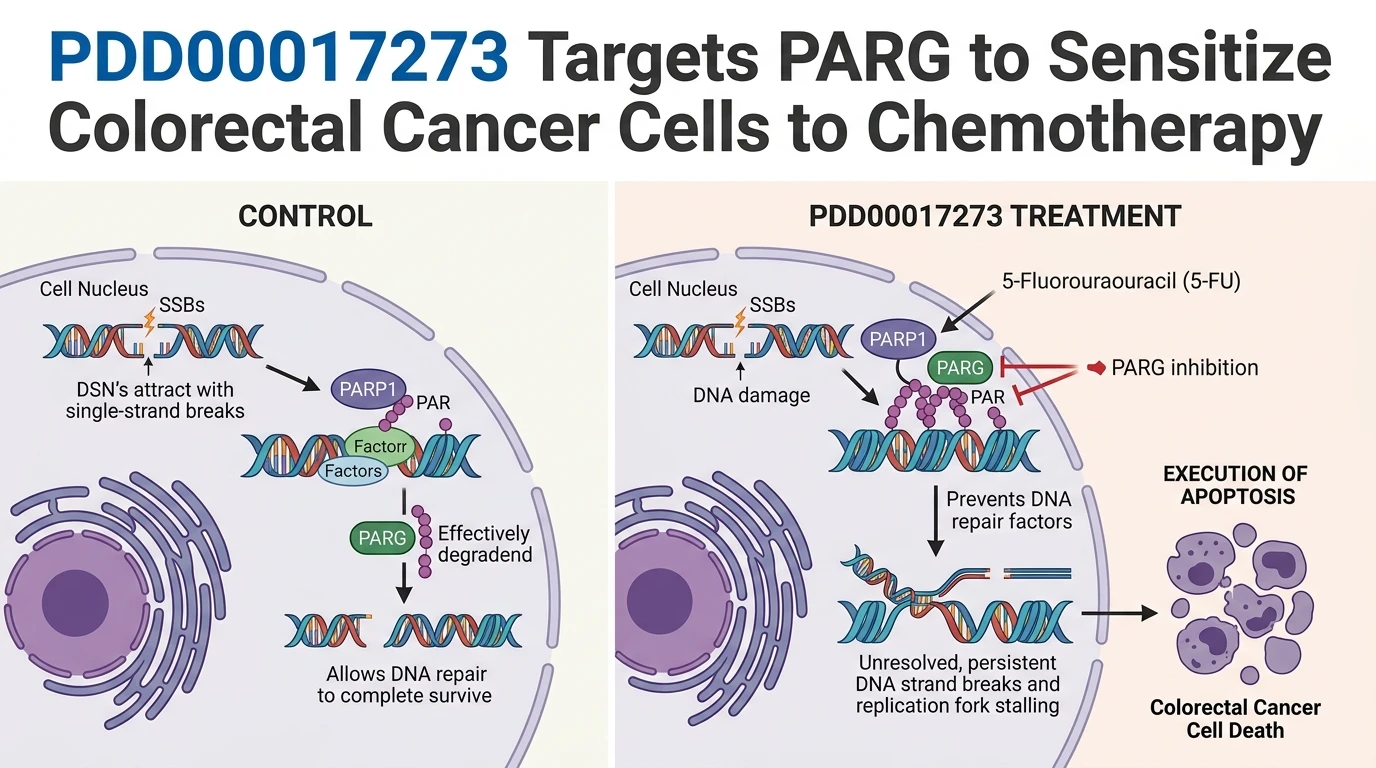
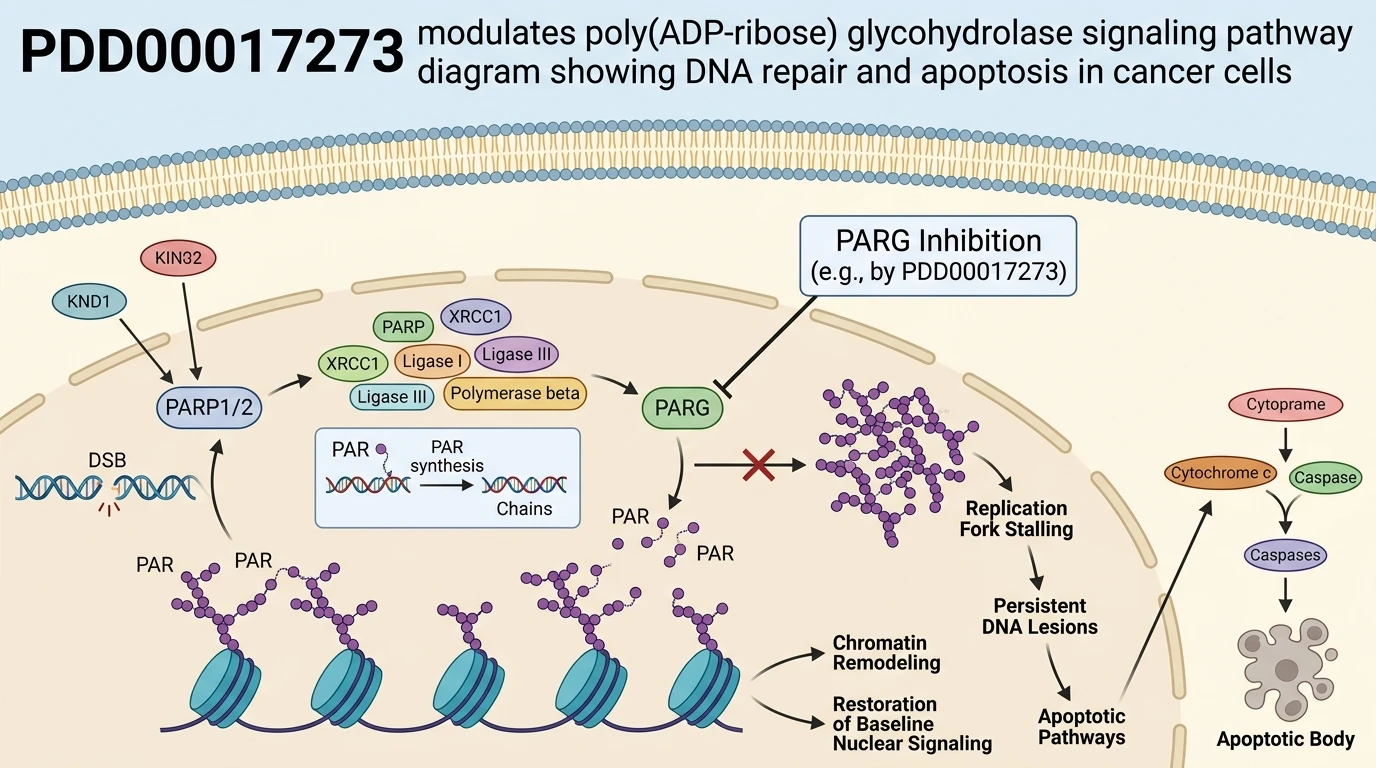
A loss-of-function genetic screening approach targeting chromatin regulators exposed poly(ADP-ribose) glycohydrolase (PARG) as an essential modifier of cytotoxic drug tolerance in colorectal cancer (CRC). Screening protocols evaluated cellular survival under exposure to 5-fluorouracil (5FU) and irinotecan (FUIRI). Disruption of PARG gene expression consistently sensitized CRC models to these chemotherapeutic agents. PARG functions as the primary endo- and exo-glycohydrolase responsible for catabolizing poly(ADP-ribose) (PAR) polymers synthesized by PARP family enzymes. During physiological DNA damage signaling, PARP1 detects single-strand and double-strand lesions, rapidly attaching PAR moieties to histones and nuclear acceptor proteins. This transient modification recruits DNA repair machinery to chromatin damage foci. Under normal physiological turnover, PARG degrades these PAR chains, allowing repair complex dissociation and restoration of baseline chromatin architecture.
Pharmacological targeting using the small-molecule inhibitor PDD00017273 disrupts this catabolic reset mechanism. When PARG activity is blocked by PDD00017273, PAR chains accumulate on nuclear proteins under tested in vitro assay conditions. Excess PAR formation restricts protein mobility within the nuclear compartment. Chromatin remains trapped in an hyper-PARylated state. This structural arrest blocks the orderly assembly and disassembly of repair complexes required for homing downstream machinery. As a consequence, double-strand DNA break repair stalls at damaged genomic sites. Under co-treatment conditions with 5FU or the active irinotecan metabolite SN38, DNA damage events escalate rapidly. S-phase progression suffers pronounced stalling due to persistent replication fork collapse. DNA lesions remain unpatched. Cellular stress responses shift from survival signaling to programmed cell death pathways.
In vitro combination experiments across multiple colorectal carcinoma cell lines—including HT29, DLD1, and HT115—demonstrate marked synergistic cytotoxicity. Treatment schedules pairing PDD00017273 with fluoropyrimidine or topoisomerase I inhibitors yielded pronounced reductions in fractional survival. Importantly, this synergistic effect extends to parental lines expressing baseline drug resistance. In 5FU-resistant CRC subclones, pharmacological PARG blockade restored chemosensitivity to therapeutic levels comparable to treatment-naive parental cells. Synergistic interactions were confirmed through combination index calculations, indicating robust supra-additive cell killing across tested dosage matrices.
Validation studies in vivo substantiate these cellular observations. In murine xenograft models bearing PARG-knockout colorectal tumors, administration of 5FU elicited tumor regression relative to wild-type tumor controls. Histological analysis of excised tissue sections revealed heightened markers of apoptosis, accompanied by sustained accumulation of unresolved double-strand break markers like gamma-H2AX. Furthermore, patient transcriptomic datasets provide clinical corroboration for these mechanistic findings. Low PARG expression correlates with improved therapeutic response rates in CRC patient cohorts receiving standard fluoropyrimidine-based regimens. Patients harboring PARG-deficient tumors demonstrated prolonged progression-free and overall survival outcomes relative to high-PARG control groups. These clinical correlations highlight the potential value of PARG inhibition as a chemosensitization strategy in colorectal malignancies.
Pharmacological Evaluation and Mechanistic Sensitization Dynamics
Copy code to add this image to your page
PDD00017273 selectively inhibits poly(ADP-ribose) glycohydrolase (PARG), preventing the hydrolysis of poly(ADP-ribose) (PAR) polymers on damaged chromatin. PAR hyper-accumulation impairs single- and double-strand DNA damage repair cascades, promoting persistent replication fork collapse. In colorectal cancer models, this disruption enhances apoptosis and re-sensitizes cells to fluoropyrimidine and topoisomerase I inhibitors.
Genetic Screen Identifies PARG as a Chemotherapeutic Determinant
A high-throughput loss-of-function genetic screen targeting chromatin-modifying enzymes isolated poly(ADP-ribose) glycohydrolase (PARG) as a critical survival factor during chemotherapy. Colorectal cancer cells were challenged with 5-fluorouracil and irinotecan combinations to identify synthetic lethal interactions. Genetic silencing of PARG pronouncedly decreased survival under sub-lethal chemotherapeutic stress. Biochemical validation confirmed that small-molecule inhibition using PDD00017273 replicates this loss-of-function phenotype. Inhibiting PARG stalls PAR degradation. Nuclear PAR polymers accumulate rapidly within minutes of drug exposure. This persistent PAR accumulation prevents chromatin decondensation at damaged loci, impeding access for downstream repair factors.
PAR Accumulation Triggers Apoptosis in Chemoresistant Models
Unresolved poly(ADP-ribose) chains induce catastrophic replication stress during cellular S-phase. Combination regimens pairing PDD00017273 with SN38 or 5FU caused sustained collapse of active replication forks in HT29 and DLD1 cell lines. Unrepaired DNA double-strand breaks persisted over extended timeframes. Cellular viability dropped sharply in drug-resistant models. In 5FU-resistant HT115 derivatives, PARG inhibition successfully overcame acquired chemoresistance. Apoptotic markers, including cleaved caspase-3 and PARP-1 cleavage, elevated significantly within 24 hours of co-treatment. The selectivity margin remained intact in non-transformed intestinal epithelial controls under identical dosing schedules.
In Vivo Efficacy and Patient Survival Correlations
Murine xenograft studies confirmed the translational relevance of target engagement in solid tumors. Animals bearing PARG-deficient colorectal xenografts exhibited marked tumor regression upon 5FU administration. Pharmacodynamic markers in excised tumor xenografts confirmed localized PAR accumulation and persistent DNA damage. Clinical dataset analyses aligned with these preclinical findings. Patients exhibiting reduced PARG expression demonstrated extended overall survival following fluoropyrimidine-based therapies. These clinical observations indicate that PARG expression levels may serve as a predictive biomarker for patient stratification in colorectal carcinoma.