FOX Inhibitors
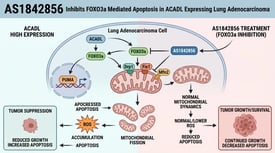
The Forkhead Box (FOX) family of transcription factors comprises a large group of proteins characterized by a conserved DNA-binding domain known as the "forkhead box" or winged-helix domain. These factors play essential roles in a wide array of biological processes, including embryonic development, cell cycle regulation, metabolism, and immune system homeostasis. In the context of human disease, particularly cancer, the FOX family is divided into those that act as oncogenes and those that function as tumor suppressors. FOXM1, for instance, is a well-known oncogene that is overexpressed in nearly all human cancers, where it promotes cell proliferation, epithelial-mesenchymal transition (EMT), and resistance to DNA-damaging agents. Conversely, members of the FOXO sub-family (e.g., FOXO1, FOXO3a) often act as tumor suppressors by inducing cell cycle arrest and apoptosis, although their function can be subverted in certain contexts. Another critical member is FOXP3, which is the master regulator of regulatory T cell (Treg) development and function, making it a key target in both oncology and autoimmune diseases.
Inhibiting FOX transcription factors presents a significant pharmacological challenge, as transcription factors have historically been considered "undruggable" due to their lack of a traditional small-molecule binding pocket. However, several innovative strategies have emerged to target these proteins. FOX inhibitors can be classified into several categories: small molecules that interfere with DNA binding, agents that disrupt protein-protein interactions, and inhibitors that modulate the upstream signaling pathways or the stability of the FOX protein itself. For example, the antibiotic thiostrepton has been identified as a FOXM1 inhibitor that works by directly binding to the protein and preventing its interaction with target promoters. Other approaches include using proteasome inhibitors to prevent the degradation of tumor-suppressive FOXO proteins or using small molecules to inhibit the kinases (like Akt) that phosphorylate and inactivate FOXOs. Current research progress is largely in the preclinical stage, with several promising compounds being validated in cell lines and animal models.
FDI-6 is a small molecule that has shown the ability to specifically inhibit FOXM1 DNA binding and reduce tumor growth in preclinical studies. In the realm of FOXP3, researchers are exploring small molecules and peptides that can disrupt its dimerization or its interaction with other transcription factors to modulate immune responses in the tumor microenvironment. The main challenges in developing FOX inhibitors include achieving high selectivity among the many family members and ensuring sufficient nuclear penetration and stability. Additionally, because FOX proteins are involved in many normal physiological processes, off-target toxicity is a major concern. Future research is directed toward the use of advanced drug delivery systems, such as nanoparticles, and the development of proteolysis-targeting chimeras (PROTACs) to specifically degrade oncogenic FOX proteins. As the structural biology of FOX-DNA complexes becomes clearer, the potential for designing more potent and specific inhibitors continues to grow.