MST Inhibitors
Mammalian Ste20-like kinases 1 and 2 (MST1 and MST2) are core components of the Hippo signaling pathway, a highly conserved cascade that controls tissue growth and organ size by regulating the activity of the transcriptional co-activators YAP and TAZ. MST1/2 are serine/threonine kinases that, upon activation by various upstream signals such as cell-cell contact or mechanical stress, phosphorylate and activate the downstream kinases LATS1/2. Activated LATS1/2 then phosphorylate YAP/TAZ, promoting their cytoplasmic retention and subsequent degradation, thereby preventing the transcription of pro-proliferative and anti-apoptotic genes. While the Hippo pathway is traditionally viewed as a tumor suppressor pathway, the role of MST1/2 is complex and context-dependent. In many cancers, MST1/2 function as tumor suppressors, and their loss leads to uncontrolled YAP activation. However, in other contexts, such as regenerative medicine and metabolic diseases, inhibiting MST1/2 has emerged as a promising therapeutic strategy.
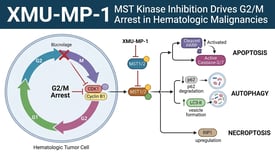
For instance, MST1 inhibition has been shown to promote liver regeneration and protect pancreatic beta cells from apoptosis in models of diabetes. Consequently, MST1/2 inhibitors are being developed primarily for applications in tissue repair and the treatment of metabolic disorders. The most notable research tool and lead compound in this field is XMU-MP-1, a potent and selective ATP-competitive inhibitor of MST1/2. Preclinical studies have demonstrated that XMU-MP-1 can enhance intestinal and liver regeneration in mice, suggesting potential utility in treating acute liver failure or inflammatory bowel disease. Research is also progressing into the role of MST1 in the immune system, where it regulates T-cell trafficking and activation. MST inhibitors can be classified based on their selectivity for MST1 vs.
MST2, although most current compounds target both due to the high homology between the two isoforms. Structurally, these are typically small-molecule, ATP-competitive inhibitors. One of the primary challenges in developing MST inhibitors is the dual role of the Hippo pathway; systemic inhibition of MST1/2 could potentially increase the risk of tumorigenesis by chronically activating YAP. Therefore, therapeutic applications may require transient or tissue-specific inhibition. Another challenge is the high degree of conservation within the Ste20 kinase family, which complicates the design of highly selective inhibitors that do not cross-react with other kinases like MAP4Ks. Despite these hurdles, the potential for MST inhibitors to revolutionize regenerative medicine and provide new treatments for chronic diseases like diabetes and heart failure continues to drive significant academic and industrial interest.
Future research will likely focus on refining the selectivity of these inhibitors and exploring their efficacy in diverse pathological conditions where Hippo pathway modulation is beneficial.