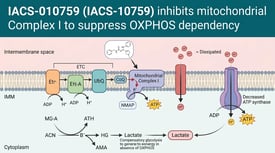
OXPHOS Inhibitors
Oxidative phosphorylation (OXPHOS) is the metabolic process by which cells use enzymes to oxidize nutrients, thereby releasing energy which is used to produce adenosine triphosphate (ATP) within the mitochondria. This process involves the electron transport chain (ETC), consisting of Complexes I through IV, and ATP synthase (Complex V). While many cancer cells primarily rely on glycolysis (the Warburg effect), it is increasingly recognized that a significant subset of tumors, particularly those that are resistant to chemotherapy or are in a quiescent state, depend heavily on OXPHOS for their energy needs and for the production of biosynthetic precursors. Furthermore, OXPHOS is essential for the survival of certain intracellular parasites, such as Plasmodium falciparum, the causative agent of malaria. Consequently, the inhibition of OXPHOS has emerged as a compelling strategy for the treatment of metabolic-dependent cancers and infectious diseases.
Inhibitors of OXPHOS can be classified based on the specific complex they target within the ETC. For example, metformin, a widely used anti-diabetic drug, is known to weakly inhibit Complex I and is being repurposed for cancer prevention and treatment. More potent and specific Complex I inhibitors, such as IACS-010759, have entered clinical trials for the treatment of acute myeloid leukemia (AML) and solid tumors. Other inhibitors target Complex III (e.g., atovaquone, used as an antimalarial) or Complex V (e.g., oligomycin, primarily used as a research tool). The research status of OXPHOS inhibitors is rapidly evolving, with several compounds in Phase I and II clinical trials.
A major challenge in this field is the potential for systemic toxicity, as OXPHOS is vital for the function of high-energy organs like the heart and brain. To overcome this, researchers are focusing on identifying specific "metabolic vulnerabilities" in cancer cells that make them more sensitive to OXPHOS inhibition than healthy cells. Additionally, combination therapies that pair OXPHOS inhibitors with glycolysis inhibitors or standard chemotherapeutics are being explored to prevent metabolic adaptation and resistance. Another area of interest is the role of OXPHOS in the maintenance of cancer stem cells, which are often more reliant on mitochondrial respiration. As the field of cancer metabolism continues to mature, the development of selective and well-tolerated OXPHOS inhibitors holds great promise for improving outcomes in patients with difficult-to-treat malignancies.
The ongoing characterization of mitochondrial heterogeneity across different tumor types will be crucial for the successful clinical implementation of these therapies. Future research will also focus on the role of OXPHOS in immune cell function, which could have implications for cancer immunotherapy.