IACS-10759 from Selleck inhibits mitochondrial Complex I to suppress OXPHOS dependency
Copy code to add this image to your page
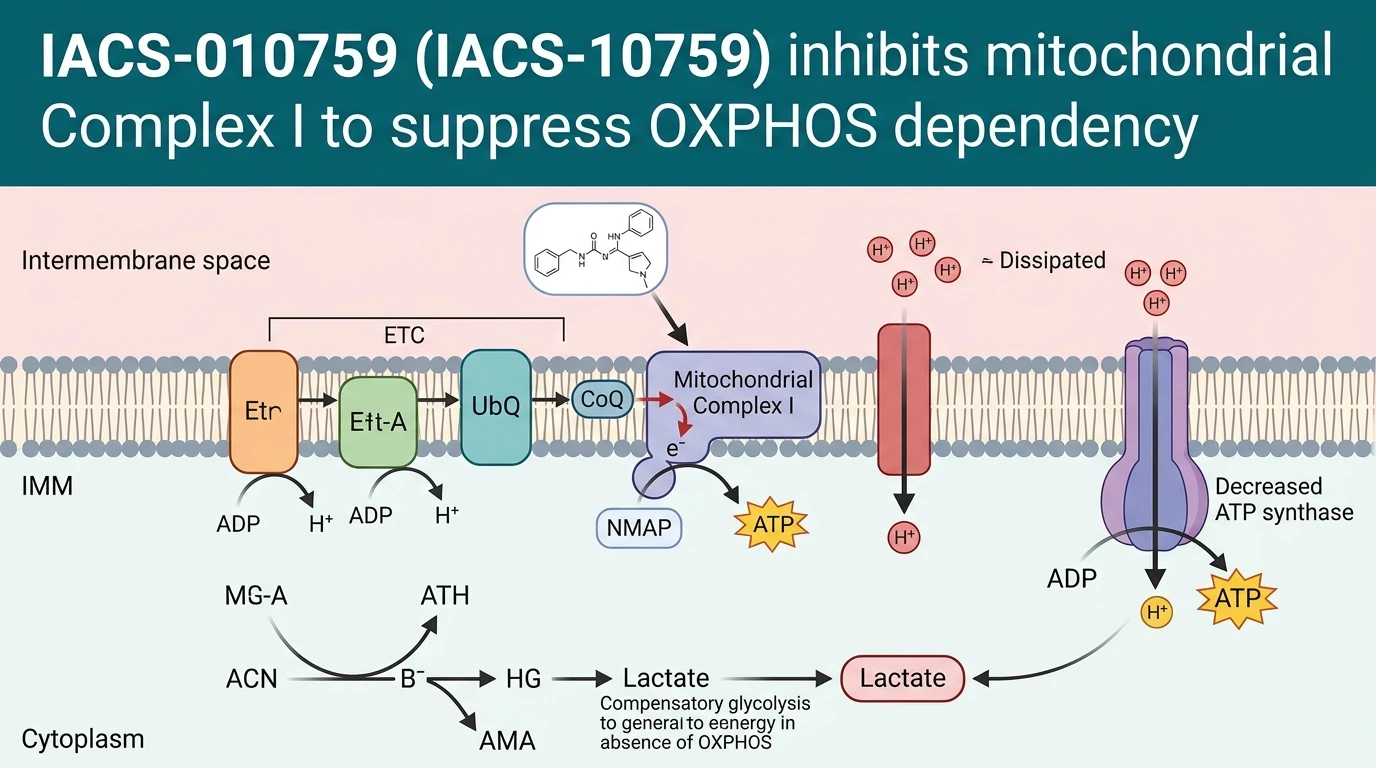
Targeting tumor bioenergetics represents a distinct pharmacodynamic strategy for eliminating oxidative phosphorylation (OXPHOS)-dependent malignancies. The small molecule IACS-010759 (IACS-10759) functions as a potent, selective inhibitor of mitochondrial Complex I (NADH-ubiquinone oxidoreductase). By binding directly to the quinone-binding site within the enzyme complex, this small molecule blocks electron transfer from NADH to ubiquinone. Consequently, mitochondrial electron flow halts abruptly. The proton gradient across the inner mitochondrial membrane collapses. ATP generation via mitochondrial ATP synthase ceases within minutes. In cellular models exhibiting stringent OXPHOS reliance—including subsets of acute myeloid leukemia (AML) and glycolysis-deficient solid tumors—treatment with IACS-010759 triggers profound energy depletion and apoptotic cell death. Biochemical characterization demonstrates nanomolar potency against mammalian Complex I. Oxygen consumption rate assays in intact cell lines confirm total suppression of basal and maximal respiration at concentrations below 10 nM. Reduced electron flux diminishes the regeneration of cytoplasmic and mitochondrial NAD+ pools. The resulting elevation in the intracellular NADH/NAD+ ratio impairs flux through malate dehydrogenase and glyceraldehyde 3-phosphate dehydrogenase. As a consequence, de novo aspartate synthesis falls precipitously, limiting pyrimidine nucleotide biosynthesis and halting ribosomal translation in rapidly dividing cells. Preclinical models validate the therapeutic sensitivity of specific metabolic phenotypes. In murine xenograft models of AML, oral administration achieved robust target engagement within leukemic blasts residing in bone marrow niches. Treatment triggered cleavage of caspase-3 and PARP, confirming apoptotic cascade execution. Solid tumors bearing genomic deletions of glycolytic enzymes—such as ENO1-deficient glioblastoma—exhibited pronounced vulnerability. Lacking metabolic plasticity to compensate via glycolysis, these tumors underwent rapid regression under sustained respiration suppression. Combinatorial therapeutic strategies further amplify antitumor activity. Simultaneous inhibition of parallel nutrient supply lines prevents metabolic escape. For example, combining Complex I inhibition with glutaminase blockade or glycolytic flux inhibitors prevents tumor cells from shifting toward alternative bioenergetic pathways. In patient-derived xenograft systems, combination regimens resulted in complete depletion of cellular ATP reserves and enhanced tumor regression. Intracellular metabolic stress sensors, notably AMP-activated protein kinase (AMPK), engaged immediately, modulating cross-talk with metabolic and survival networks. Parallels in nutrient regulation involving signaling cascade components underscore how nutrient availability alters cell fate decisions under metabolic inhibition. Despite robust preclinical efficacy, early clinical translation faced significant systemic toxicity challenges. Systemic inhibition of mitochondrial respiration forces healthy peripheral tissues to convert pyruvate to lactate to sustain basal ATP levels via glycolysis. Phase I clinical evaluations revealed dose-limiting toxicities, specifically severe lactic acidosis and peripheral neuropathy. Serum lactate elevations mirrored systemic bioenergetic inhibition, highlighting a narrow therapeutic index in human subjects. These physiological constraints demonstrate that successful clinical deployment will require precise biomarker-driven patient selection, intermittent schedule designs, or targeted drug delivery systems capable of sparing non-malignant tissues. Structural cryo-EM studies reveal that the molecule inserts into the water-accessible channel of the ubiquinone binding cavity, preventing substrate entry. Mitochondrial reactive oxygen species production increases moderately in specific cellular contexts, further accelerating cytochrome c release. Microenvironmental hypoxia further increased sensitivity to respiratory inhibition, demonstrating that native oxygen tensions magnify bioenergetic stress.
Pharmacological Evaluation and Bioenergetic Trade-offs
Copy code to add this image to your page
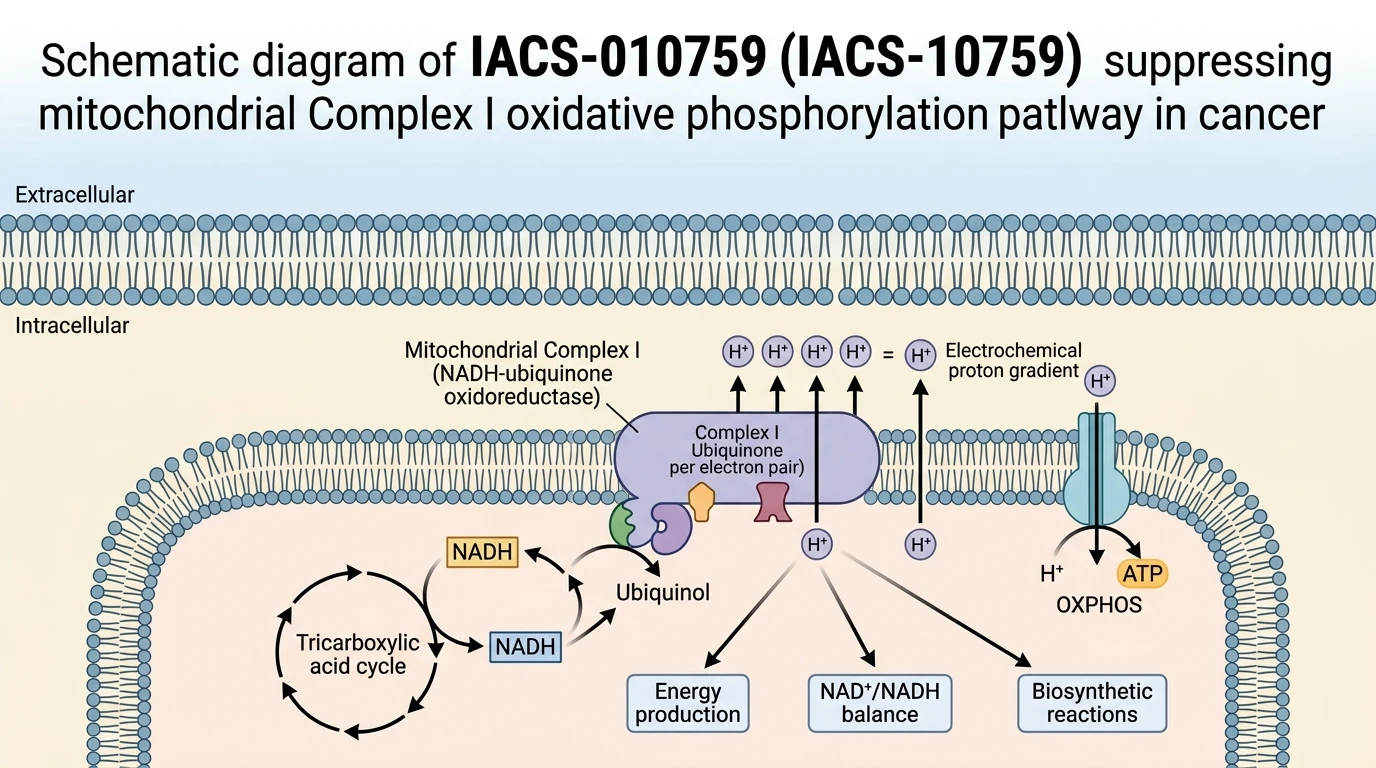
IACS-010759 selectively inhibits mitochondrial Complex I (NADH-ubiquinone oxidoreductase), blocking electron transfer along the mitochondrial respiratory chain. This inhibition disrupts the inner membrane proton gradient, shutting down ATP synthesis via oxidative phosphorylation. Elevated NADH/NAD+ ratios inhibit TCA cycle activity and aspartate production, triggering acute energy failure and intrinsic apoptosis in OXPHOS-dependent cancer cells. Compensatory upregulation of glycolysis in non-malignant tissues drives lactate accumulation, defining the compound's therapeutic window.
Complex I Inhibition Suppresses Respiration in AML Models
Primary acute myeloid leukemia cells exhibit acute dependence on mitochondrial respiration. In baseline oxygen consumption assays, application of IACS-10759 from Selleck produced rapid, concentration-dependent cessation of oxygen consumption. Basal respiration fell by 85% within two hours. Intracellular ATP levels dropped simultaneously in primary leukemic blasts. The selectivity margin remained intact when comparing leukemic blasts to normal hematopoietic stem cells under equivalent assay conditions. Downstream activation of AMP-activated protein kinase occurred within four hours of treatment. AMPK phosphorylation at Thr172 confirmed induction of severe energy stress. Consequently, cell cycle arrest occurred in G1 phase, followed by mitochondrial membrane depolarization and annexin V positivity.
Metabolic Compensations Drive Toxicity and Lactic Acid Accumulation
Systemic inhibition of the electron transport chain induces secondary metabolic remodeling across non-malignant tissues. Upon treatment with IACS-10759 from Selleck, skeletal muscle and cardiac tissues shifted rapidly toward anaerobic glycolysis. Pyruvate conversion to lactate accelerated to compensate for lost mitochondrial ATP production. In rodent pharmacokinetic models, plasma lactate concentrations rose four-fold above baseline within six hours post-dose. This metabolic shift mirrors observations in early clinical safety cohorts where hyperlactatemia restricted escalation. Neuronal tissue demonstrated particular vulnerability, resulting in peripheral axonopathy during extended administration protocols. These systemic findings establish that therapeutic benefit requires strict monitoring of systemic metabolic biomarkers to avoid irreversible neurotoxicity.
Dual Route Blockade Enhances Apoptosis in Resistant Solid Tumors
Solid tumor models featuring high glycolytic capacity often display intrinsic resistance to monotherapy. Concurrent suppression of glutamine metabolism restored therapeutic sensitivity in patient-derived pancreatic adenocarcinoma xenografts. Treatment regimens pairing Complex I inhibition with glutaminase inhibitors depleted intracellular glutamate and alpha-ketoglutarate pools completely. Tumor growth stalled completely over a 28-day treatment window. Histological analysis revealed extensive necrotic cores and dense caspase-3 staining throughout treated tumor tissue. No permanent tissue damage was observed in adjacent non-neoplastic stromal compartments. These observations indicate that combination strategies effectively circumvent single-agent metabolic adaptation without worsening systemic bioenergetic failure.