Relacorilant (CORT125134) Selective Glucocorticoid Receptor Antagonism Reverses Chemotherapy Resistance in Epithelial Tumors
Copy code to add this image to your page
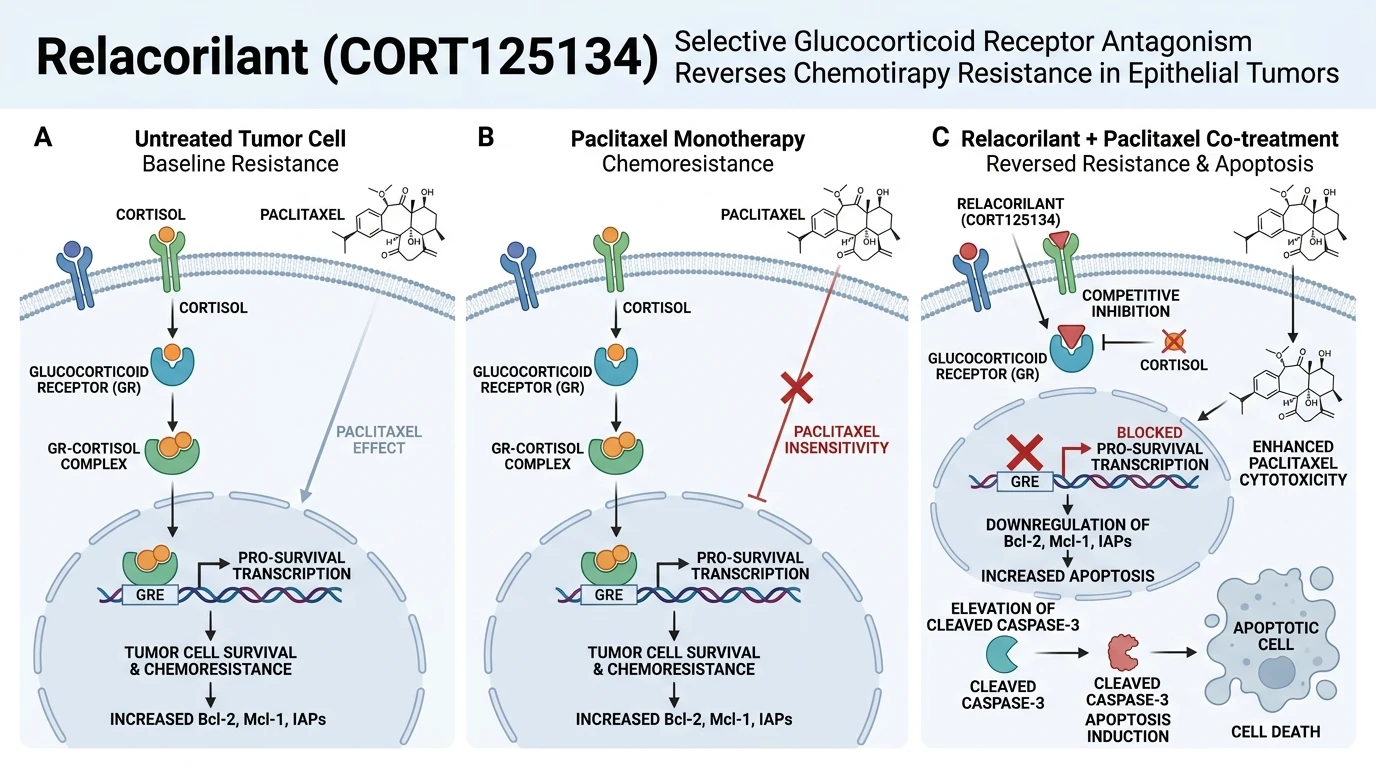
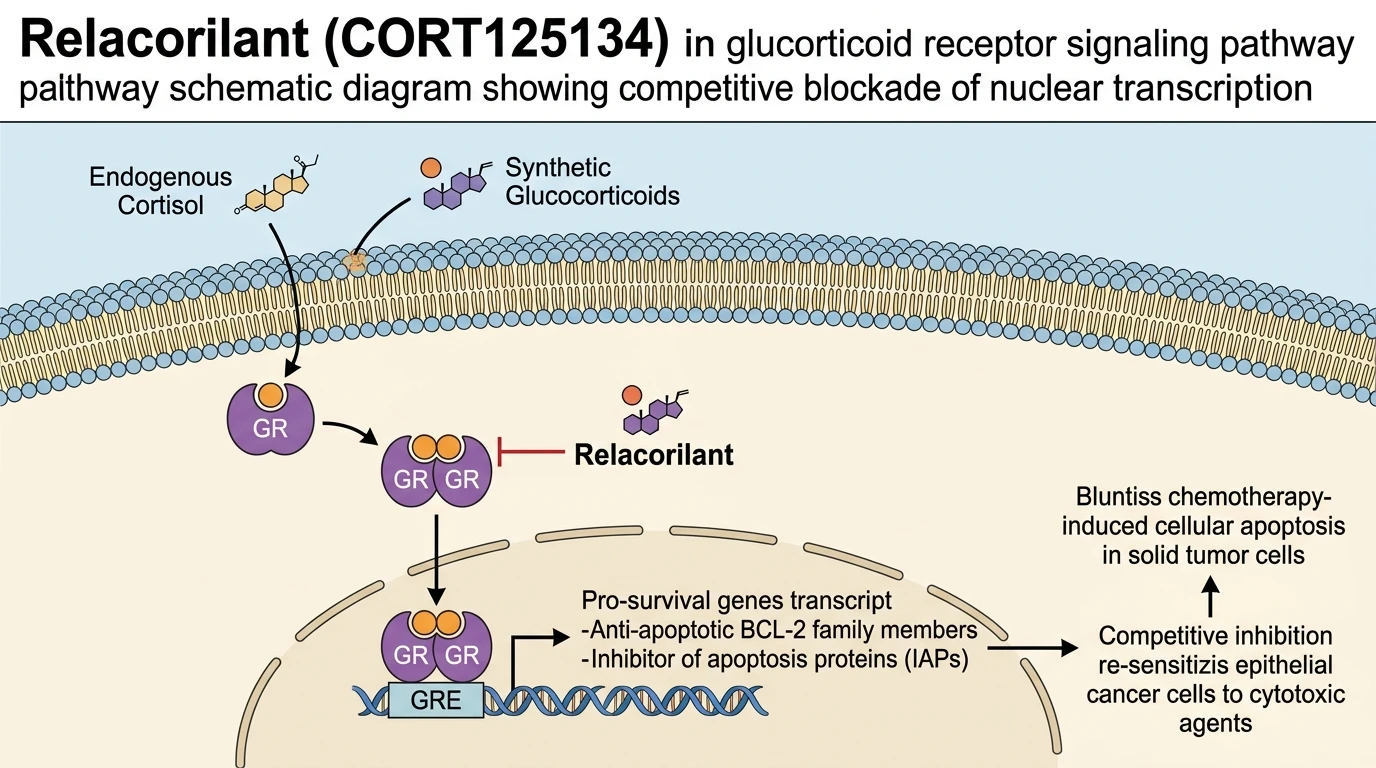
Activation of the nuclear receptor subfamily 3 group C member 1, commonly known as the glucocorticoid receptor (GR), exerts anti-apoptotic actions across multiple epithelial solid malignancies. Endogenous glucocorticoids, predominantly cortisol, as well as exogenous synthetic corticosteroids such as dexamethasone, bind the cytosolic GR complex. Bound receptors dimerize, translocate across the nuclear membrane, and engage explicit consensus sequences designated as glucocorticoid response elements. This glucocorticoid receptor transcriptional activation cascade upregulates an extensive network of pro-survival transcripts. Downstream effectors include B-cell lymphoma 2 (BCL-2) family proteins, cellular inhibitor of apoptosis proteins (cIAPs), and dual-specificity phosphatases that attenuate stress-activated protein kinase pathways. Consequently, glucocorticoid signaling directly counteracts drug-induced DNA damage and cytoskeletal disruption, establishing a prominent mechanism of acquired and intrinsic chemoresistance in carcinoma cell lines.
Relacorilant (CORT125134) was designed as a non-steroidal, highly selective glucocorticoid receptor modulator (SGRM) that operates as a pure competitive GR antagonist. Unlike classical GR antagonists such as mifepristone, CORT125134 exhibits no detectable partial agonist activity at therapeutic concentrations and demonstrates minimal cross-reactivity with progesterone receptors (PR), androgen receptors (AR), or mineralocorticoid receptors (MR). This distinct selectivity profile minimizes off-target endocrine dysregulation, particularly progesterone-receptor-mediated side effects and mineralocorticoid excess phenotypes. By binding competitively to the ligand-binding domain of GR, Relacorilant (CORT125134) prevents cortisol-induced conformational activation and nuclear translocation, effectively blocking transcriptional induction of anti-apoptotic machinery.
In preclinical epithelial solid tumor models, corticosteroid administration routinely protects tumor cells from cytotoxic injury. Administration of paclitaxel, gemcitabine, or platinum salts induces mitochondrial outer membrane permeabilization, triggering cytochrome c release and caspase-3 cleavage. However, concurrent exposure to physiological or pharmacological concentrations of cortisol or dexamethasone suppresses this apoptotic cascade. Selective blockade of GR by CORT125134 ablates this steroid-mediated cytoprotection. Under experimental conditions utilizing pancreatic ductal adenocarcinoma, cervical carcinoma, and cholangiocarcinoma cell lines, co-treatment with relacorilant restores mitochondrial apoptosis cascades. Quantitative western blot and fluorometric assay data confirm marked elevations in cleaved caspase-3 and cleaved PARP levels when relacorilant is added to standard chemotherapy regimens in the presence of glucocorticoids.
Pharmacodynamic evaluation in rodent xenograft models corroborates these cellular observations. In vivo, systemic administration of relacorilant in combination with paclitaxel or nab-paclitaxel attenuates tumor growth kinetics compared to cytotoxic monotherapy alone. Importantly, these synergistic tumor growth inhibitions occur under physiological baseline murine corticosterone levels. The compound enhances the potency and total efficacy of microtubule-disrupting agents without escalating systemic toxicities associated with high-dose chemotherapy. Furthermore, because dexamethasone is frequently co-prescribed in clinical oncology as an antiemetic and premedication for hypersensitivity reactions, GR antagonism by relacorilant presents a strategic pharmacological approach to preserve corticosteroid-mediated symptom control in non-malignant tissues while neutralizing pro-survival signaling within GR-expressing malignant cells.
Mechanistic Evaluation and Antitumor Efficacy in Preclinical Models
Copy code to add this image to your page
Relacorilant (CORT125134) functions as a selective, competitive glucocorticoid receptor (GR) antagonist devoid of partial agonist activity. Endogenous and synthetic glucocorticoids induce anti-apoptotic pathways via GR-mediated transcription of pro-survival proteins, attenuating the cytotoxic efficacy of paclitaxel, platinum compounds, and gemcitabine in solid tumors. Relacorilant selectively binds GR, inhibiting nuclear translocation and downstream transcription. This blockade restores apoptosis, evidenced by elevated cleaved caspase-3 and PARP activity, and enhances chemotherapeutic cytotoxicity in pancreatic, cervical, and cholangiocarcinoma models.
Reversal of Cortisol-Mediated Anti-Apoptotic Signaling in Solid Tumors
Cytotoxic chemotherapeutic agents trigger programmed cell death through mitochondrial pathways. Endogenous cortisol impairs this response. In epithelial solid tumor models, glucocorticoid engagement protects cells against paclitaxel cytotoxicity. Competitive binding by CORT125134 directly disrupts this protective mechanism. Under tested in vitro assay conditions, adding the antagonist suppresses GR-mediated transcriptional induction of anti-apoptotic BCL-2 family proteins. Apoptotic cascades resume promptly. Fluorometric assays demonstrated a three-fold increase in cleaved caspase-3 activity following combined treatment compared to dexamethasone monotherapy. Chemotherapy potency was completely restored.
Synergistic Tumor Regression in Pancreatic and Cholangiocarcinoma Xenografts
In vivo xenograft models confirmed cellular pharmacodynamic observations. Tumor burden decreased substantially under combination protocols. In murine pancreatic ductal adenocarcinoma models, relacorilant combined with nab-paclitaxel suppressed primary lesion volume relative to monotherapy control arms. Baseline murine corticosterone levels failed to shield carcinoma cells from apoptosis when GR was blocked. Intratumoral biomarker analysis revealed prominent PARP cleavage and sustained suppression of pro-survival transcripts. Body weight remained stable across treatment groups. Selective GR modulation achieved robust efficacy while maintaining a favorable safety window within these preclinical cohorts.
Restoration of Chemotherapeutic Sensitivity Across Microtubule and Platinum Regimens
Reversal of chemoresistance extends beyond taxane-based therapy. Glucocorticoid signaling blunts cytotoxic stress induced by gemcitabine and carboplatin. Pharmacological evaluation confirmed that target engagement by CORT125134 lowers half-maximal inhibitory concentration values across multiple ovarian and cervical carcinoma cell lines. Nuclear GR translocation remained below detectable limits during co-incubation assays. Mitochondrial outer membrane permeability increased within hours of administration. Consequently, combination schedules permit reduced chemotherapeutic dosages while achieving equivalent cell kill. These empirical findings substantiate a mechanism-based strategy for overcoming steroid-driven treatment failure in solid tumors.