BCRP Inhibitors
Breast Cancer Resistance Protein (BCRP), also known as ABCG2, is a member of the ATP-binding cassette (ABC) transporter family. It functions as a high-capacity efflux pump that utilizes the energy from ATP hydrolysis to transport a wide variety of substrates across cellular membranes. BCRP is physiologically expressed in tissues with barrier functions, such as the blood-brain barrier, the placenta, the liver, and the intestines, where it plays a protective role by limiting the absorption and promoting the excretion of xenobiotics and endogenous toxins. However, in the context of oncology, BCRP is frequently overexpressed in various cancer cells, including those of the breast, colon, and lung, as well as in leukemias. This overexpression leads to the rapid efflux of numerous chemotherapeutic agents—such as topotecan, irinotecan, methotrexate, and various tyrosine kinase inhibitors—thereby conferring a multidrug resistance (MDR) phenotype that significantly compromises the efficacy of cancer treatment. Inhibiting BCRP has long been pursued as a strategy to reverse MDR and sensitize tumors to chemotherapy. BCRP inhibitors can be classified into several generations.
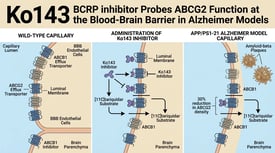
The first generation included broad-spectrum ABC transporter inhibitors like cyclosporine A, which lacked potency and selectivity. The second and third generations have focused on more specific and potent small molecules. Ko143 is widely regarded as the most potent and selective BCRP inhibitor available for research purposes, often used to elucidate the transporter's role in drug disposition. Another well-known tool compound is Fumitremorgin C, a fungal toxin that selectively inhibits BCRP but is too toxic for clinical use. Current research progress involves the identification of non-toxic, orally bioavailable inhibitors that can be used in combination with chemotherapy. Interestingly, many drugs developed for other targets, such as the tyrosine kinase inhibitors Gefitinib and Nilotinib, have been found to potently inhibit BCRP as an off-target effect, leading to potential drug-drug interactions. Beyond its role in cancer, BCRP is a critical transporter of urate.
Genetic variants of ABCG2 that result in reduced transport activity are strongly associated with hyperuricemia and the development of gout. This has opened a new research front where BCRP modulators might be used to manage urate levels. However, the clinical development of BCRP inhibitors faces significant hurdles. The most prominent challenge is the potential for systemic toxicity and unpredictable drug-drug interactions, as BCRP is essential for the normal distribution and elimination of many medications. Furthermore, the role of BCRP in the transport of dietary phytochemicals and vitamins suggests that its inhibition could have nutritional implications, necessitating careful monitoring during treatment. Therefore, current strategies are focusing on the development of dual-action drugs or the use of nanotechnology to deliver BCRP inhibitors specifically to tumor sites. As our understanding of the structural biology of ABCG2 improves through high-resolution cryo-EM, the design of more precise, allosteric inhibitors that can bypass the limitations of current compounds is becoming a reality.