PAD Inhibitors
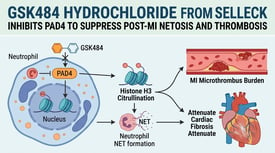
Peptidylarginine deiminases (PADs) are a family of calcium-dependent enzymes that catalyze the post-translational modification known as citrullination or deimination. This process involves the conversion of positively charged arginine residues within proteins into neutral citrulline residues. There are five mammalian isozymes (PAD1, 2, 3, 4, and 6), each with distinct tissue distributions and physiological roles. PAD4 is particularly notable as it contains a nuclear localization signal and is highly expressed in neutrophils and other inflammatory cells. Citrullination alters the electronic charge and folding of target proteins, which can significantly impact their function, protein-protein interactions, and immunogenicity. One of the most critical roles of PAD4 is the citrullination of histones (e.g., H3, H4), which promotes chromatin decondensation and is a key step in the formation of neutrophil extracellular traps (NETs), a process known as NETosis. While NETs are essential for trapping and killing pathogens, their excessive formation is linked to various pathological conditions.
The clinical significance of PAD enzymes is most prominently observed in autoimmune and inflammatory diseases. In rheumatoid arthritis (RA), the production of anti-citrullinated protein antibodies (ACPAs) is a diagnostic hallmark and a major driver of joint inflammation and destruction. PAD2 and PAD4 are the primary enzymes responsible for generating these citrullinated autoantigens in the synovium. Furthermore, dysregulated PAD activity and aberrant NETosis are implicated in the pathogenesis of systemic lupus erythematosus (SLE), multiple sclerosis, and various fibrotic disorders. In oncology, PAD4 is often overexpressed in several types of cancer, including breast and colon cancer, where it can act as an epigenetic regulator to silence tumor suppressor genes or promote a pro-tumorigenic inflammatory microenvironment. Additionally, PAD-mediated citrullination has been linked to the progression of cardiovascular diseases and thrombosis. Research into PAD inhibitors has evolved from non-selective, irreversible inhibitors to more potent and isoform-selective agents.
Early tool compounds like Cl-amidine and its more stable analog BB-Cl-amidine are pan-PAD inhibitors that have demonstrated efficacy in numerous preclinical models of RA, colitis, and cancer. However, the focus has shifted toward developing selective inhibitors to reduce potential side effects. For instance, GSK199 and GSK484 are highly selective PAD4 inhibitors that have been used to specifically investigate the role of PAD4 in NETosis and inflammation without affecting other PAD isoforms. These inhibitors typically work by binding to the active site in a calcium-dependent manner. Current progress in the field includes the exploration of PAD inhibitors in clinical trials for RA and the investigation of their potential in treating COVID-19-related coagulopathy and inflammation. Challenges include the need for better oral bioavailability and the long-term safety of inhibiting an enzyme involved in innate immunity. Nevertheless, PAD inhibitors represent a novel class of anti-inflammatory and potentially anti-cancer agents with the unique ability to modulate both epigenetic and extracellular signaling pathways.