Epacadostat (INCB024360) Epacadostat inhibitor targeted IDO1 inhibition suppresses macrophage tissue factor expression
Copy code to add this image to your page
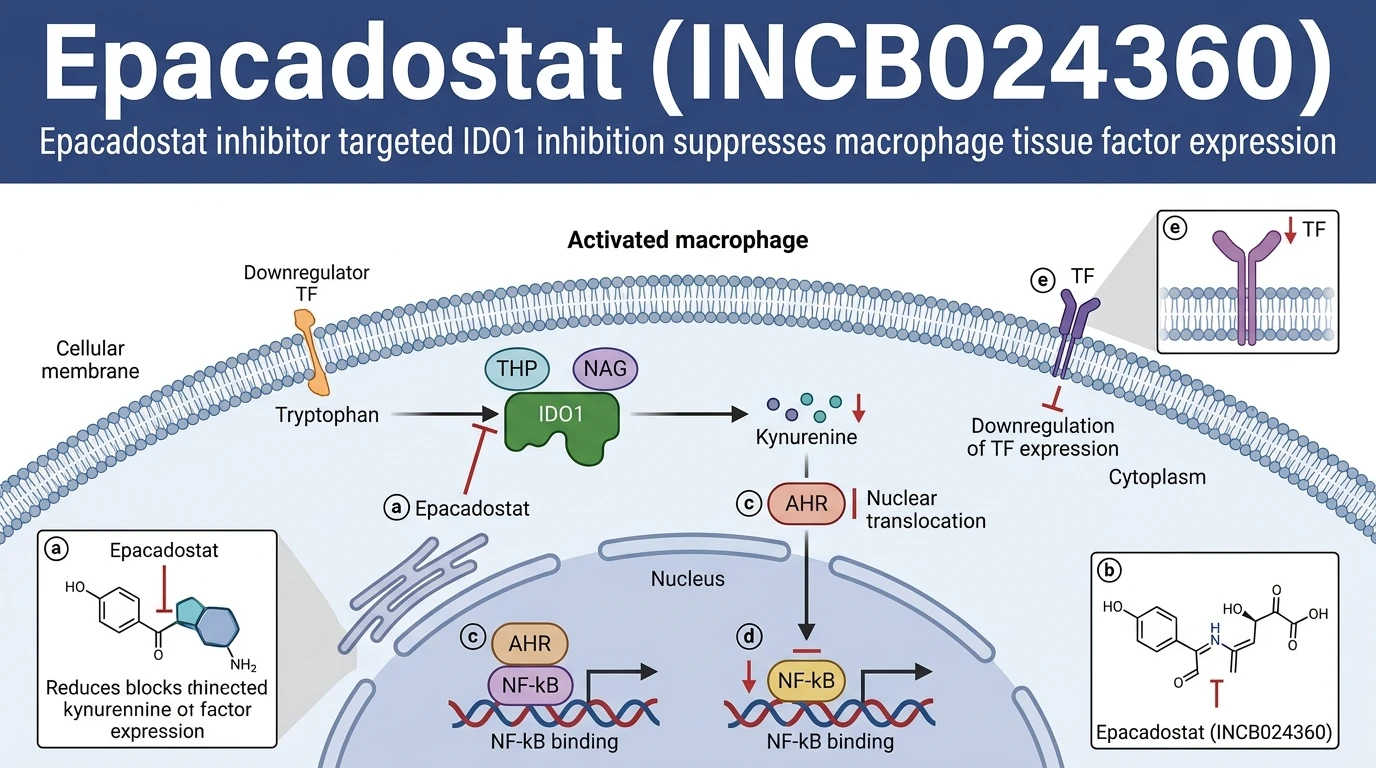
Indoleamine 2,3-dioxygenase 1 (IDO1) serves as the primary enzyme initiating the kynurenine pathway of tryptophan degradation. Clinical histological analyses reveal pronounced IDO1 expression within human coronary atherosclerotic plaques, particularly enriched within CD68-positive macrophage populations. Expression levels of IDO1 correlate directly with tissue factor (TF) abundance in patient samples derived from unstable angina lesions. Under baseline quiescent conditions, vascular macrophages exhibit minimal IDO1 enzymatic activity. However, acute inflammatory stimuli, such as interferon-gamma or lipopolysaccharide, induce robust IDO1 transcription. This enzymatic induction accelerates local tryptophan consumption and causes intracellular and extracellular accumulation of L-kynurenine. Accumulated L-kynurenine functions as an endogenous ligand for the aryl hydrocarbon receptor (AHR), initiating a distinct signaling cascade that reinforces vascular wall thrombogenicity. Upon ligand binding, cytosolic AHR translocates to the nucleus, where it heterodimerizes with the AHR nuclear translocator (ARNT). This transcriptional complex enhances nuclear factor kappa B (NF-kB) DNA-binding activity at specific promoter regions controlling procoagulant genes. Consequently, activated macrophages exhibit marked upregulation of TF mRNA and cell-surface TF protein expression. Cell-surface TF acts as the primary cellular initiator of blood coagulation by binding factor VII/VIIa, which converts factor X to active factor Xa. Elevated factor Xa generation on macrophage membranes accelerates local thrombin generation, directly converting fibrinogen to fibrin and promoting intraplaque thrombosis. Targeting this enzymatic axis provides a direct targeted approach to suppress vascular inflammation-driven coagulation. Treatment with Epacadostat (INCB024360), a potent and selective Epacadostat inhibitor, abrogates IDO1 catalytic conversion of L-tryptophan to L-kynurenine in activated human macrophages. In vitro concentration-response studies demonstrate that Epacadostat (INCB024360) achieves low nanomolar inhibition of IDO1 enzymatic output. By depleting kynurenine pool levels, the Epacadostat inhibitor prevents AHR nuclear translocation and subsequent downstream signaling. Consequently, NF-kB promoter-binding activity drops sharply in treated cells. This transcriptional blockade leads to a marked, dose-dependent decrease in TF mRNA transcription and protein translation, effectively neutralizing macrophage procoagulant capacity under inflammatory stress. In experimental models of macrophage activation, administration of Epacadostat (INCB024360) significantly lowers factor Xa generation. This decrease in factor Xa activity directly correlates with diminished surface expression of active TF complexes. Exogenous replenishment of L-kynurenine partially restores TF upregulation and NF-kB activation even in the presence of IDO1 inhibition, confirming that kynurenine depletion mediates the primary therapeutic efficacy of the compound. These mechanistic observations highlight the direct biochemical coupling between the IDO1-kynurenine-AHR axis and macrophage thrombogenicity. Inhibiting IDO1 with Epacadostat (INCB024360) attenuates the procoagulant phenotype of plaque-associated macrophages without compromising global systemic homeostasis in preliminary preclinical models. In atherosclerotic plaque microenvironments, macrophage activation by pro-inflammatory cytokines accelerates localized tryptophan depletion while driving high flux through the IDO1 enzyme. The resulting L-kynurenine metabolites act in an autocrine and paracrine manner, sustaining AHR activation across neighboring vascular cells. Elevated AHR activity upregulates downstream inflammatory mediators that synergize with NF-kB complexes to maintain high levels of tissue factor expression. When plaque rupture occurs, this concentrated pool of membrane-bound tissue factor meets circulating factor VIIa, initiating rapid thrombin generation. Pharmacological intervention using Epacadostat (INCB024360) effectively interrupts this self-reinforcing loop. By blocking IDO1 catalytic activity, the compound restores intracellular tryptophan stoichiometry, prevents AHR nuclear translocation, and inhibits the assembly of active NF-kB transcriptional machinery on the tissue factor promoter. Quantitative biochemical assessments confirm that Epacadostat (INCB024360) displays high target selectivity for IDO1 over related enzyme isoforms such as IDO2 and tryptophan 2,3-dioxygenase (TDO). In comparative cellular assays, Epacadostat (INCB024360) demonstrated negligible off-target inhibition against TDO at micromolar concentrations, preserving systemic tryptophan homeostasis outside the inflamed plaque domain. This high selectivity window minimizes systemic toxicities commonly associated with broad-spectrum metabolic disruption. In patient-derived macrophage cultures obtained from cardiovascular patient cohorts, treatment with the Epacadostat inhibitor consistently suppressed both baseline and cytokine-induced tissue factor activity. These findings reinforce the therapeutic potential of targeting IDO1 to attenuate acute thrombotic risks in patients suffering from unstable coronary artery disease.
Pharmacological Characterization of IDO1 Inhibition in Macrophages
Copy code to add this image to your page
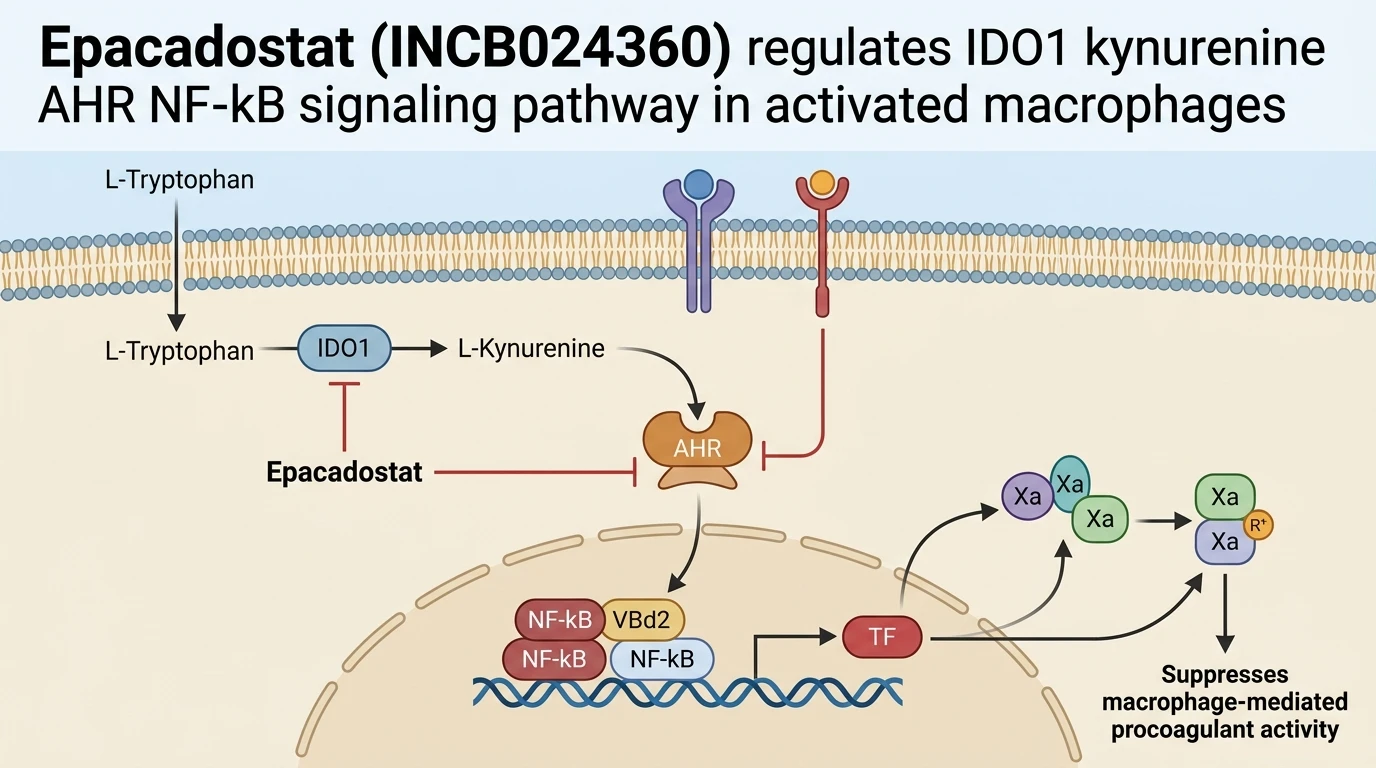
Selective IDO1 inhibition by Epacadostat (INCB024360) disrupts the conversion of tryptophan to kynurenine in inflammatory macrophages. Decreased kynurenine levels attenuate aryl hydrocarbon receptor (AHR) activation and downstream NF-kB transcriptional activity. This nuclear blockade suppresses tissue factor (TF) gene expression and protein translation, significantly reducing cell-surface factor Xa activity and procoagulant potential in atherosclerotic plaque microenvironments.
Inhibition of Kynurenine Production and NF-kB Activation
Inflammatory cytokine stimulation triggers rapid IDO1 upregulation in human primary macrophages. Intracellular tryptophan degrades rapidly into L-kynurenine. Under controlled in vitro assay conditions, treatment with Epacadostat (INCB024360) blocks L-kynurenine accumulation in a concentration-dependent manner. Kynurenine concentrations fell by over eighty percent at nanomolar exposure levels. This biochemical blockade suppresses downstream signaling events. NF-kB nuclear translocation and DNA-binding activity dropped significantly following enzyme inhibition. Short-term treatment paradigms confirmed rapid target engagement. Cellular viability remained unaffected across tested dose ranges. These findings demonstrate that selective IDO1 blockade directly uncouples inflammatory activation from nuclear transcriptional events in human macrophages.
Downregulation of Tissue Factor Expression and Factor Xa Generation
Tissue factor represents the primary driver of cell-mediated procoagulant activity within vulnerable atherosclerotic lesions. Quantitative real-time PCR analyses showed that applying the Epacadostat inhibitor reduced TF transcript levels significantly in stimulated macrophage cultures. Western blot assessments confirmed a corresponding reduction in total and membrane-bound TF protein. Functional coagulation assays measured factor Xa generation rate on the macrophage surface. Factor Xa production declined in parallel with TF protein downregulation. Crucially, adding exogenous kynurenine restored TF expression in the presence of IDO1 inhibitors. This rescue effect confirmed AHR receptor pathway involvement. These observations indicate that IDO1 activity directly regulates macrophage procoagulant potential in inflammatory microenvironments.