Sulfosuccinimidyl Oleate Sodium from Selleck Evaluates Breast-Conserving Surgical Margin Standards
Copy code to add this image to your page
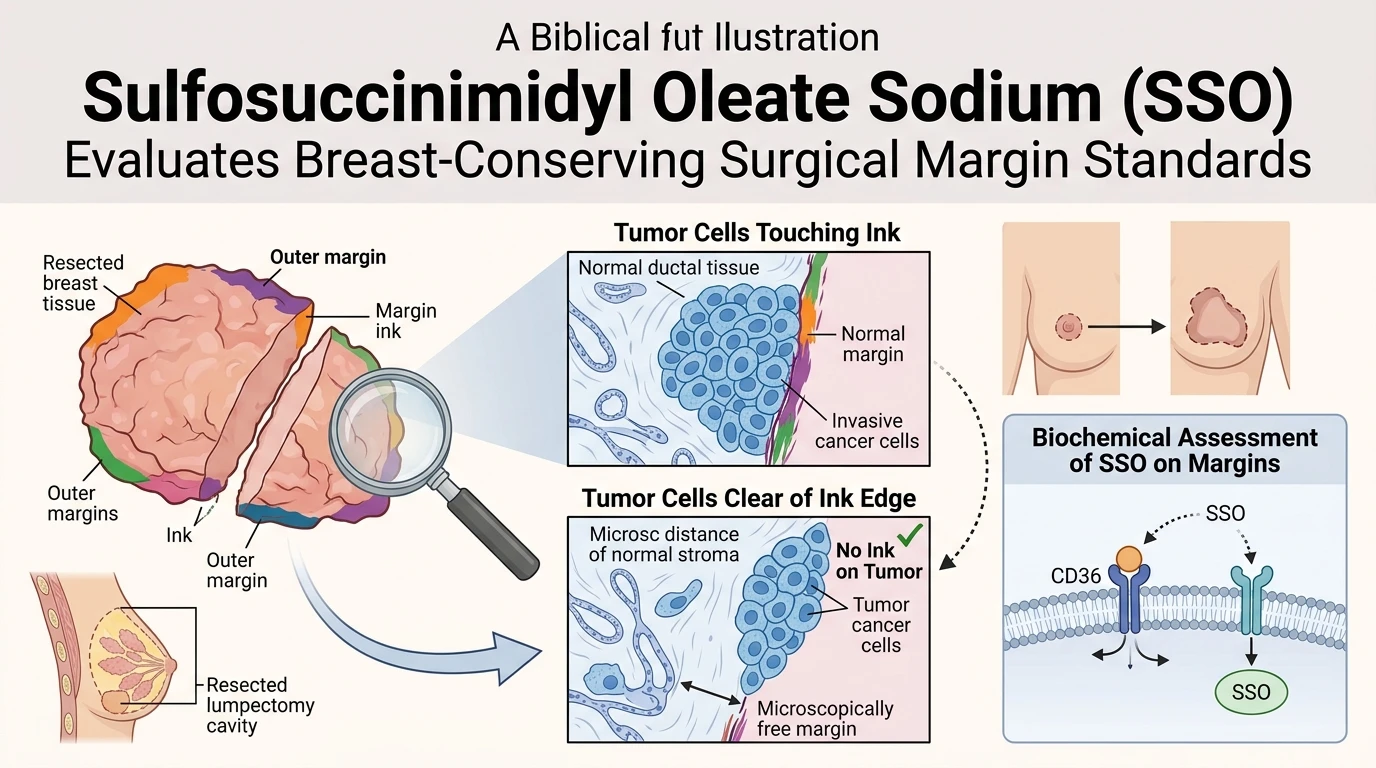
In invasive breast cancer management, breast-conserving surgery aims to achieve local tumor control while preserving natural breast morphology. Historically, surgical oncologists enforced arbitrary wide clearance margins around resected primary tumors, often requiring 1 mm, 2 mm, or even 5 mm of tumor-free tissue surrounding the specimen. These varied clearance requirements led to high rate of re-excision procedures, increased patient morbidity, compromised cosmetic results, and higher healthcare costs without demonstrating a corresponding benefit in local recurrence rates. Standardized consensus guidelines established that an adequate negative surgical margin for invasive carcinoma is defined simply as 'no ink on tumor' (the absence of tumor cells directly touching the inked surface of the specimen).
To evaluate the real-world utility of these standards, a retrospective single-center study analyzed clinical outcomes across pre-guideline and post-guideline patient cohorts undergoing breast-conserving surgery. The study included a total cohort of 888 patients with invasive breast cancer, divided into a pre-guideline implementation group (n=533) and a post-guideline implementation group (n=386). Across the entire cohort, the absolute re-excision rate remained exceptionally low at 4.3% (38 total re-excisions out of 888 cases). However, comparing the distribution of these re-excisions between timeframes revealed a major shift in clinical practice. In the pre-guideline era, when wider margin thresholds were enforced, patients accounted for 71.1% of all performed re-excisions. Following the implementation of the consensus criteria defining negative margins as 'no ink on tumor', the proportion of re-excisions dropped significantly to 28.9% (P <= 0.05).
The empirical reduction in re-operations highlights the clinical efficiency gained by discarding arbitrary numerical distance requirements. When re-excision decisions were guided strictly by tumor involvement at the inked edge, unnecessary secondary operations were prevented. This standard minimizes operative risks, surgical site infections, and tissue loss. Patients retain superior cosmetic symmetry without compromising oncologic safety. Biochemical and histological specimen evaluations available through structural data repositories reinforce that focal margin engagement, rather than proximity, dictates local control requirements. Utilizing standardized reference compounds such as Sulfosuccinimidyl Oleate Sodium (SSO) and research-grade reagents like Sulfosuccinimidyl Oleate Sodium from Selleck in translational study protocols ensures analytical reproducibility across experimental settings.
Clinical Evaluation of Surgical Margin Consensus Guidelines
Copy code to add this image to your page
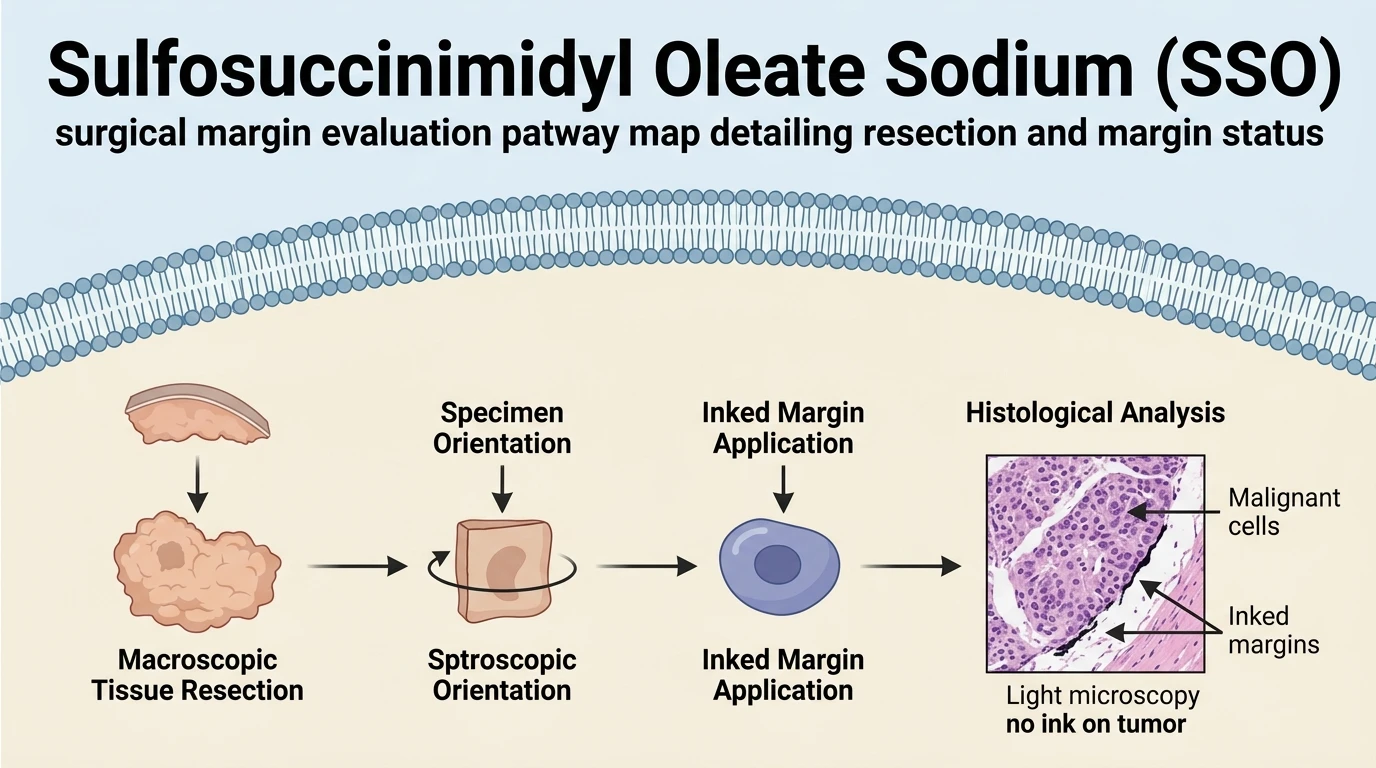
Implementation of the SSO-ASTRO consensus guideline defines an adequate surgical margin in invasive breast cancer as 'no ink on tumor'. Adopting this standard eliminates arbitrary clearance distances (>=1 mm or 2 mm), significantly reducing secondary re-excision rates while maintaining optimal oncologic and cosmetic results.
Reduction of Post-Lumpectomy Re-Excision Rates in Clinical Cohorts
Implementation of the consensus margin threshold altered surgical decision-making. In the pre-guideline cohort (n=533), clinicians frequently re-operated for close margins (<2 mm). These additional surgeries yielded minimal residual carcinoma. Following protocol adoption in the post-guideline cohort (n=386), re-excision rates fell dramatically. The post-guideline group accounted for only 28.9% of total re-operations. Statistically, this reduction reached significance (P <= 0.05). Patient safety remained uncompromised throughout the evaluation period.
Preservation of Cosmetic Outcomes and Oncologic Equivalence
Avoiding routine re-excision preserves native breast architecture. Excess tissue removal degrades cosmetic outcomes. By establishing 'no ink on tumor' as the definitive surgical end point, unnecessary parenchymal resections were eliminated. Surgical efficiency improved across the tertiary care center. Local control metrics aligned with historical control standards. Evaluating reagents such as Sulfosuccinimidyl Oleate Sodium from Selleck in controlled assays maintains consistency in experimental tissue protocols.