LB-100 inhibitor engagement of PP2A sensitizes resistant tumors to chemoimmunotherapy
Copy code to add this image to your page
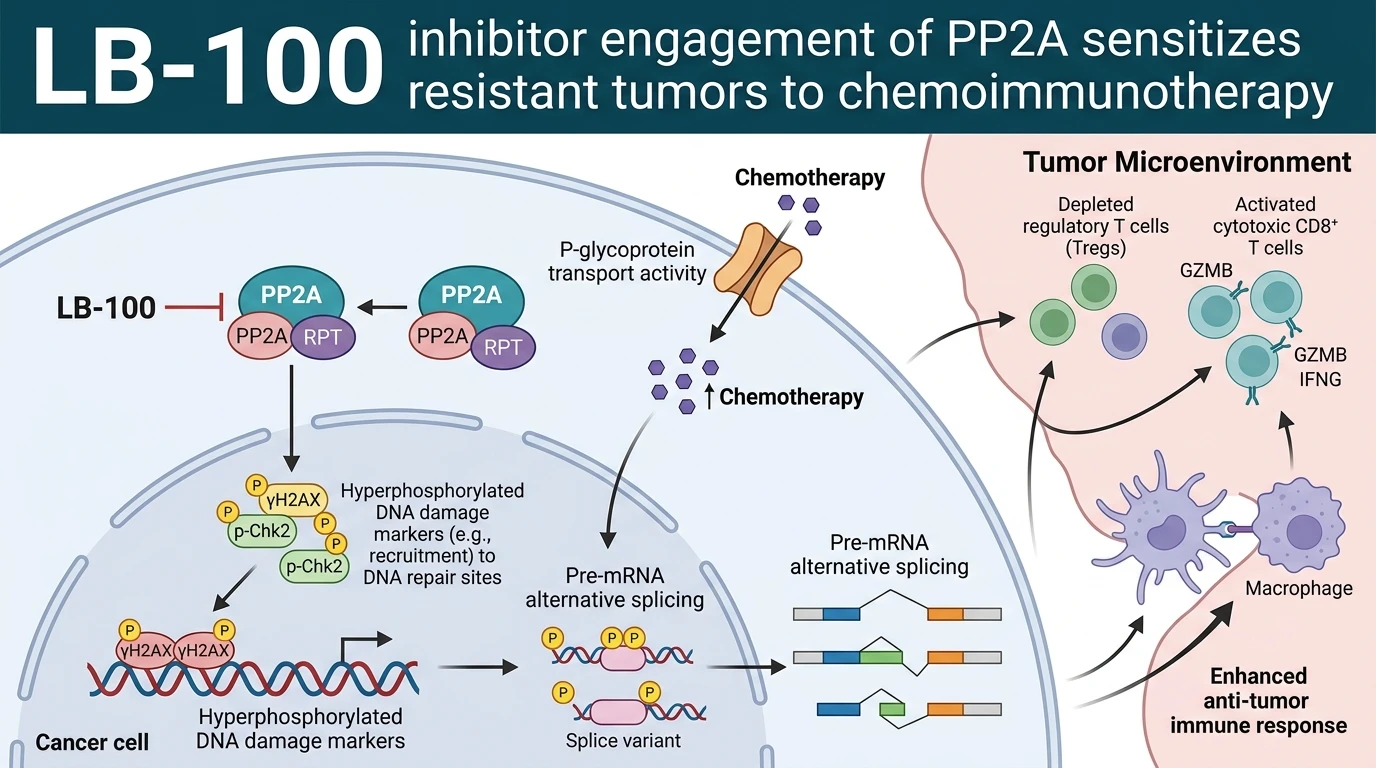
Protein phosphatase 2A (PP2A) represents a critical serine/threonine phosphatase heterotrimer governing essential regulatory nodes across mitotic exit, DNA damage repair cascades, and metabolic homeostasis. Structural assembly of PP2A involves a catalytic C subunit, a structural A scaffold, and variable regulatory B subunits that dictate localized substrate specificity. Under physiological conditions, PP2A dephosphorylates substrate targets to enforce cell cycle checkpoints and limit hyperactivation of oncogenic kinase signals. The small molecule LB-100, a synthetic derivative of norcantharidin, functions as a catalytic inhibitor of PP2A and related serine/threonine phosphatases such as PP5. Direct competitive engagement of LB-100 with the phosphatase catalytic domain blocks substrate dephosphorylation, altering intracellular phosphorylation stoichiometry within minutes of administration across cultured tumor models.
Disruption of PP2A catalytic activity by LB-100 severely compromises cellular capacity to resolve DNA double-strand breaks. In response to ionizing radiation or alkylating chemotherapeutics, tumor cells normally activate ATM and ATR kinase cascades to arrest cell cycle progression and facilitate DNA repair. PP2A routinely dephosphorylates ATM, CHK1, and gamma-H2AX to signal repair completion and permit mitotic entry. Utilizing an epigenetic and transcriptional reprogramming model alongside PP2A blockade demonstrates how persistent substrate phosphorylation disrupts homotypic repair mechanisms. When LB-100 inhibits PP2A-mediated dephosphorylation, target cells sustain hyperphosphorylated CHK1 levels while G2/M arrest collapses under replication stress. Cells enter mitosis prematurely with damaged DNA, triggering mitotic catastrophe across diverse p53-deficient carcinoma lines.
Beyond DNA repair suppression, LB-100 destabilizes ATP-binding cassette transporter networks responsible for multidrug resistance phenotypes. Multidrug resistance frequently stems from P-glycoprotein overexpression, which actively pumps lipophilic chemotherapeutics out of the cytoplasm. Phosphorylation status directly dictates P-glycoprotein membrane localization and transport turnover. Catalytic PP2A inhibition by LB-100 alters transporter phosphorylation kinetics, leading to decreased functional P-glycoprotein expression on the plasma membrane. Reduced drug efflux increases intracellular anthracycline and platinum compound retention within resistant cancer cell lines.
Concurrently, catalytic inhibition of PP2A modulates RNA processing events within malignant cells. Pre-mRNA splicing factors undergo dynamic phosphorylation cycles regulated by PP2A and serine/arginine-rich protein kinases. Exposure to LB-100 induces widespread intron retention and alternative splice site selection. These altered RNA transcripts generate tumor-specific neoepitopes that are processed and displayed via MHC Class I molecules on the cell surface, enhancing intrinsic immunogenicity in cold tumor models.
Pharmacological modulation of PP2A further reorganizes the surrounding immune microenvironment. Regulatory T cells (Tregs) depend on PP2A activity to maintain FOXP3 stability and suppressive function. Catalytic suppression destabilizes FOXP3 within tumor-infiltrating Tregs, impairing their suppressor capabilities. Concurrently, cytotoxic CD8+ T cells exhibit elevated proliferative capacity and sustained effector cytokine secretion under PP2A inhibition. Adoptively transferred CAR-T cell constructs treated with LB-100 show enhanced functional persistence and resistance to exhaustion marker expression, amplifying overall antitumor responses when combined with anti-PD-1 or anti-PD-L1 checkpoint blockade.
Therapeutic Evaluation and Pharmacological Characterization
Copy code to add this image to your page
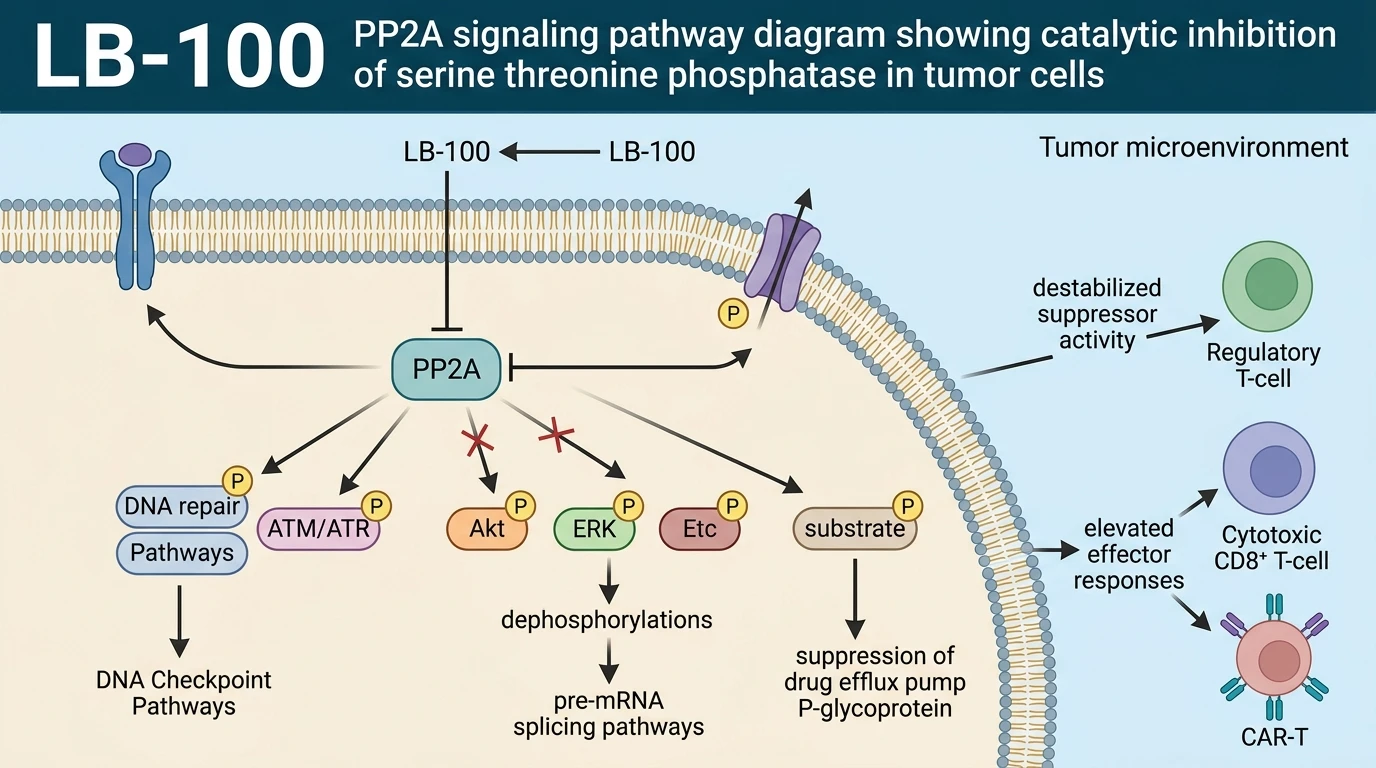
LB-100 is a small-molecule catalytic inhibitor of protein phosphatase 2A (PP2A) and PP5. By blocking PP2A catalytic activity, LB-100 prevents substrate dephosphorylation, leading to sustained CHK1 phosphorylation, abrogated DNA repair, and mitotic catastrophe in cancer cells. Furthermore, LB-100 reduces P-glycoprotein-mediated drug efflux, alters pre-mRNA splicing to increase tumor neoantigens, and destabilizes FOXP3+ regulatory T cells while augmenting cytotoxic CD8+ T-cell and CAR-T activity. These integrated mechanisms sensitize resistant tumors to chemotherapy, radiotherapy, and immune checkpoint blockade.
Catalytic Suppression of PP2A Sensitizes Platinum-Resistant Tumors
In vitro cytotoxicity assays demonstrate that catalytic inhibition of PP2A converts chemoresistant tumor phenotypes into chemosensitive states. When combined with cisplatin or doxorubicin, application of the LB-100 inhibitor lowers the half-maximal inhibitory concentration across multiple refractory cell lines. Downstream phosphorylation of CHK1 remained persistently elevated for over twenty-four hours following combination exposure. This blunted the cellular repair capacity. Consequently, double-strand DNA break markers such as gamma-H2AX accumulated rapidly within nuclear fractions. In murine xenograft models harboring patient-derived ovarian carcinomas, co-administration of LB-100 with standard carboplatin schedules produced sustained tumor stasis without exacerbating systemic toxicity parameters. Reductions in functional P-glycoprotein density at the cell surface further correlated with increased intracellular anthracycline retention. These empirical observations highlight the pharmacodynamic utility of targeting serine/threonine phosphatases to reverse acquired multidrug resistance mechanisms.
Splicing Alterations and T-Cell Activation Enhance Checkpoint Blockade
Immune microenvironment profiling reveals that catalytic PP2A inhibition shifts tumor-infiltrating lymphocyte populations toward an active cytotoxic phenotype. Syngeneic mouse models of triple-negative breast cancer treated with the LB-100 inhibitor exhibited marked reductions in intratumoral FOXP3-positive regulatory T cells. Concurrently, antigen-specific CD8+ T cell populations displayed elevated granzyme B release and reduced exhaustion markers including TIM-3 and LAG-3. RNA sequencing of treated tumor isolates confirmed distinct shifts in pre-mRNA splicing patterns. Increased neoantigen presentation directly enhanced T-cell recognition efficiency. When paired with anti-PD-1 monoclonal antibodies, dual therapy generated durable complete responses in sixty percent of treated animals within this specific cellular context. Adoptive transfer experiments using CAR-T cells pre-conditioned with LB-100 similarly demonstrated prolonged persistence and superior antitumor control in solid tumor rechallenge assays.