NMS-873 Potentiates Radiotherapy via VCP ERAD Inhibition and UPR Pathway Activation
Copy code to add this image to your page
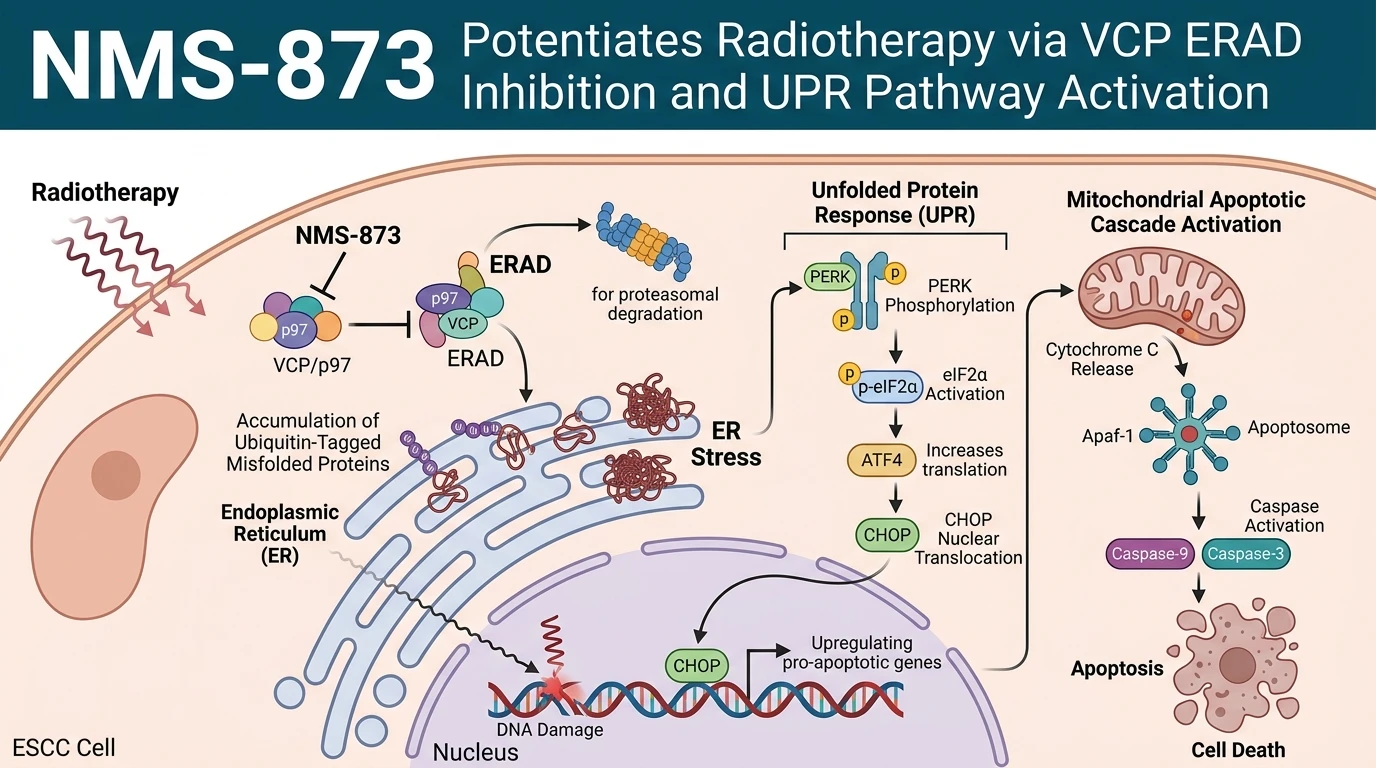
Valosin-containing protein (VCP), also designated as p97, functions as a homohexameric AAA+ (ATPases Associated with diverse cellular Activities) chaperone that orchestrates ubiquitin-dependent proteolysis. Structurally composed of an N-terminal domain and two conserved ATPase domains (D1 and D2), VCP uses mechanical energy derived from ATP hydrolysis to extract misfolded proteins from membrane complexes or macromolecular assemblies. Within the endoplasmic reticulum (ER), VCP serves as the catalytic engine for ER-associated degradation (ERAD). ERAD isolates unfolded or aberrant polypeptides from the lumen and lipid bilayer, retrotranslocating them into the cytosol for ubiquitin-proteasome system clearance. By maintaining ER proteostasis, VCP buffers tumor cells against high metabolic stress and rapid protein turnover.
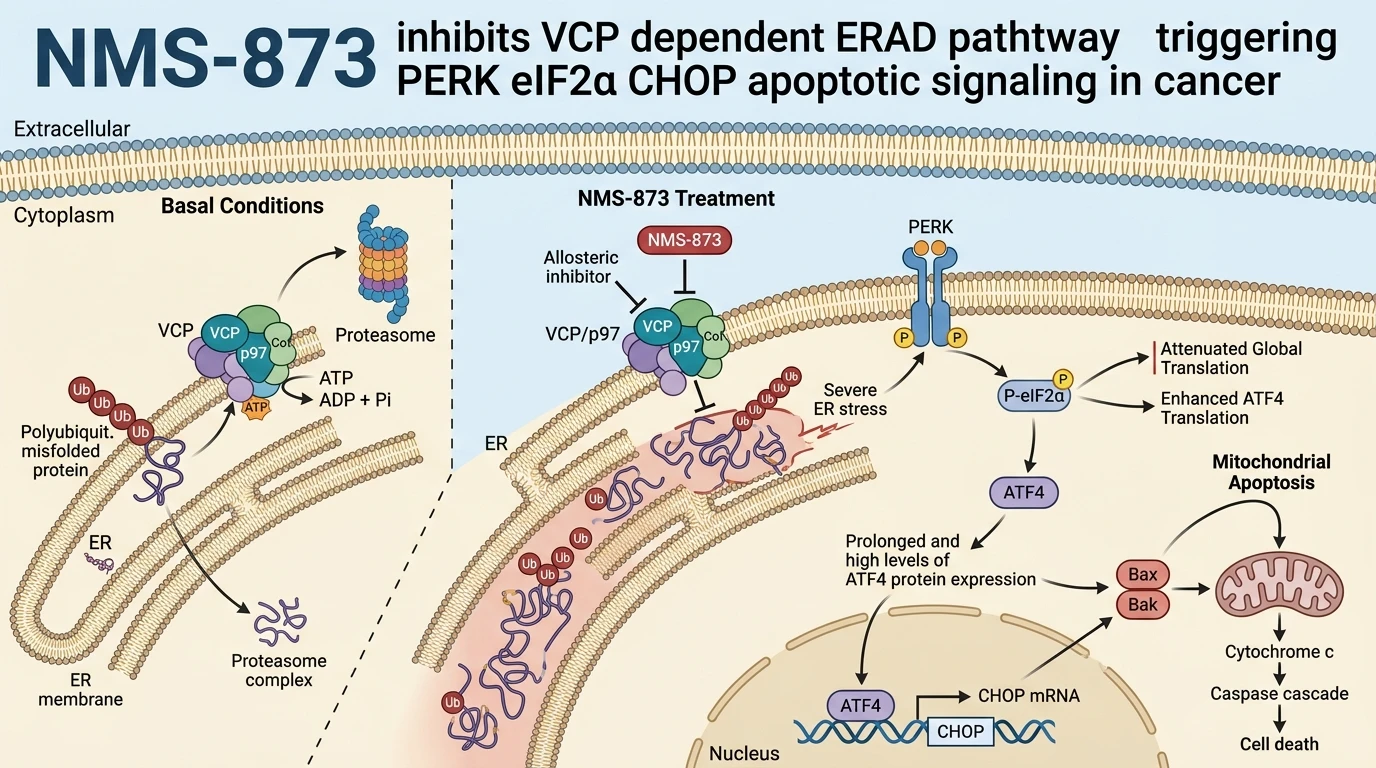
Pharmacological targeting of VCP using the small-molecule inhibitor NMS-873 offers an allosteric approach to disrupt proteostasis. Unlike ATP-competitive active site ligands, NMS-873 binds to a cryptic pocket situated at the interface between the D1 and D2 domains. This binding traps the hexamer in an intermediate conformational state, potently inhibiting ATPase activity without directly competing with high intracellular ATP pools. In cellular models of esophageal squamous cell carcinoma (ESCC), NMS-873 demonstrates nanomolar potency in blocking ERAD substrate clearance. This block provokes rapid accumulation of polyubiquitinated proteins within the ER lumen and cytosol, creating severe proteotoxic stress.
The resulting ER stress activates the unfolded protein response (UPR) through three classical sensors: PERK, IRE1α, and ATF6. Under non-stress conditions, the chaperone BiP/GRP78 sequesters these sensors in an inactive state. Accumulated unfolded proteins preferentially recruit BiP away, causing PERK dimerization and autophosphorylation. Active PERK directly phosphorylates translation initiation factor eIF2α at Serine-51. While eIF2α phosphorylation globally shuts down protein synthesis to relieve cellular load, it paradoxically increases translation of Activating Transcription Factor 4 (ATF4). Downstream ATF4 drives transcriptional expression of C/EBP homologous protein (CHOP/DDIT3), a master transcription factor controlling pro-apoptotic gene networks.
Ionizing radiation induces double-strand DNA breaks and oxidative protein damage, demanding robust repair mechanisms and proteostasis capacity. In ESCC cell lines, elevated baseline expression of VCP correlates with enhanced radioresistance and poor overall patient survival following radiotherapy. Concomitant administration of NMS-873 blunts this adaptive response. By impairing protein clearance during radiation-induced proteotoxic stress, NMS-873 transforms sublethal radiation doses into cytotoxic triggers. Tumor cells fail to clear oxidative protein aggregates, resulting in persistent PERK-eIF2α-CHOP pathway activation, mitochondrial outer membrane permeabilization, and apoptotic execution. Researchers studying target delivery or genetic verification often utilize specialized AAV packaging services for high-efficiency gene transfer in preclinical models. In esophageal cancer models, NMS-873 acts synergistically with radiation to suppress clonogenic survival and provoke sustained apoptotic death in vitro and in vivo.
Pharmacological Evaluation and Mechanistic Characterization in ESCC
Copy code to add this image to your page
NMS-873 is an allosteric inhibitor of valosin-containing protein (VCP/p97) that targets the interdomain D1-D2 interface. By selectively blocking VCP ATPase activity, NMS-873 halts endoplasmic reticulum-associated degradation (ERAD) substrate retrotranslocation. Misfolded polyubiquitinated proteins accumulate inside the ER lumen, triggering prolonged endoplasmic reticulum stress. This severe stress converts the unfolded protein response (UPR) into a pro-apoptotic cascade via sustained activation of the PERK-eIF2α-CHOP pathway. In esophageal squamous cell carcinoma cells, NMS-873-mediated VCP inhibition synergizes with radiation treatment, overwhelming cellular proteostatic machinery and sensitizing radioresistant tumor cells to apoptosis.
Allosteric VCP Blockade Suppresses ESCC Proliferation In Vitro
In vitro proliferation assays revealed dose-dependent cytotoxicity following treatment with NMS-873 across multiple human ESCC cell lines. Nanomolar exposures markedly reduced colony formation efficiency compared to vehicle controls. Downstream ubiquitin accumulation occurred within hours of compound administration. Cellular viability dropped sharply at micromolar thresholds. This anti-proliferative response coincided with acute ER morphological disruption and proteasomal substrate accumulation. Furthermore, non-cancerous esophageal epithelial cells exhibited broader tolerance margins under identical dosing regimens, indicating selective tumor sensitivity.
Combined ERAD Suppression Amplifies Radiation-Induced CHOP Apoptosis
Co-treatment of ESCC cells with NMS-873 and ionizing radiation markedly upregulated phosphorylated eIF2α and nuclear CHOP expression. Sublethal radiation alone generated transient UPR signaling. In contrast, dual treatment converted UPR from an adaptive response into a sustained apoptotic trigger. Cleaved caspase-3 levels increased significantly within 24 hours post-irradiation. Annexin V flow cytometry confirmed enhanced apoptotic fractions in combination groups compared to single-agent treatments. Thus, disabling VCP-mediated protein retrotranslocation effectively lowers the threshold for radiation-induced programmed cell death in resistant tumor phenotypes.
High VCP Expression Predicts Radioresistance and Adverse Survival
Retrospective clinical transcriptomic analyses demonstrate that high VCP mRNA and protein expression correlate with reduced overall survival in ESCC cohorts receiving definitive radiotherapy. Patients exhibiting strong baseline VCP staining demonstrated higher local recurrence rates post-irradiation. In cell line models derived from primary radiation-resistant tumors, NMS-873 restored radiosensitivity, bringing survival fractions down to baseline levels. These empirical findings underscore VCP as both a prognostic biomarker and a compelling target for radiosensitization strategies.