PARG Inhibitors
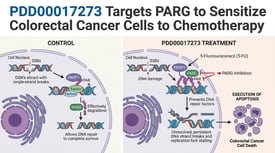
Poly(ADP-ribose) glycohydrolase (PARG) is the primary enzyme responsible for the hydrolysis of poly(ADP-ribose) (PAR) polymers, a crucial post-translational modification involved in numerous cellular processes. PAR polymers are synthesized by poly(ADP-ribose) polymerases (PARPs) in response to various cellular stresses, most notably DNA damage. PARG counteracts PARP activity by cleaving the glycosidic bonds within PAR chains, degrading them into individual ADP-ribose units. This dynamic interplay between PARP synthesis and PARG degradation is essential for maintaining cellular homeostasis, particularly in the context of DNA repair, replication, transcription, and programmed cell death. PARG ensures the timely removal of PAR, allowing for the progression of DNA repair pathways and preventing excessive PAR accumulation, which can be detrimental to cell viability. The enzyme is found in both nuclear and mitochondrial compartments, reflecting its broad involvement in cellular stress responses. Given its critical role in DNA damage response (DDR) and cellular stress, PARG has emerged as a compelling drug target, primarily in oncology. Inhibiting PARG leads to the accumulation of PAR polymers, which can trap PARP enzymes on DNA damage sites, exacerbating DNA lesions and inducing synthetic lethality in cancer cells with pre-existing deficiencies in homologous recombination repair (HRD). This mechanism mirrors the successful strategy employed by PARP inhibitors.
Beyond cancer, PARG's involvement in inflammation and neurodegeneration is also being investigated. Excessive PARP activation and subsequent PAR accumulation are observed in various inflammatory conditions and neurodegenerative diseases, suggesting that PARG inhibition could modulate these processes by altering PAR dynamics and downstream signaling pathways, such as NF-κB activation or mitochondrial dysfunction. Research into PARG inhibitors is predominantly in the preclinical stage, with several potent and selective small molecule compounds having been identified and characterized. Examples include PDD00017273, PDD00018, and other proprietary compounds developed by academic and industrial groups. These inhibitors are being extensively evaluated in various cancer models, both as monotherapy in HRD-positive cancers and, more commonly, in combination with DNA-damaging agents like chemotherapy (e.g., temozolomide, cisplatin) or radiotherapy. While no PARG inhibitors have yet reached clinical trials as standalone agents, their potential as sensitizers in combination regimens is a major focus. The preclinical data suggest that PARG inhibitors can enhance the efficacy of existing cancer treatments and potentially overcome resistance mechanisms that arise with PARP inhibitors, offering a novel therapeutic avenue in DDR-targeted therapies. PARG inhibitors are primarily classified as small molecule compounds, often categorized by their chemical scaffold and their selectivity profile. Early inhibitors were less selective, but modern drug discovery efforts have yielded compounds with high specificity for PARG over other ADP-ribosylhydrolases and PARP enzymes.
These inhibitors typically bind to the catalytic domain of PARG, preventing its ability to hydrolyze PAR. They can also be broadly classified as competitive or non-competitive inhibitors, depending on their interaction with the enzyme's active site. The development of highly selective inhibitors is crucial to avoid off-target effects and ensure a favorable therapeutic index. Key challenges in the development of PARG inhibitors include achieving sufficient selectivity over other enzymes involved in ADP-ribose metabolism and managing potential toxicity due to widespread PAR accumulation in healthy tissues. The therapeutic window for PARG inhibition needs to be carefully defined, especially given the essential role of PAR metabolism in normal cellular function. Synthetic lethality with HRD cancers remains the most promising therapeutic strategy, building on the success of PARP inhibitors. Furthermore, PARG inhibitors may offer a strategy to circumvent resistance to PARP inhibitors, as some resistance mechanisms involve altered PARG activity. Research tools include specific antibodies, activity assays, and genetic models (e.g., PARG knockout mice) to study the physiological consequences of PARG inhibition. Combination therapy with DNA-damaging agents, PARP inhibitors, or immune checkpoint inhibitors is a highly active area of investigation, aiming to maximize anti-tumor efficacy and minimize resistance.