Denifanstat (TVB-2640) FASN Inhibition Suppresses De Novo Lipogenesis and Fibrosis in MASH
Copy code to add this image to your page
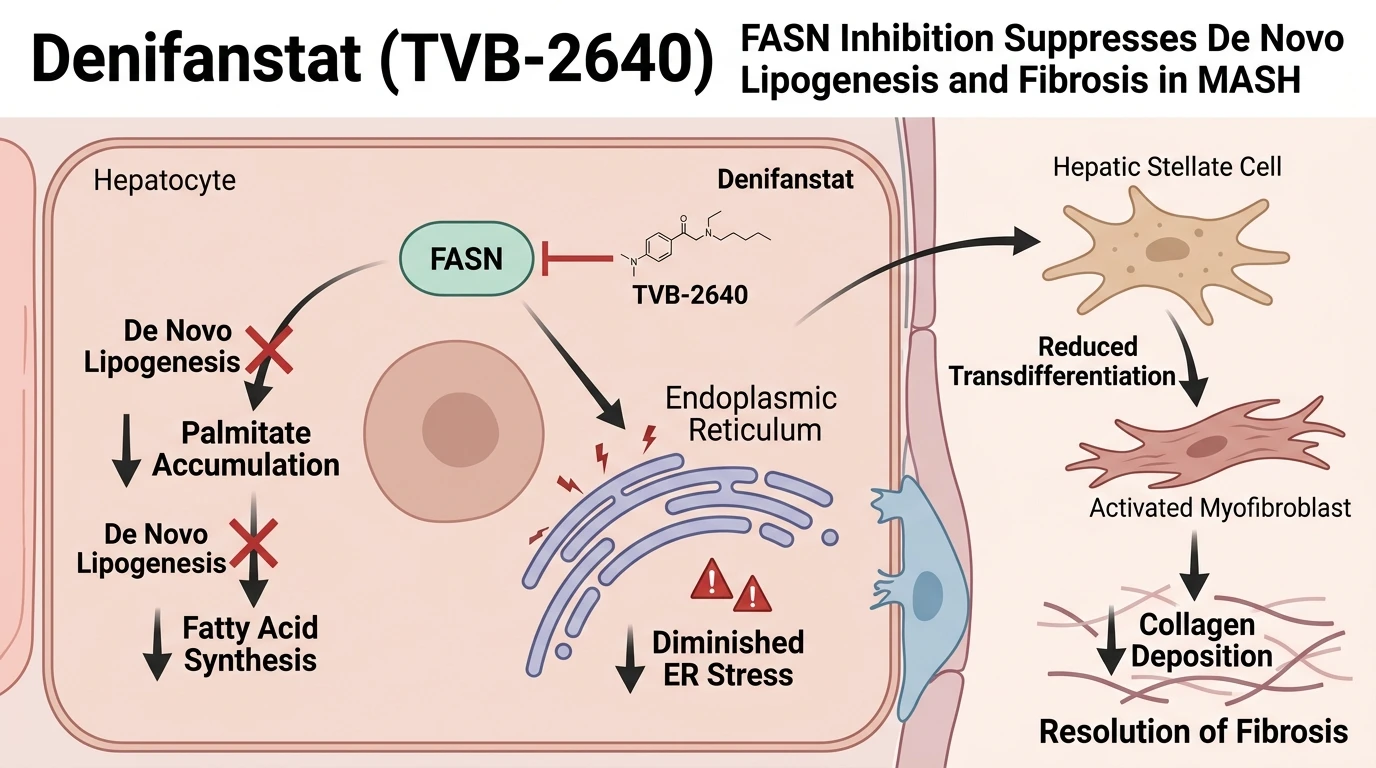
Metabolic dysfunction-associated steatohepatitis (MASH) represents a progressive liver disease characterized by excessive accumulation of intrahepatic fat, persistent lobular inflammation, ballooning hepatocyte injury, and progressive extracellular matrix deposition. In healthy individuals, de novo lipogenesis (DNL)—the enzymatic synthesis of new fatty acids from carbohydrate precursors—contributes only a minor fraction of the total intrahepatic pool. In patients affected by MASH, however, hepatic DNL is pathologically upregulated, accounting for up to 30% or more of accumulated hepatic triglycerides. Fatty acid synthase (FASN) serves as the central, rate-limiting enzymatic node of this pathway, catalyzing the NADPH-dependent condensation of acetyl-CoA and malonyl-CoA into palmitic acid (C16:0). Palmitate and its downstream esterified lipotoxic intermediates (such as diacylglycerols and ceramides) trigger direct hepatocyte cellular toxicity, activating nuclear factor kappa B (NF-κB) signaling, inducing endoplasmic reticulum stress responses, and driving mitochondrial oxidative dysfunction. The resulting release of pro-inflammatory cytokines and reactive oxygen species acts paracrinely upon adjacent quiescent hepatic stellate cells (HSCs), triggering their transdifferentiation into collagen-producing myofibroblasts. Consequently, pharmacological targeted inhibition of FASN provides a direct therapeutic strategy to shut down toxic lipid biosynthesis at its origin.
Denifanstat (TVB-2640) is a potent, oral, highly selective small-molecule inhibitor of FASN designed to intercept this pathological cascade. By reversibly occupying the catalytic domain of fatty acid synthase, TVB2640 blocks the de novo synthesis of saturated fatty acids in hepatocytes without interfering with dietary fatty acid uptake or peripheral lipid clearance. In vitro binding assays and cell-free enzymatic kinetics confirm high selectivity for FASN over related transferase and hydrolase enzyme families. In human hepatocyte culture models exposed to excess glucose or fructose loads, administration of denifanstat blunts palmitate generation in a dose-dependent manner, suppressing endoplasmic reticulum stress markers (such as phosphorylated eIF2α and CHOP) and downstream NLRP3 inflammasome assembly. Pharmacodynamic profiling demonstrates that TVB2640 effectively halts the primary driver of lipotoxicity rather than merely altering secondary fat storage depots, establishing a strong biochemical rationale for clinical investigation in fibrotic liver disease.
Clinical proof-of-concept and histological validation were rigorously established in a 52-week randomized, double-blind, placebo-controlled Phase 2b clinical trial evaluating denifanstat in patients with biopsy-confirmed MASH and stage F2 to F3 liver fibrosis. Subjects were randomized to receive either 50 mg daily oral denifanstat or matching placebo. Histological efficacy was evaluated through paired baseline and end-of-treatment liver biopsies assessed by independent, blinded central pathologists. In the modified intention-to-treat analysis, 41% of patients treated with denifanstat achieved the primary endpoint of histological fibrosis improvement by at least one stage without worsening of MASH, compared to only 18% in the placebo cohort (p = 0.0102). In addition, key secondary endpoints reflected broad metabolic and histological benefit: a higher proportion of denifanstat-treated individuals achieved resolution of MASH without worsening of fibrosis, alongside statistically significant reductions in liver fat content as measured by magnetic resonance imaging proton density fat fraction (MRI-PDFF) and circulating liver enzyme concentrations (ALT and AST).
Subgroup analyses from this Phase 2b trial provided crucial mechanistic and clinical insights into patient populations displaying heightened therapeutic response. Patients with advanced stage F3 baseline fibrosis experienced pronounced relative risk reductions in fibrosing activity following 52 weeks of continuous therapy. Furthermore, diabetic cohorts—a demographic typically characterized by refractory metabolic dysfunction and rapid fibrosis progression—exhibited robust histological improvements following denifanstat treatment. Experimental co-administration studies and exploratory clinical sub-analyses also indicated positive interactions when denifanstat was combined with glucagon-like peptide-1 (GLP-1) receptor agonists, demonstrating additive reductions in intrahepatic lipid accumulation and systemic inflammatory markers. Across trial cohorts, denifanstat demonstrated a favorable safety and tolerability profile; adverse events were predominantly grade 1 or 2, with minor occurrences of dry skin or temporary hair thinning, and no signal for severe systemic toxicities or lipid decompensation. These pivotal Phase 2b findings directly validate FASN as a disease-modifying target and justify ongoing Phase 3 clinical evaluation.
Clinical Efficacy and Histological Regression in MASH
Copy code to add this image to your page
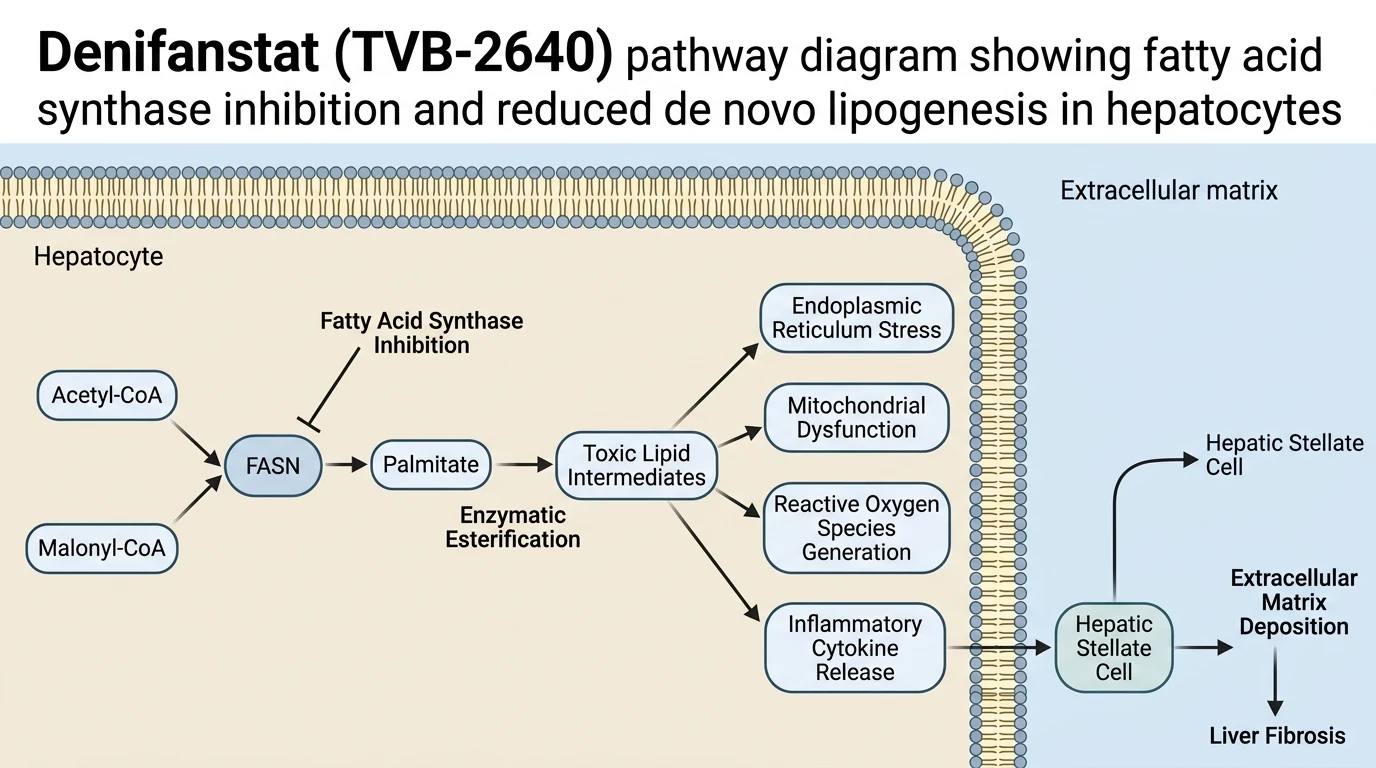
Denifanstat (TVB-2640) selectively inhibits fatty acid synthase (FASN), the central enzyme catalyzing de novo lipogenesis in hepatocytes. By halting the conversion of acetyl-CoA and malonyl-CoA into saturated fatty acids such as palmitate, denifanstat reduces intracellular lipotoxicity, quenches endoplasmic reticulum stress, and suppresses inflammatory signaling. Consequently, hepatic stellate cell activation is blocked, preventing collagen deposition and promoting fibrosis regression in patients with MASH.
Histological Fibrosis Reduction Across Phase 2b Cohorts
Daily administration of denifanstat sustained potent FASN inhibition. In a 52-week trial involving patients with F2-F3 fibrosis, 50 mg denifanstat yielded a 41% fibrosis improvement rate compared to 18% in placebo controls. Histological lesions regressed without MASH worsening. The primary endpoint achieved statistical significance with a p-value of 0.0102, confirming robust structural recovery within the hepatic parenchyma. Target engagement reduced circulating tripalmitin levels rapidly. In patient cohorts receiving TVB2640, serum biomarker analyses demonstrated marked attenuations in hepatic lipotoxicity and downstream systemic lipid accumulation.
Enhanced Response in Diabetic Subgroups and Combination Modalities
Subgroup analyses revealed distinct therapeutic benefits among high-risk patient subpopulations. Individuals presenting with stage F3 advanced fibrosis exhibited marked histological regression following complete protocol adherence over 52 weeks. Diabetic subjects showed heightened pharmacological sensitivity. Co-administration with GLP-1 receptor agonists elicited synergistic reductions in intracellular fat accumulation and inflammatory gene expression. Metabolic parameters stabilized across dosing cohorts. In these targeted sub-cohorts, TVB2640 reduced pro-inflammatory lipid intermediates while preserving systemic lipid transport mechanics without inducing clinical pancreatitis.