BMS-927711 (Rimegepant) BMS927711 CGRP Receptor antagonist Efficacy in Migraine Therapeutics
Copy code to add this image to your page
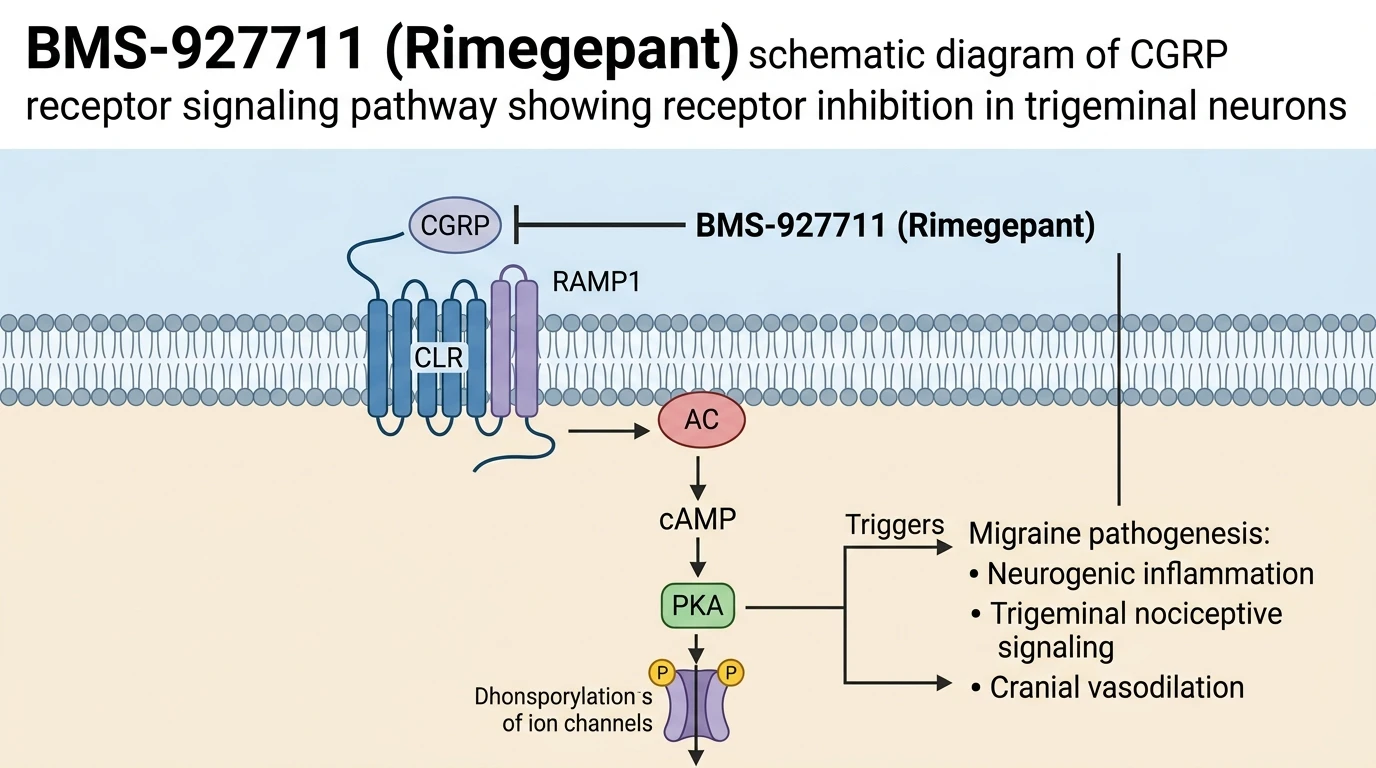
Calcitonin gene-related peptide (CGRP) signaling represents a primary driver of neurovascular headache disorders. The Calcitonin gene-related peptide (CGRP) receptor—a heterodimer composed of the calcitonin receptor-like receptor (CLR) and receptor activity-modifying protein 1 (RAMP1)—coordinates downstream intracellular cascades that induce neurogenic inflammation and cranial vasodilation. BMS-927711 (Rimegepant) functions as an orally bioavailable small-molecule antagonist targeting this receptor complex. By occupying the orthosteric binding pocket of CLR/RAMP1, the BMS927711 CGRP Receptor antagonist impedes CGRP binding, preventing Gs-mediated activation of adenylate cyclase and subsequent cyclic adenosine monophosphate (cAMP) production. This mechanism of action directly interrupts trigeminal nociceptive transmission and vasodilation without relying on vasoconstrictive pathways characteristic of earlier abortive agents such as triptans.
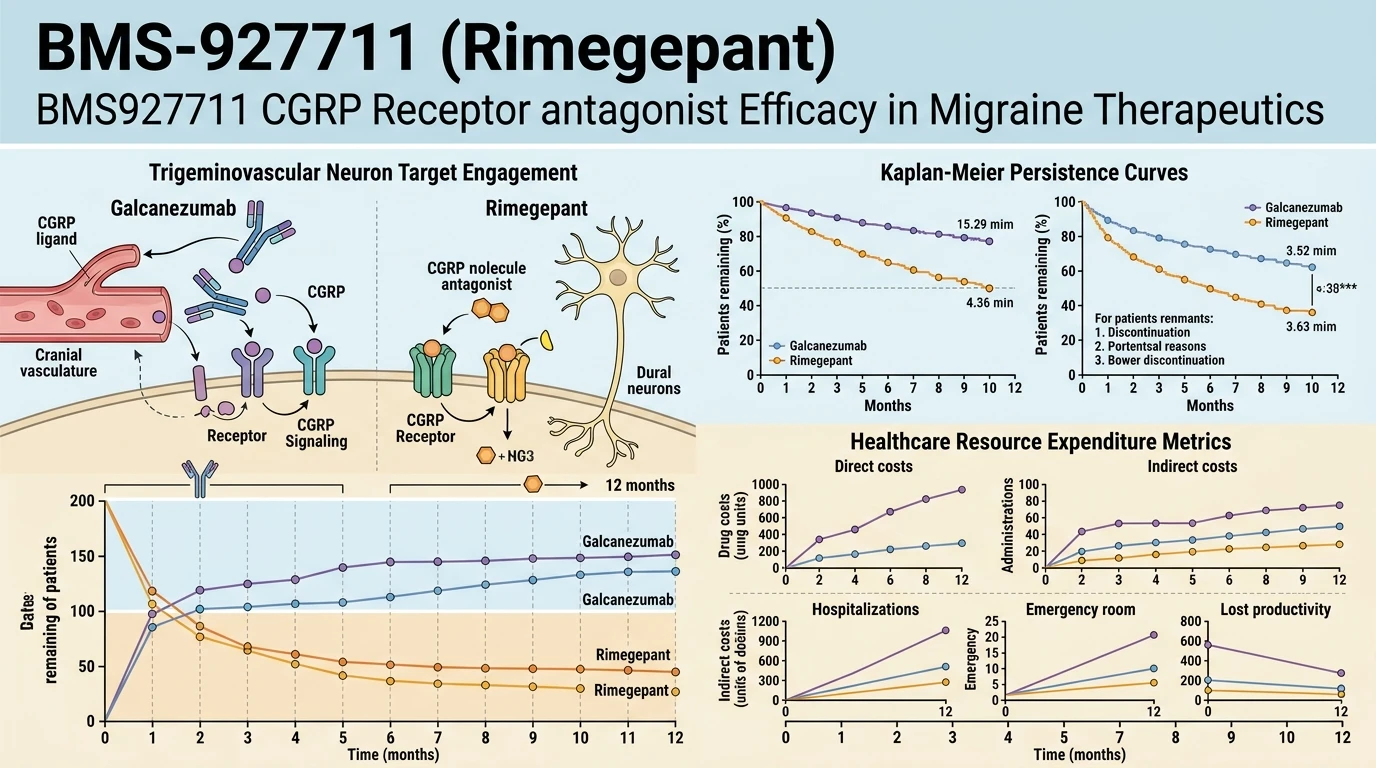
While oral CGRP receptor antagonists offer acute and preventive utility, comparative long-term outcomes between daily/gepant-based oral strategies and monthly monoclonal antibody regimens remain critical for clinical decision-making. A recent retrospective administrative claims study evaluated healthcare utilization, longitudinal expenditure patterns, and treatment discontinuation over a 12-month follow-up window in adult cohorts with episodic migraine. This study compared real-world outcomes in patients initiating either the monoclonal antibody galcanezumab—which directly neutralizes the CGRP ligand—or the small-molecule oral CGRP receptor antagonist BMS-927711 (Rimegepant).
Both treatment cohorts exhibited increases in overall healthcare expenditure across the 12-month post-index evaluation period. However, significant divergence was observed in the magnitude of cost escalation between the two therapeutic modalities. Patients initiated on galcanezumab experienced a 21% lower mean increase in all-cause total healthcare costs relative to those initiated on rimegepant ($8,378 versus $10,641). The disparity proved even more pronounced when isolating disease-specific expenses: the galcanezumab cohort demonstrated a 76% lower mean increase in migraine-related total costs ($2,172 versus $9,041) compared to the rimegepant group. Economic decomposition indicated that this variance was driven predominantly by outpatient pharmacy expenditures rather than acute inpatient admissions or emergency department visits.
Beyond economic metrics, longitudinal treatment persistence differed markedly between the study populations. Discontinuation rates over the 12-month observation frame were substantially lower among patients receiving galcanezumab compared to those prescribed rimegepant (49.4% versus 69.1%). Cox proportional hazards modeling yielded a hazard ratio of 1.81 for treatment discontinuation in the rimegepant cohort relative to galcanezumab. Furthermore, survival analysis demonstrated a significantly extended mean time to treatment discontinuation for galcanezumab users (244.6 days) compared to rimegepant users (178.1 days).
These real-world findings reflect distinct clinical operational dynamics between monthly subcutaneous injectable biologics and daily or alternate-day oral gepants. Although small-molecule target engagement effectively blocks CGRP receptor signaling at the cellular level, patient-adherence barriers, dosing frequency, and prescription refill patterns inherent to oral self-administration regimens can influence real-world efficacy and overall health system costs. Consequently, while BMS-927711 (Rimegepant) remains a mechanistically validated CGRP receptor antagonist for preventive migraine therapy, real-world claims data indicate that long-acting biologic administration yields higher treatment persistence and lower overall disease-related pharmacy expenditure in adult episodic migraine populations.
Real-World Comparative Outcomes and Cost Analysis
Copy code to add this image to your page
BMS-927711 (Rimegepant) functions as a selective small-molecule antagonist of the calcitonin gene-related peptide (CGRP) receptor complex, comprising CLR and RAMP1 subunits. By competitively blocking CGRP binding at the trigeminovascular interface, the compound inhibits Gs-mediated adenylate cyclase activation and subsequent intracellular cAMP accumulation. This selective antagonism suppresses neurogenic inflammation, attenuates cranial vasodilation, and mitigates central nociceptive transmission. Clinically, this mechanism provides targeted inhibition of pathophysiological pathways driving episodic and chronic migraine attacks.
Differential Persistence Rates Across Preventive Modalities
Treatment adherence dictates real-world preventive efficacy. In this retrospective claims cohort, treatment discontinuation reached 69.1% for rimegepant compared to 49.4% for galcanezumab. The risk of therapy cessation was markedly elevated in oral recipient groups (hazard ratio = 1.81). Mean time to discontinuation spanned 244.6 days for galcanezumab; conversely, rimegepant persisted for only 178.1 days. Dosing frequency likely drives these observed persistence variations—monthly biological administration enforces structured therapeutic adherence over daily oral administration. Extended dosing intervals stabilize systemic exposure without daily patient intervention.
Pharmacy Spend Drives Total Cost Divergence
Economic accrual varied significantly by therapeutic drug class. Overall all-cause costs expanded across both cohorts over 12 months. However, galcanezumab demonstrated a 21% lower mean increase in all-cause costs ($8,378 vs. $10,641). Disease-specific savings were pronounced. Migraine-related expenditure increases were 76% lower in the galcanezumab arm ($2,172 vs. $9,041). Outpatient prescription fulfillment costs accounted for primary budget divergence. Targeted receptor blockade using the BMS927711 CGRP Receptor antagonist effectively modulates neurovascular signaling; nevertheless, drug delivery logistics dictate long-term healthcare expenditure.
Clinical Strategy Implications for Trigeminal Antagonism
Targeting the CGRP signaling axis mitigates neurogenic inflammation. Small-molecule inhibitors like BMS-927711 (Rimegepant) reversibly bind CLR/RAMP1 receptors. Biological monoclonal antibodies instead clear circulating ligand directly. Within administrative health claims, continuous target saturation by monoclonal antibodies correlated with improved persistence. High discontinuation in oral cohorts suggests underlying administration fatigue or inconsistent refill compliance. Future clinical deployment must weigh targeted molecular efficiency against real-world human behavioral variables.