CGRP Receptor Inhibitors
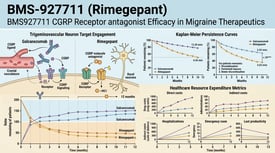
Calcitonin Gene-Related Peptide (CGRP) is a 37-amino acid neuropeptide that serves as a potent vasodilator and a key mediator in the trigeminovascular system, which is central to the pathophysiology of migraine. The CGRP Receptor is a unique heteromeric complex consisting of the Calcitonin Receptor-Like Receptor (CLR), the Receptor Activity-Modifying Protein 1 (RAMP1), and the CGRP Receptor Component Protein (RCP). Activation of this receptor leads to the stimulation of adenylyl cyclase, increasing intracellular cAMP levels and resulting in vasodilation, neurogenic inflammation, and the sensitization of pain-sensing neurons. CGRP receptor inhibitors have revolutionized the treatment of migraine, providing a targeted approach that avoids the vasoconstrictive side effects of older drugs like triptans. These inhibitors are broadly classified into two categories: small-molecule CGRP receptor antagonists, known as 'gepants,' and monoclonal antibodies (mAbs).
The gepants, such as Ubrogepant and Rimegepant, are used for the acute treatment of migraine, while Rimegepant and Atogepant are also used for prevention. The monoclonal antibodies are further divided into those that bind directly to the CGRP ligand (e.g., Fremanezumab, Galcanezumab, and Eptinezumab) and those that block the CGRP receptor itself (e.g., Erenumab). Research progress in this field has been rapid, with several of these agents receiving FDA approval in recent years. Early development of gepants, such as Telcagepant, was halted due to concerns over liver toxicity, but second-generation gepants have shown excellent safety profiles. Clinical trials have demonstrated that CGRP inhibitors significantly reduce the number of monthly migraine days and improve patient quality of life with minimal side effects, the most common being injection site reactions for mAbs and nausea or somnolence for gepants.
A notable challenge in CGRP inhibition is the potential long-term effect on the cardiovascular system, as CGRP is a protective vasodilator during ischemic events; however, current clinical data have not shown significant cardiovascular risks in the general migraine population. Combination therapy, such as using a preventive mAb with an acute gepant, is an emerging strategy for patients with refractory migraine. Tool compounds like BIBN4096BS (Olcegepant) were instrumental in the early validation of CGRP as a therapeutic target. Beyond migraine, CGRP inhibitors are being investigated for other conditions involving neurogenic inflammation, such as cluster headache and potentially certain types of chronic pain. The success of CGRP-targeted therapies represents a landmark in translational medicine, moving from the discovery of a neuropeptide to the development of a highly specific and effective class of drugs for a debilitating neurological disorder.